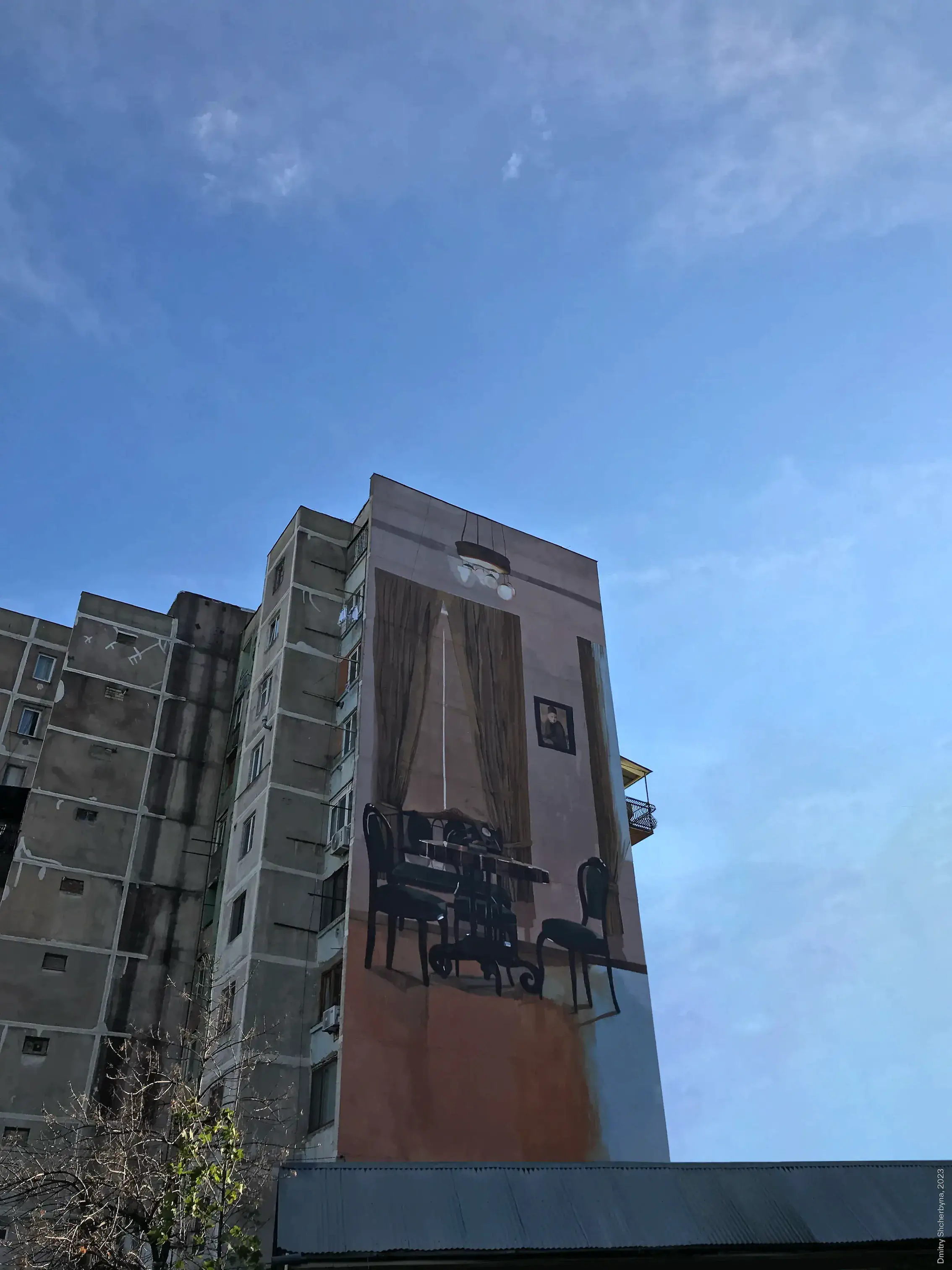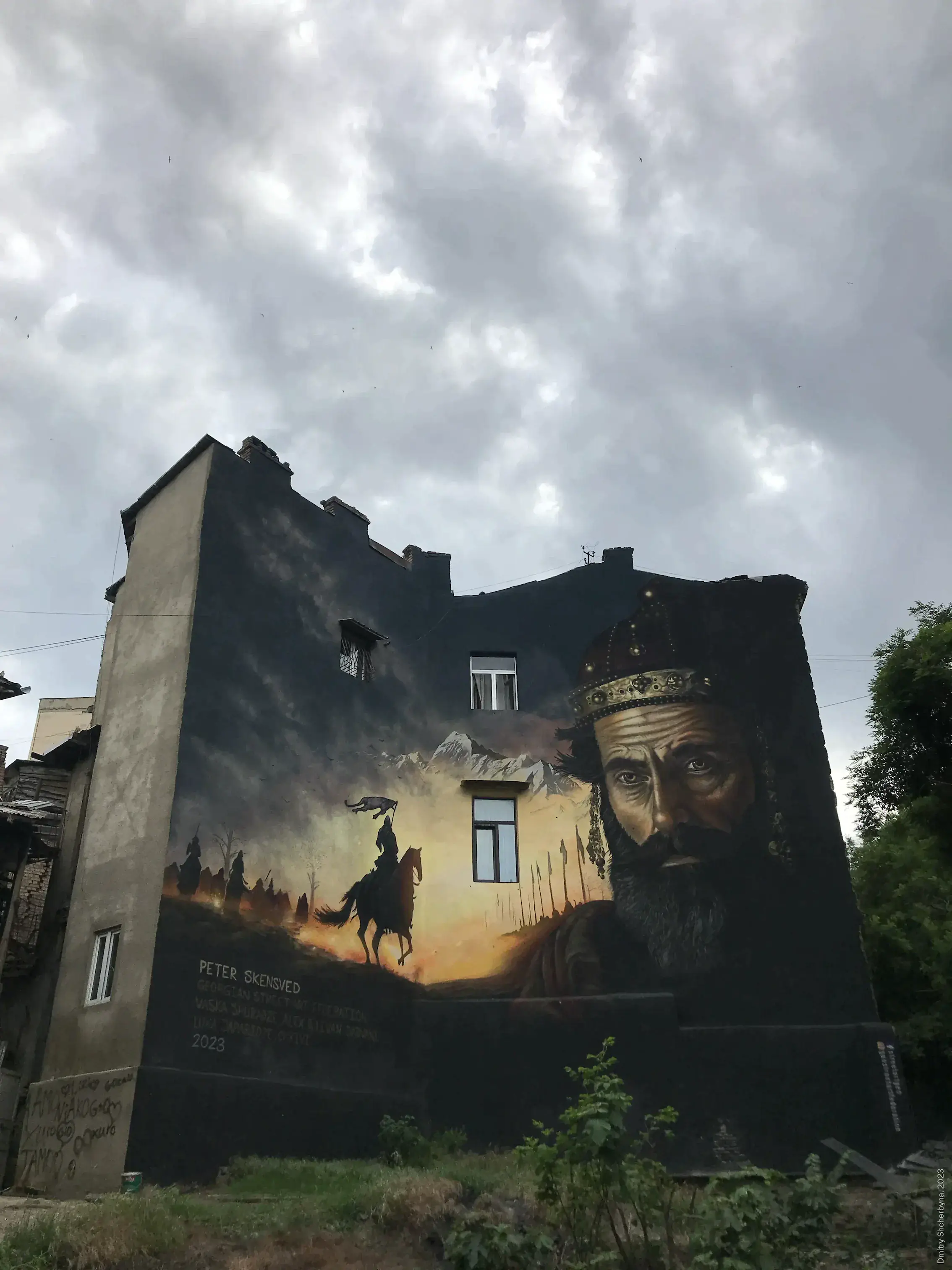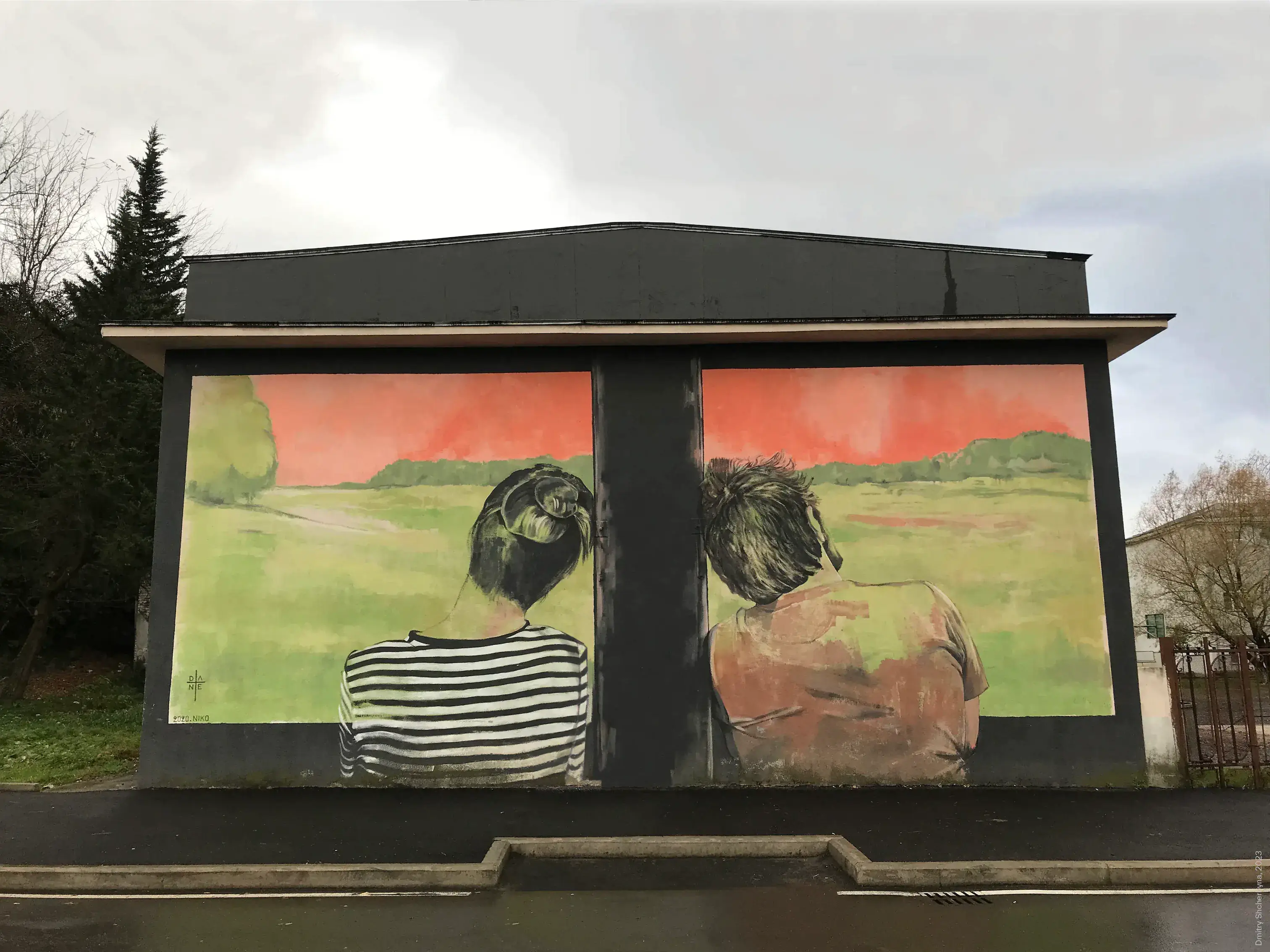
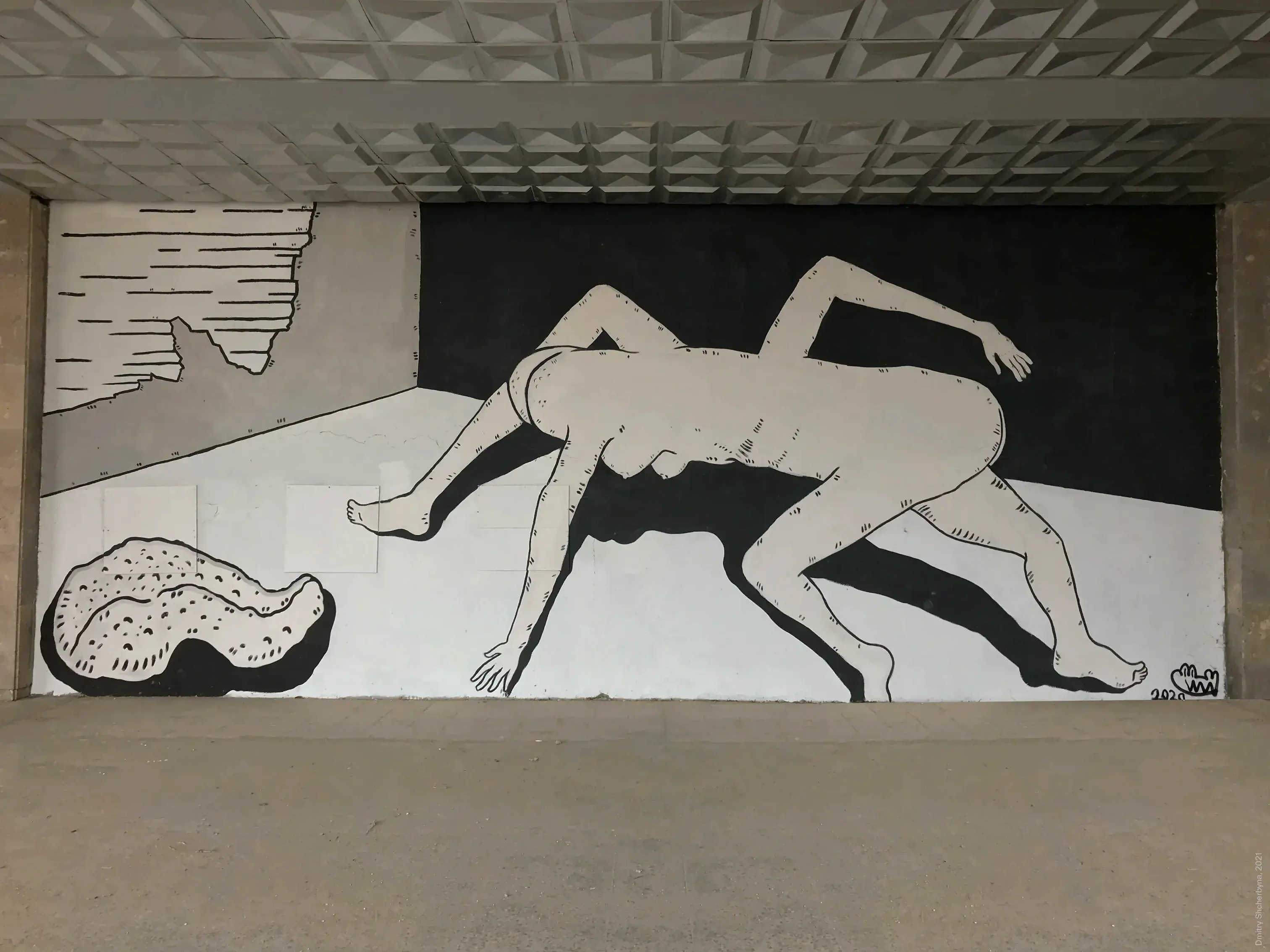
Archive of selected Georgian street art works. 2021-2023.
The modern subculture of tagging gained prominence in the mid-1960s, first emerging in Philadelphia and then moving to New York before eventually spreading worldwide.
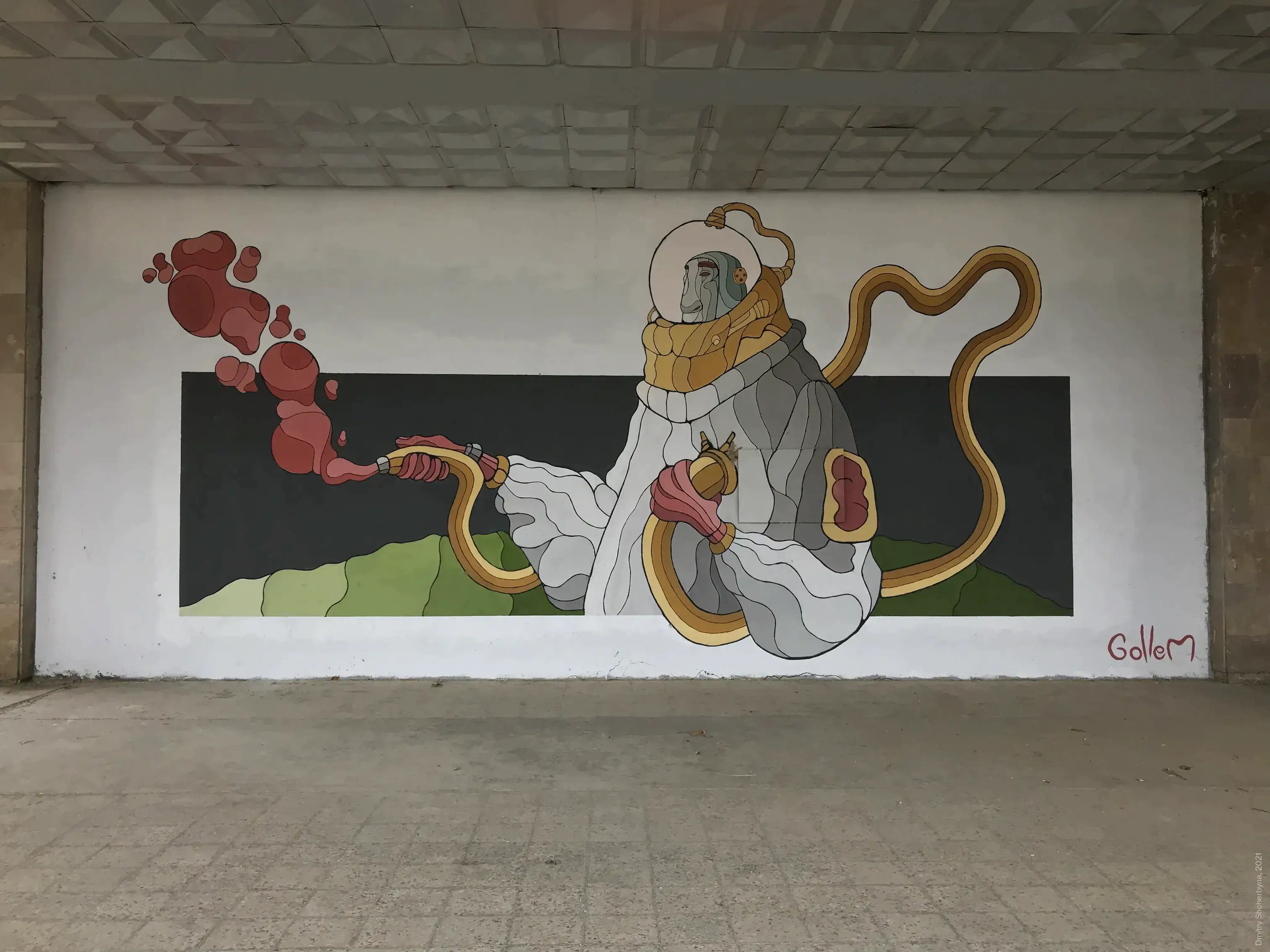
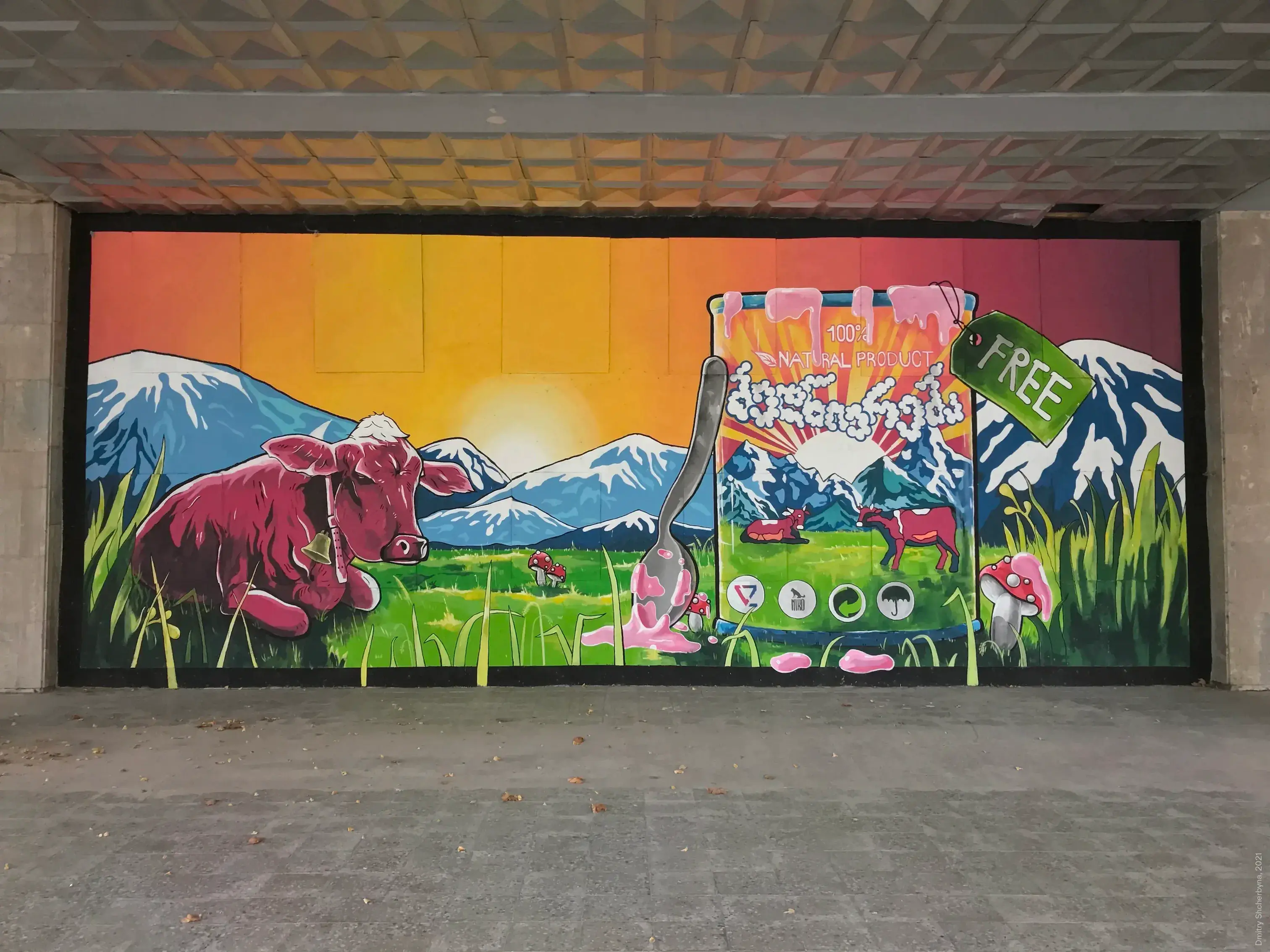
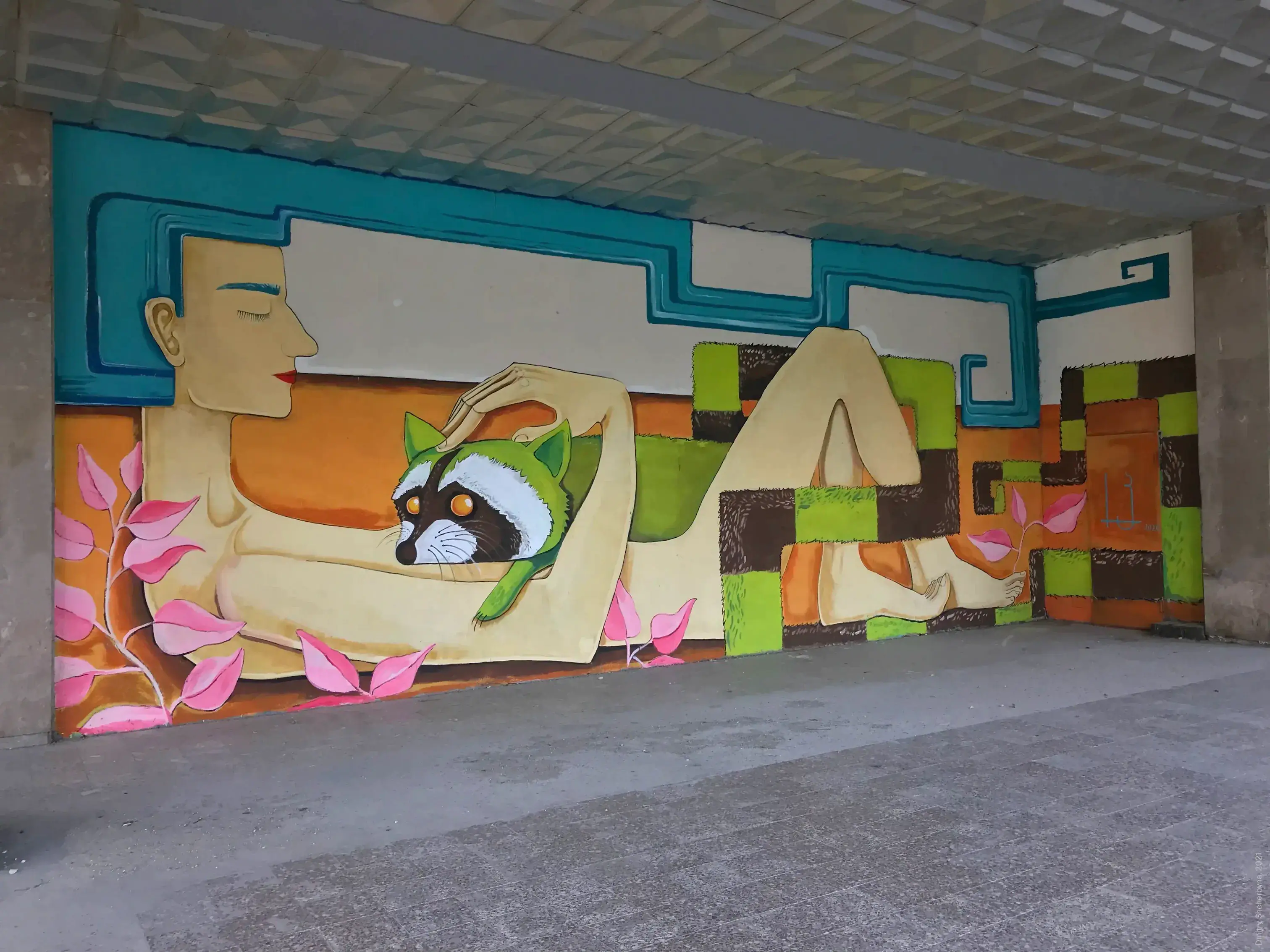
During the early 1980s, galleries began embracing graffiti-inspired work, with artists like Keith Haring and Jean-Michel Basquiat bringing street aesthetics into the mainstream art world. The actual term “street art” entered broader usage from the late 1980s onward, by which time various styles of the practice had already appeared. Today, it is a powerful movement with a wide range of techniques practiced by a multitude of artists working around the globe.
Nowadays, street art methods of expression are acknowledged as a full-fledged form of modern culture, but the level of formal acceptance varies widely worldwide. More than half a century has passed since the rise of name-based tagging, pioneered by Darryl McCray — better known as “Cornbread.” What began on city walls has now entered galleries and museums, contributing to its establishment as a distinct and complex contemporary art form.
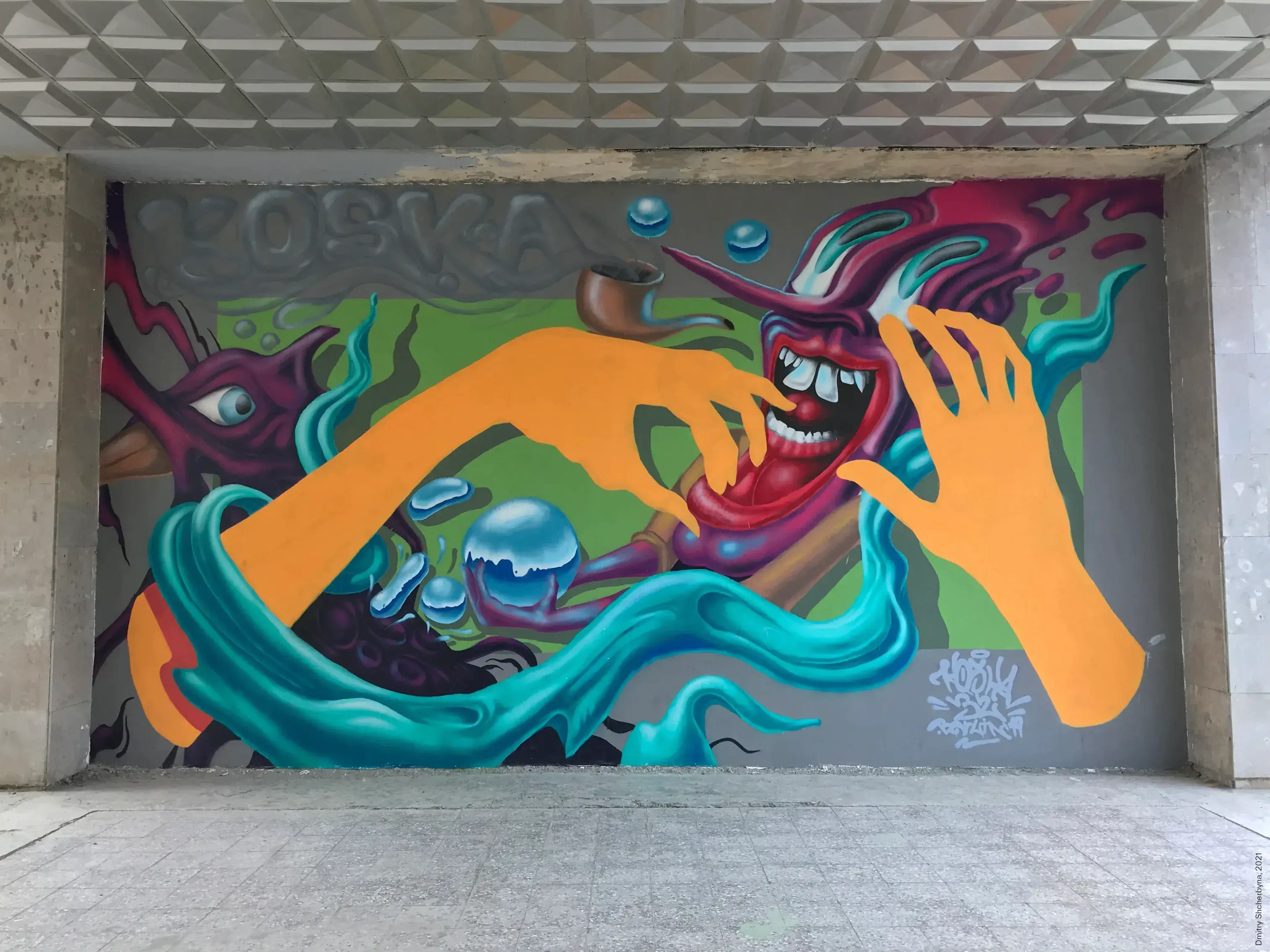
Until recently, little known to the global street art world, Georgia has built a scene with a full range of contemporary techniques. Abstract lettering and stencil work, murals, optical illusions, digitized video projection, and various figurative techniques are part of the ways Georgian artists diversify the urban environment. Mostly through a mix of murals, graffiti, and stencil art, city streets are actively showcasing their constantly evolving visual identity.
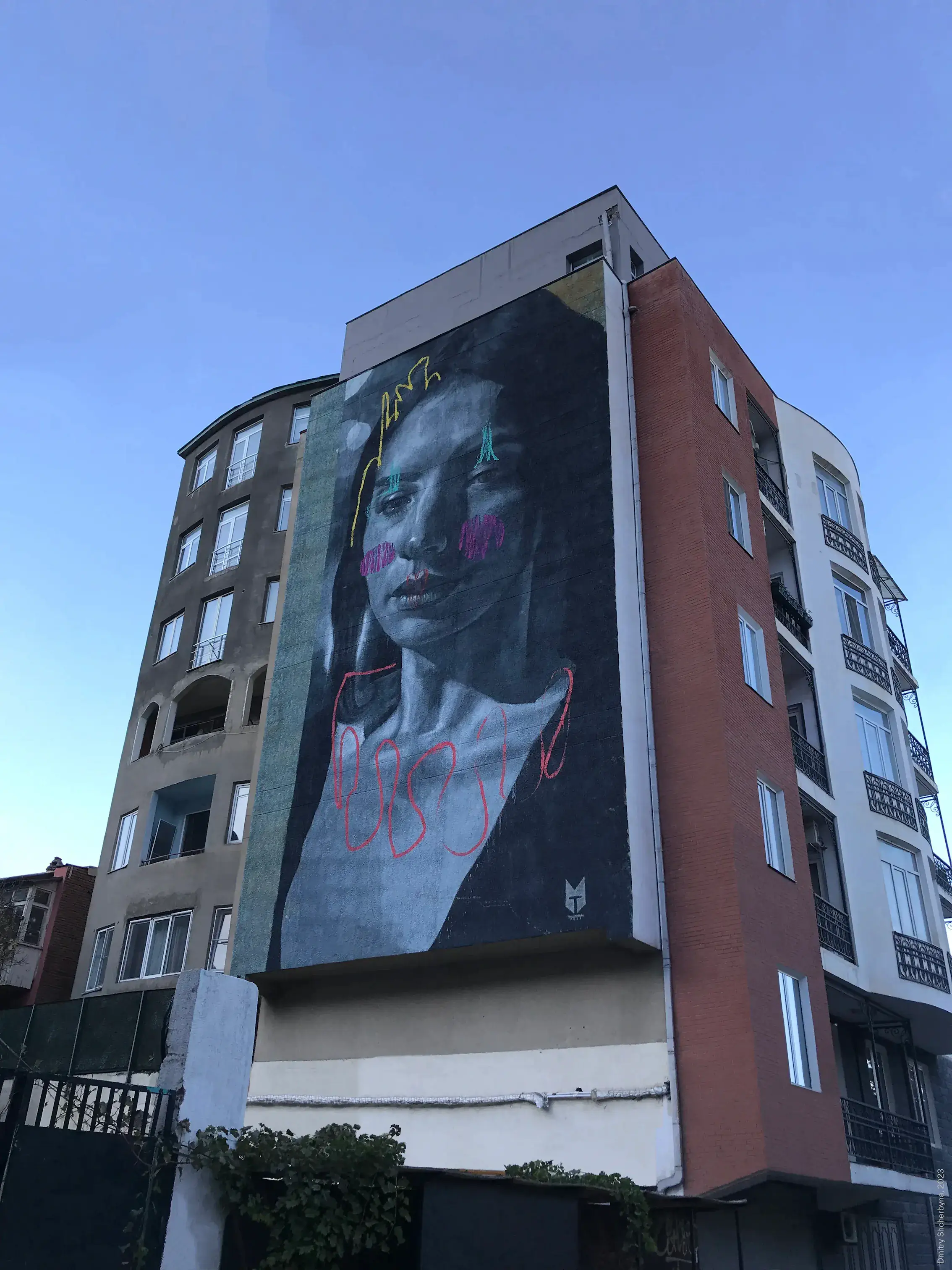
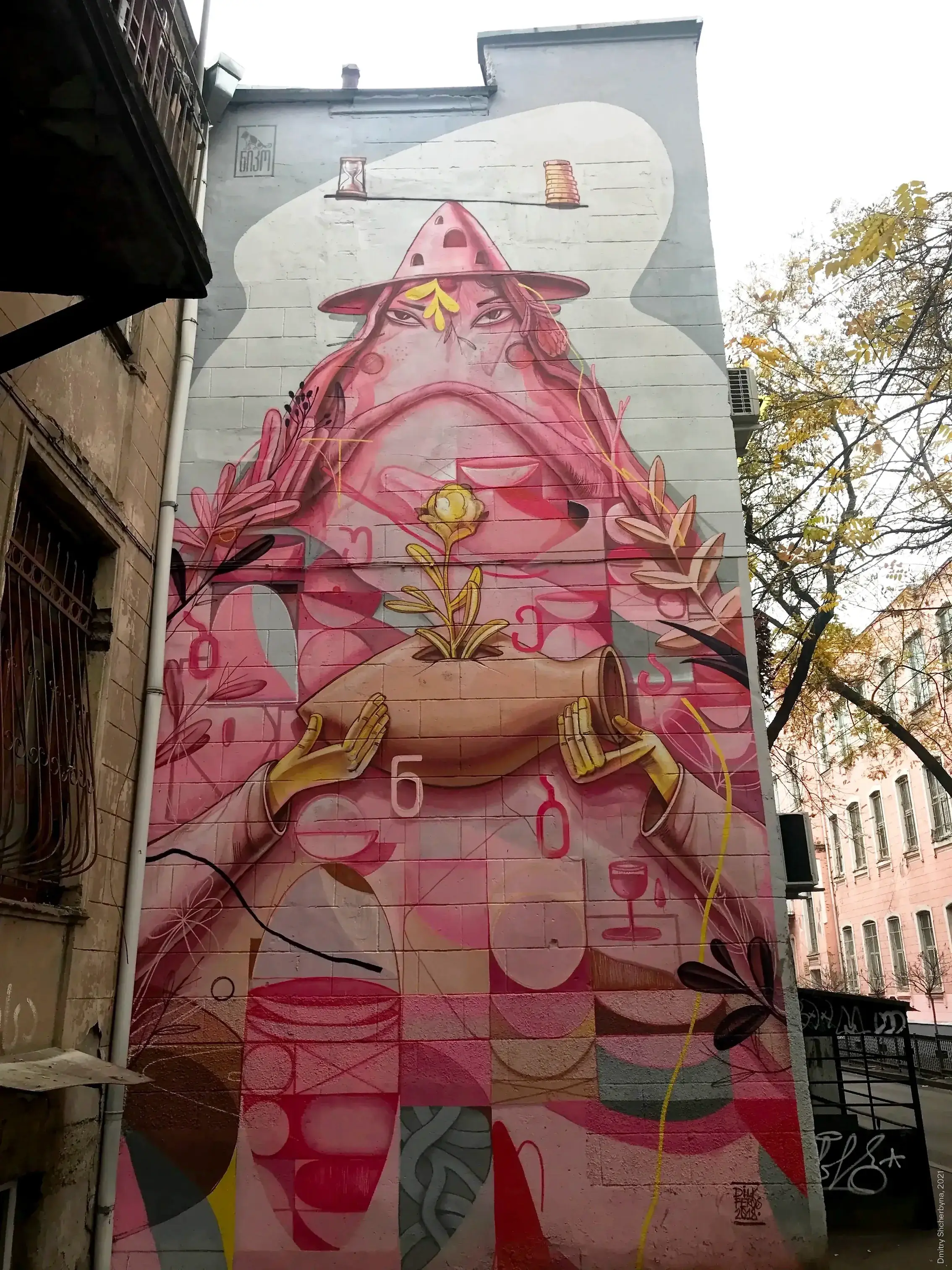
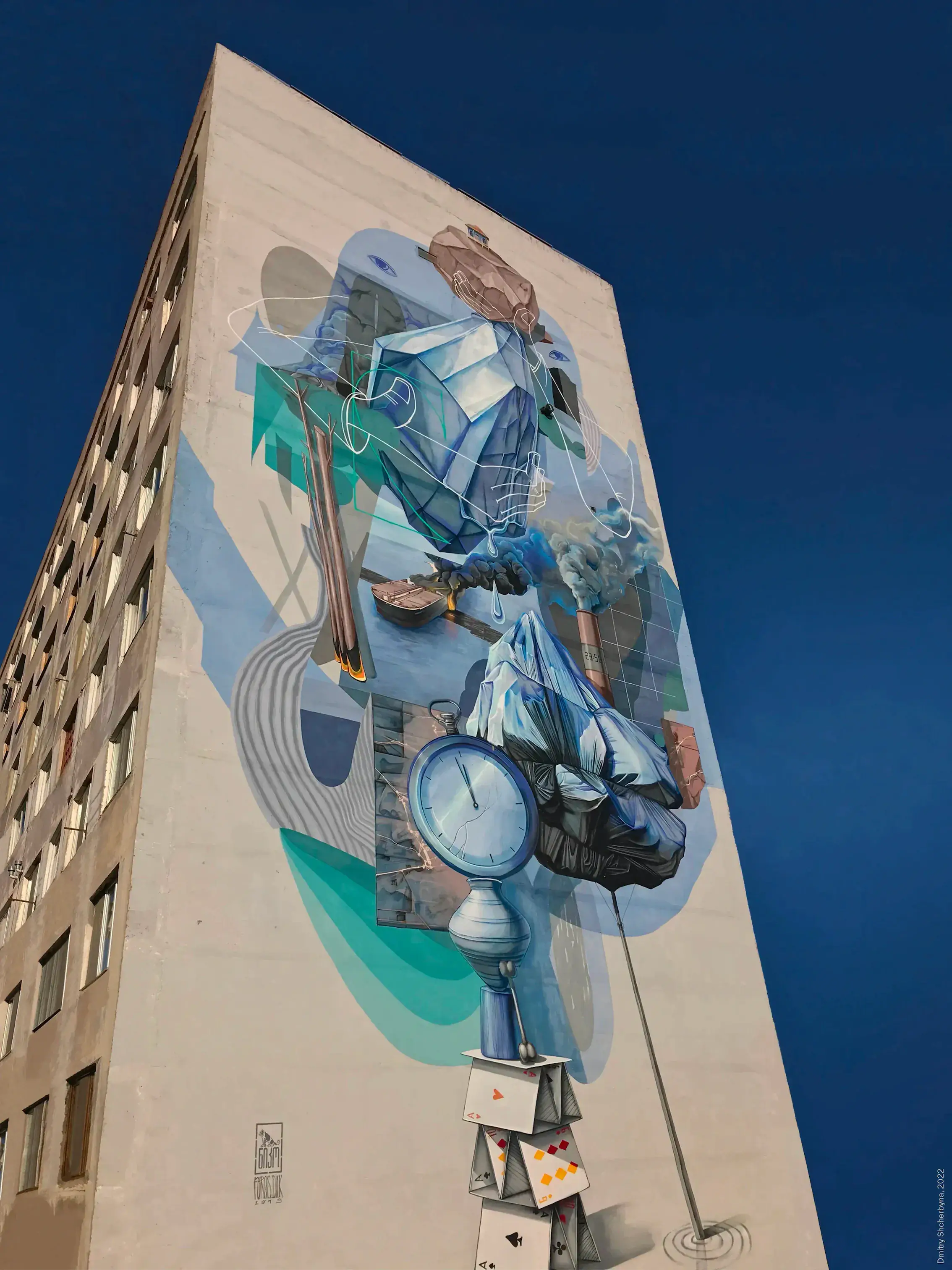
Mural painting is popular in Georgia, and many works are large-scale murals that cover entire buildings. Artists approach each facade thoughtfully, considering the surface, the structure, and the context of the surrounding neighborhood.
The stencil art technique involves creating cut templates made out of different materials: paper, cardboard, or other media, and then using spray paint or roll-on paint. Sometimes, multiple layers of stencils are used to add color or an illusion of depth.
Graffiti is writing, drawing, or other markings made on surfaces using spray paint or markers, though it can also be scratched or etched. It appears unexpectedly in public spaces and on the daily routes of city residents — ranging from simple inscriptions to large paintings. It serves different purposes: tagging, territorial marking, political and social commentary, or can be used to convey what simply can't be said politely and feels urgent or personal.
Murals contribute to the evolving visual identity of the city, adding new symbolic and aesthetic layers to its urban fabric. Many reflect broader societal changes and ongoing challenges within contemporary society. The city increasingly becomes a space where artists articulate their distinct visions. Some subtly reinterpret the boundary between public and private, framing the city as a shared cultural space, while others are simply trying to find the wall. In Tbilisi, that surface is often the side of a Soviet-era residential block — utilitarian and repetitive.
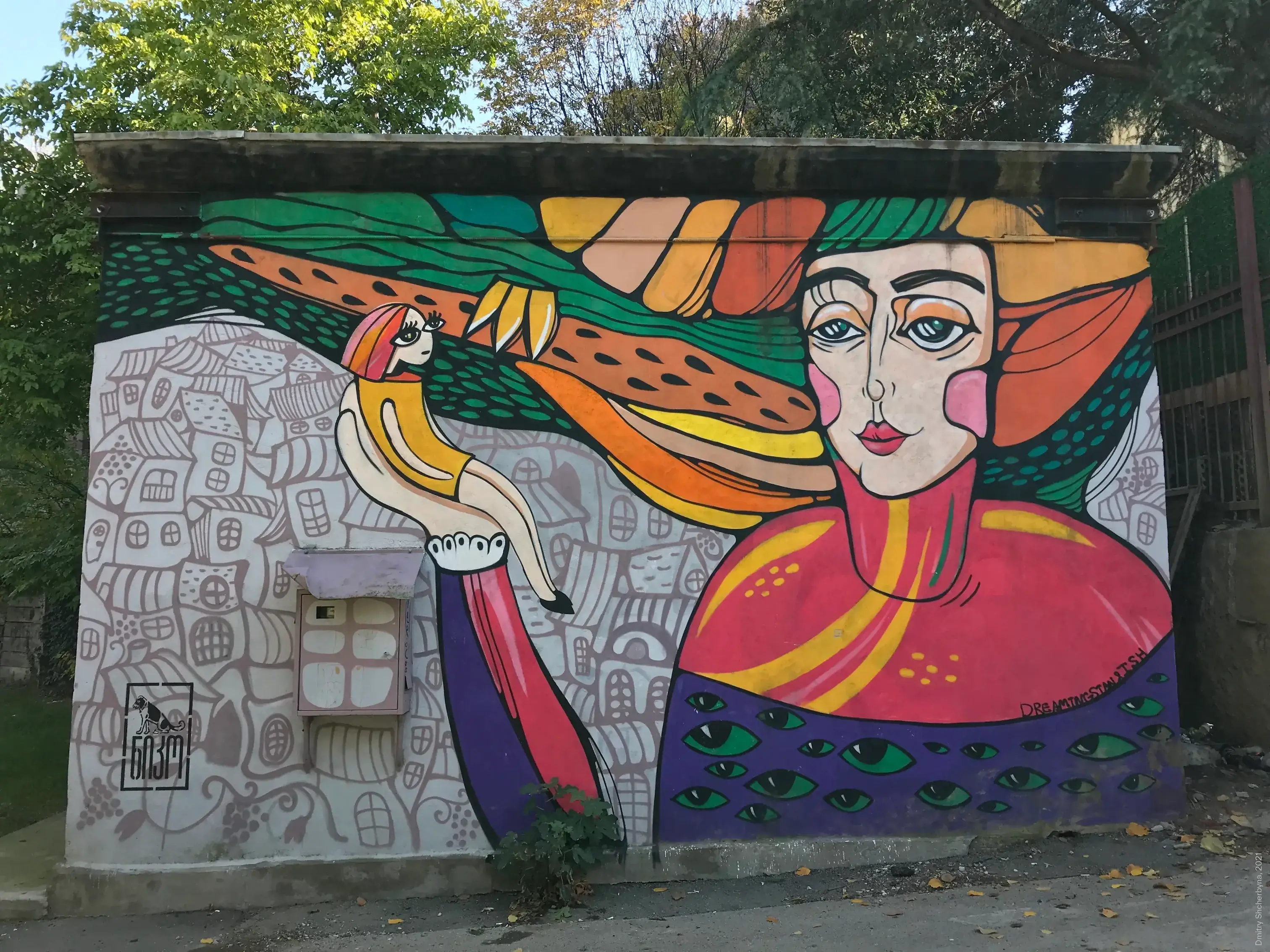
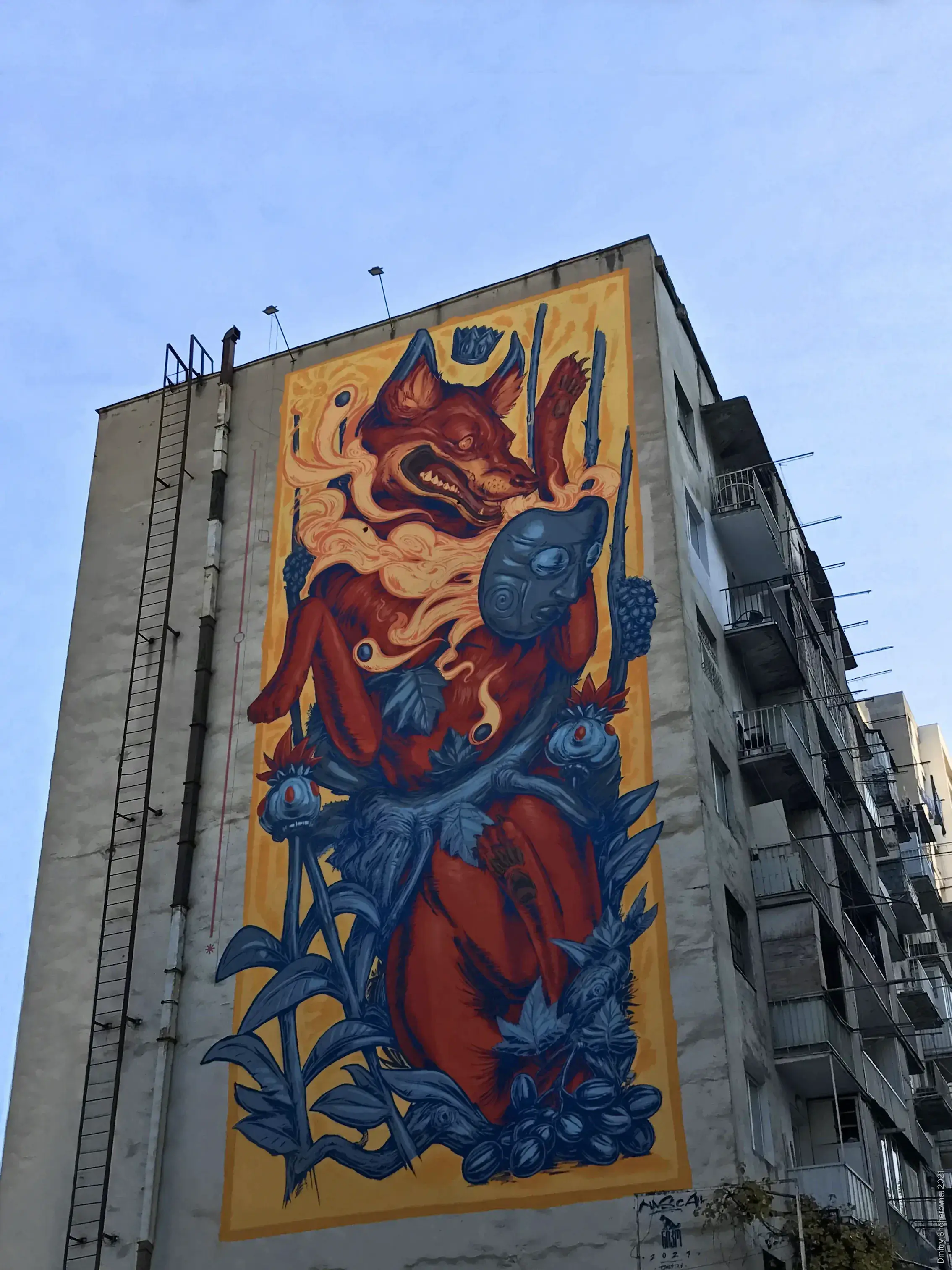
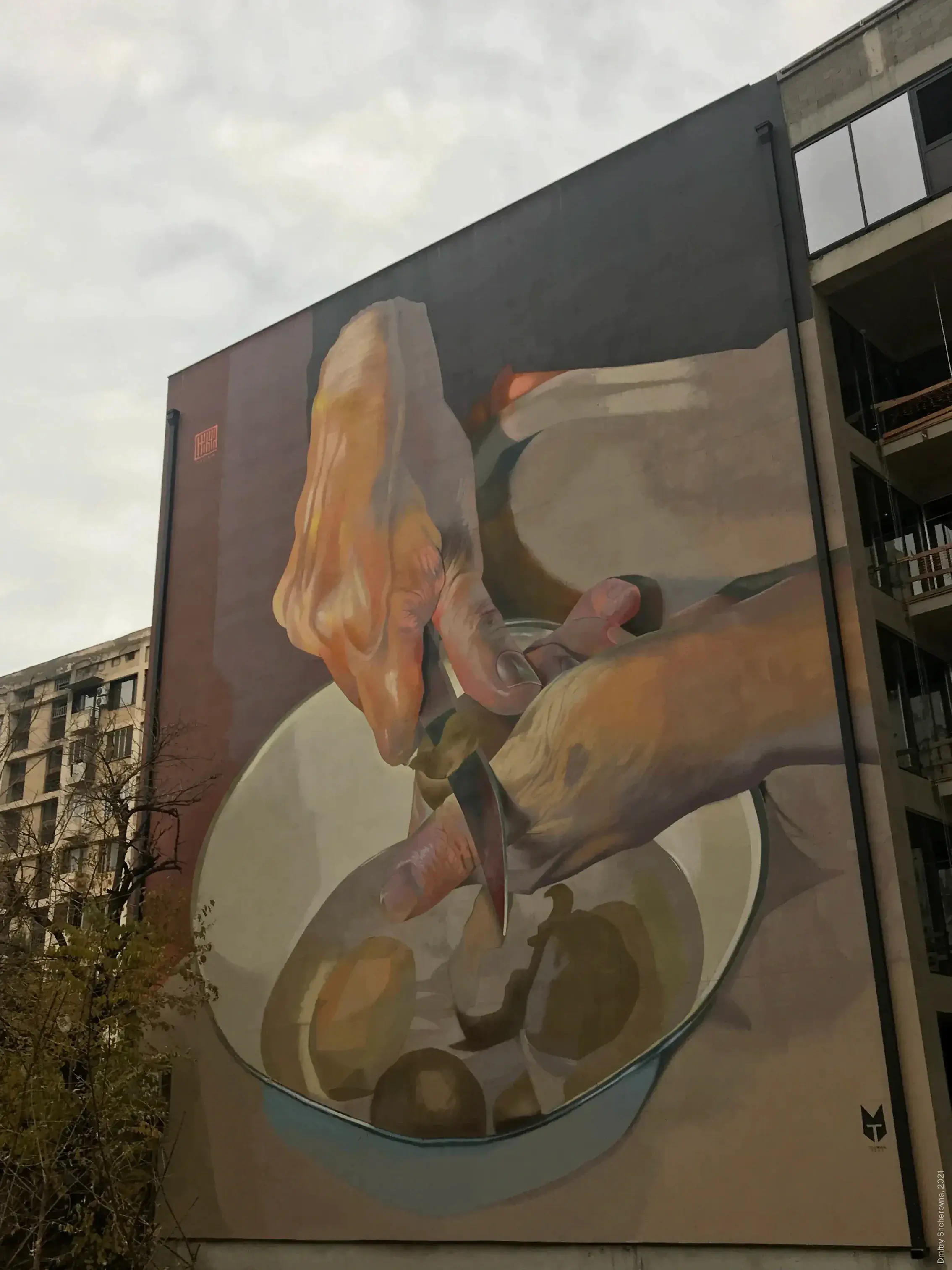
Everything began to take shape in the early 2000s, when affordable aerosol paints became widely available. What was initially perceived as vandalism and defacement of private property, over two decades, has shifted into something that the city increasingly recognizes as its own. Freedom of creativity is enshrined in the Georgian Constitution, but the walls that artists paint are either privately owned or belong to the city. This tension never fully disappears.
The widespread distribution of street art has prompted many countries to enact specific legislation regulating various aspects of this artistic phenomenon within public spaces. Public perception remains diverse: unauthorized tagging may face criticism, while commissioned murals are often widely embraced. Although some works remain unsanctioned, much of the contemporary mural scene operates through negotiated agreements with Tbilisi City Hall, which simultaneously supports festival initiatives and fines unauthorized work.
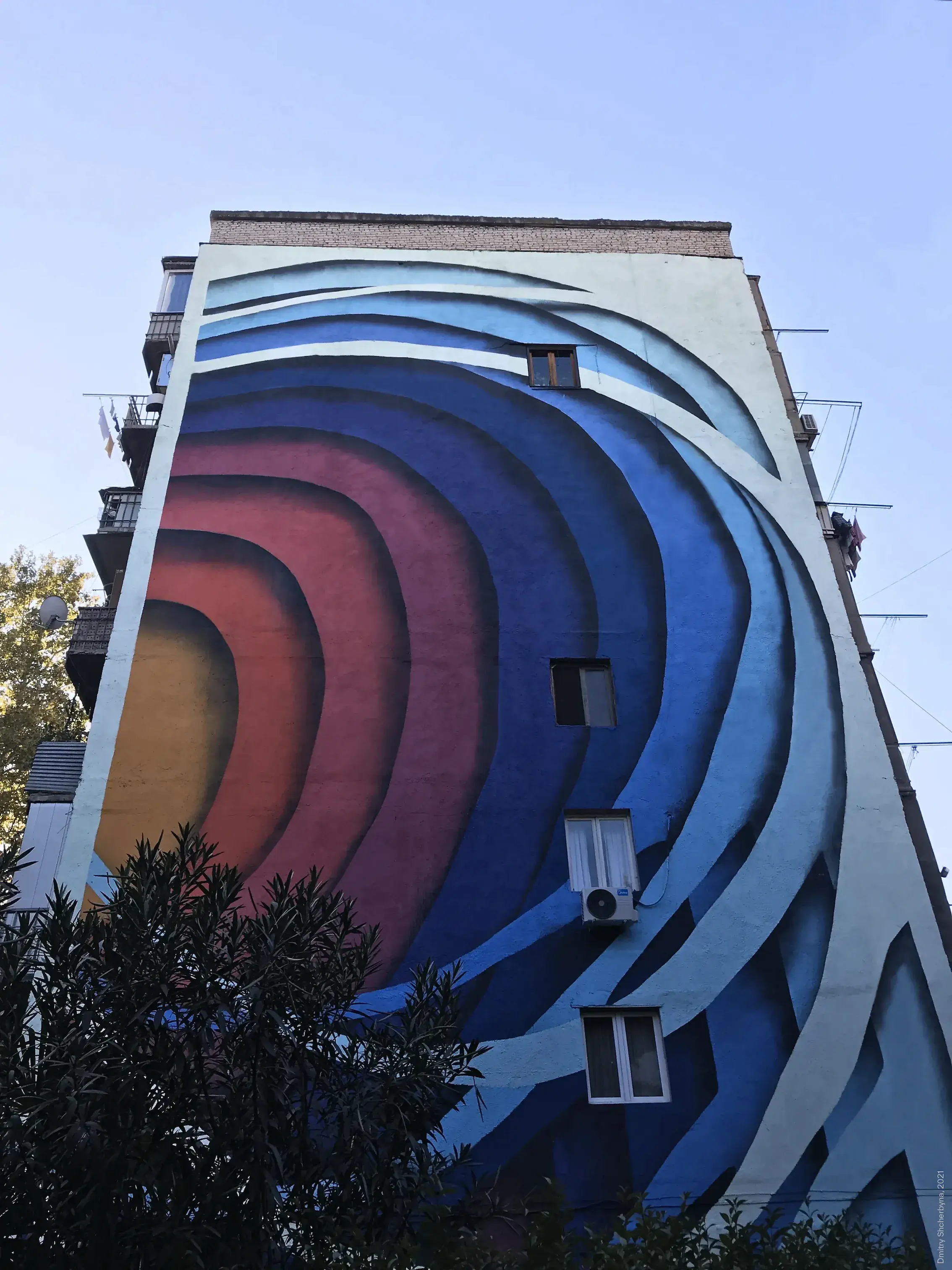
Though graffiti appeared earlier in isolated instances, meaningful growth came with organized projects expanding strongly after the 2010s.
Street art is already most noticeable in the capital, where some areas are defined more by their murals than by their architectural ensembles.
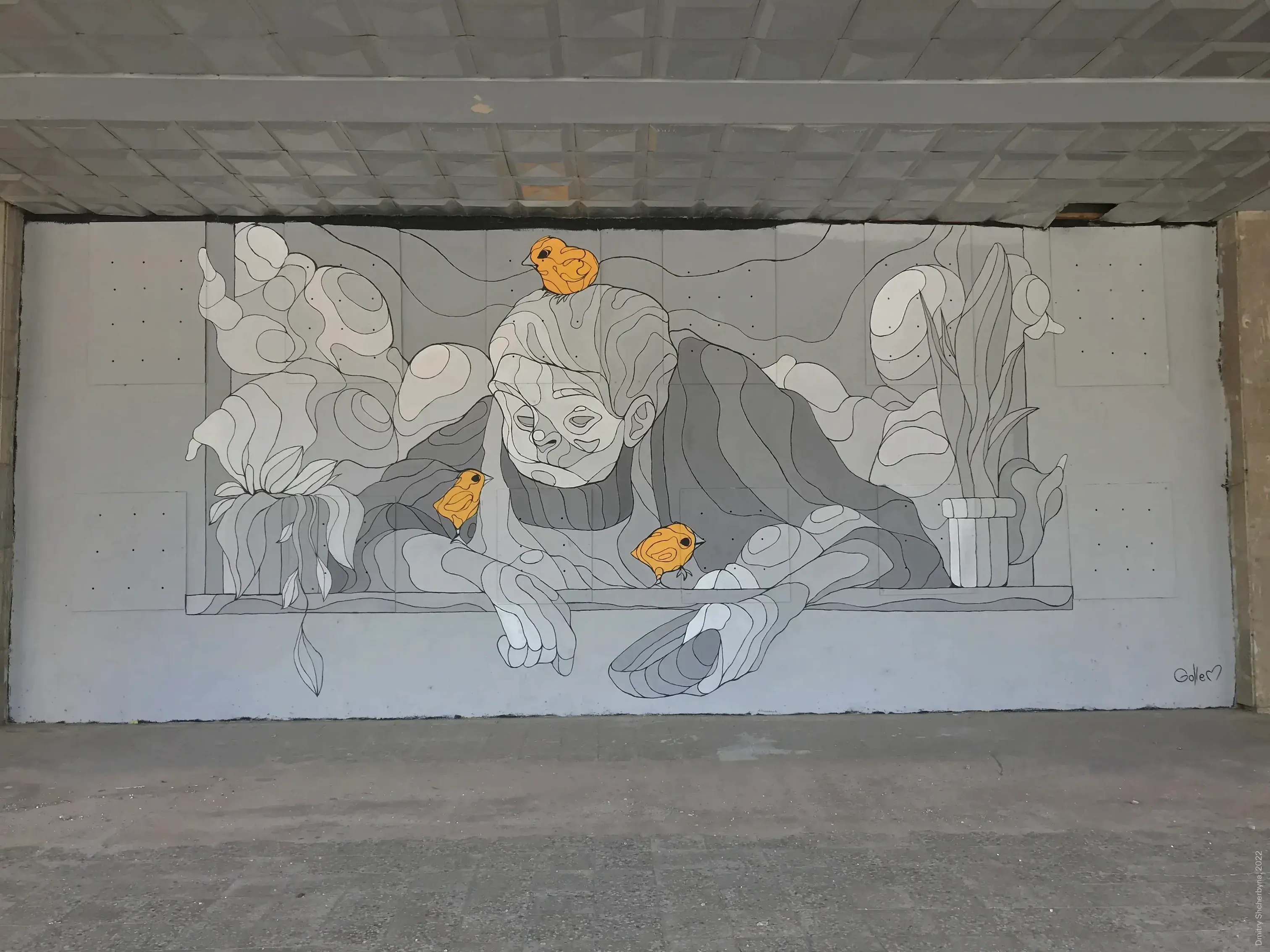
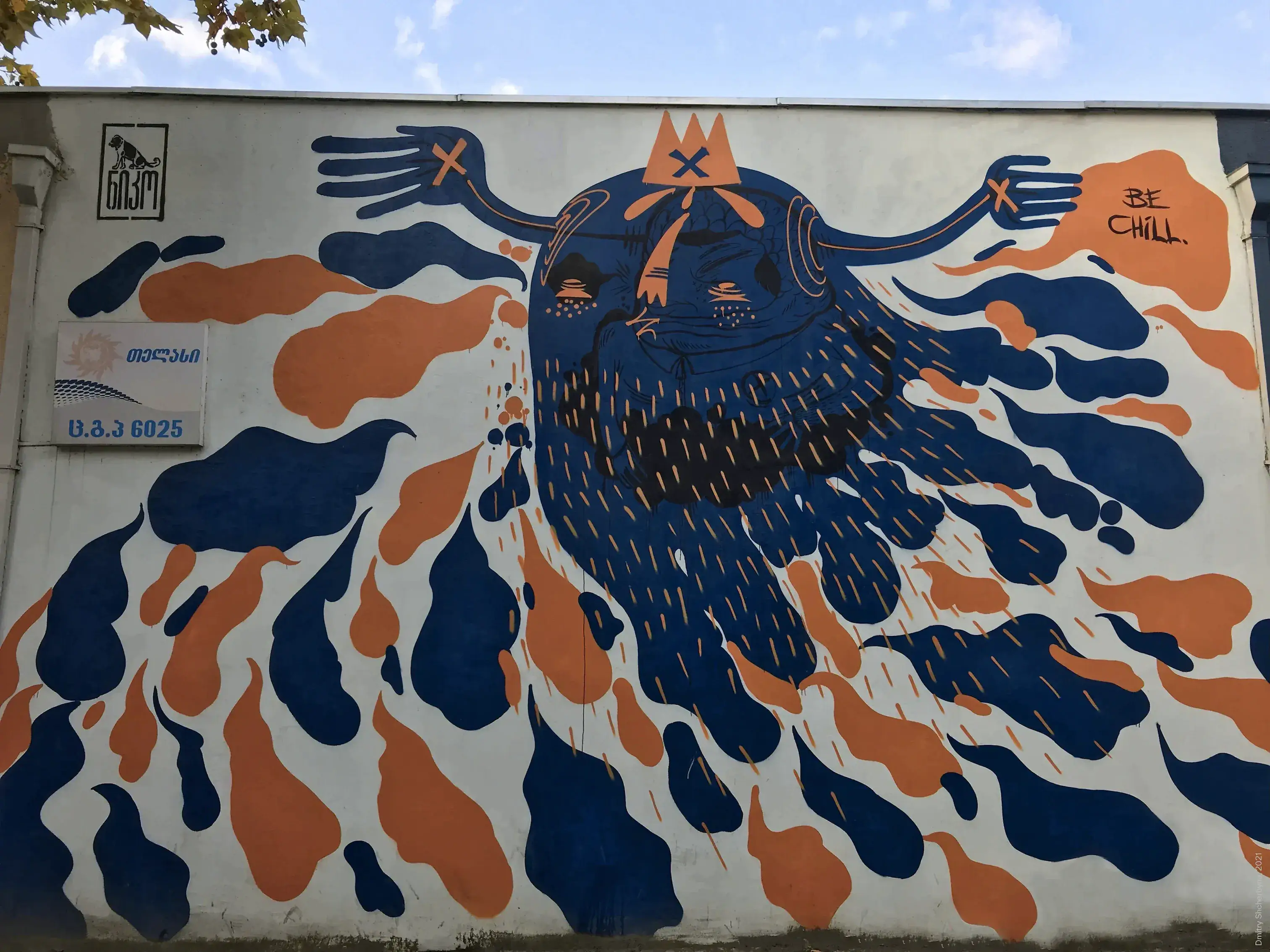
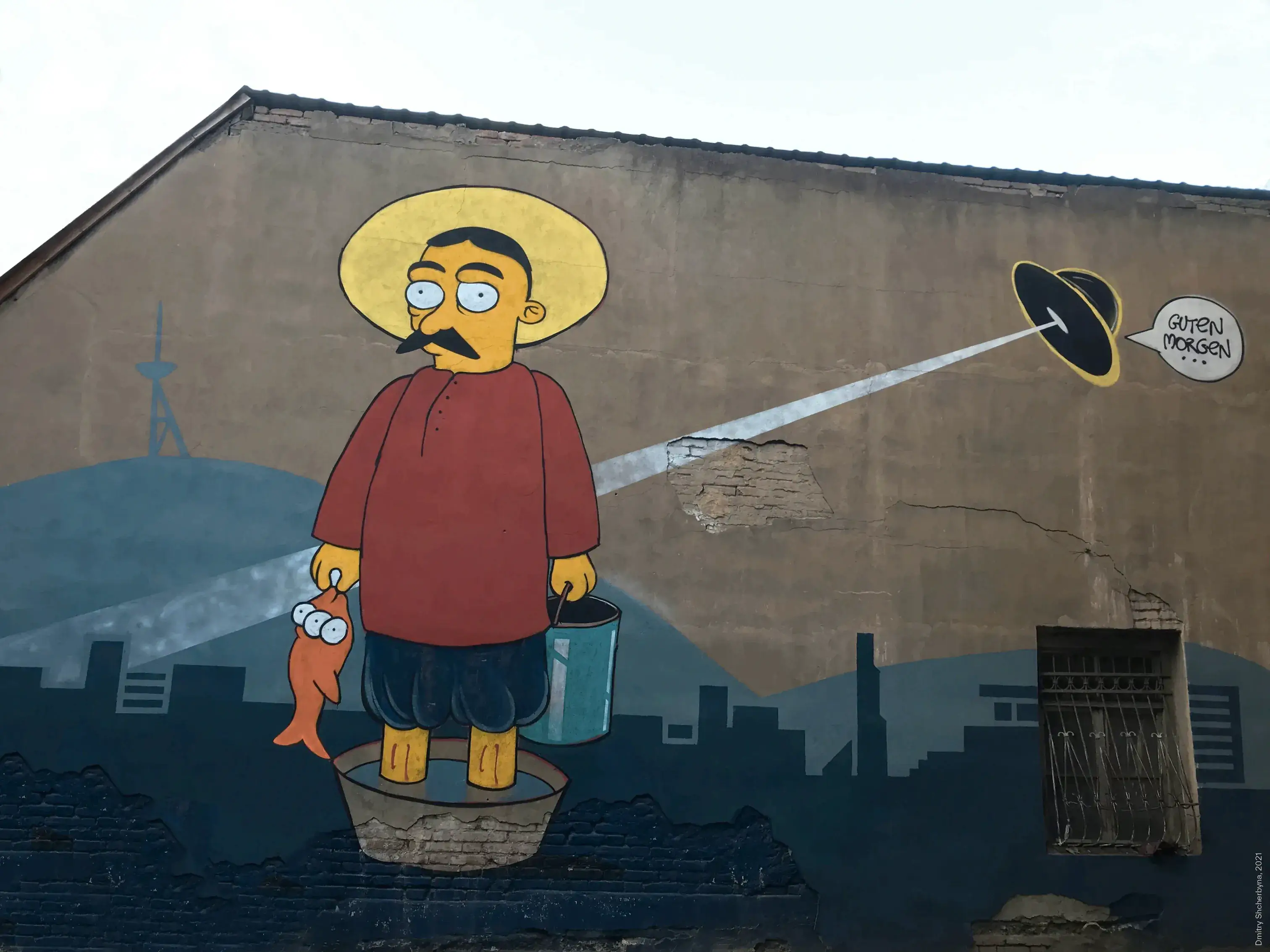
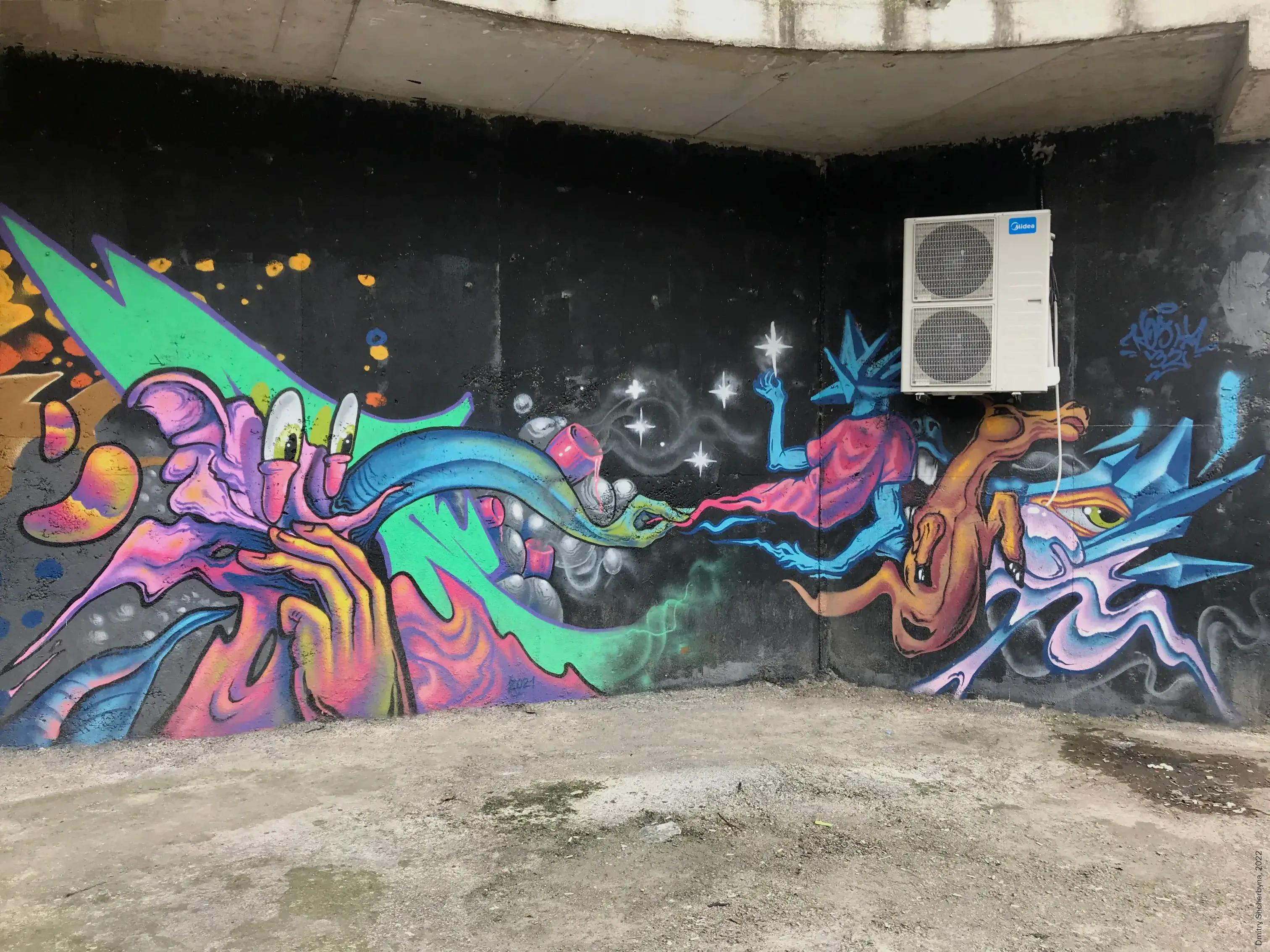
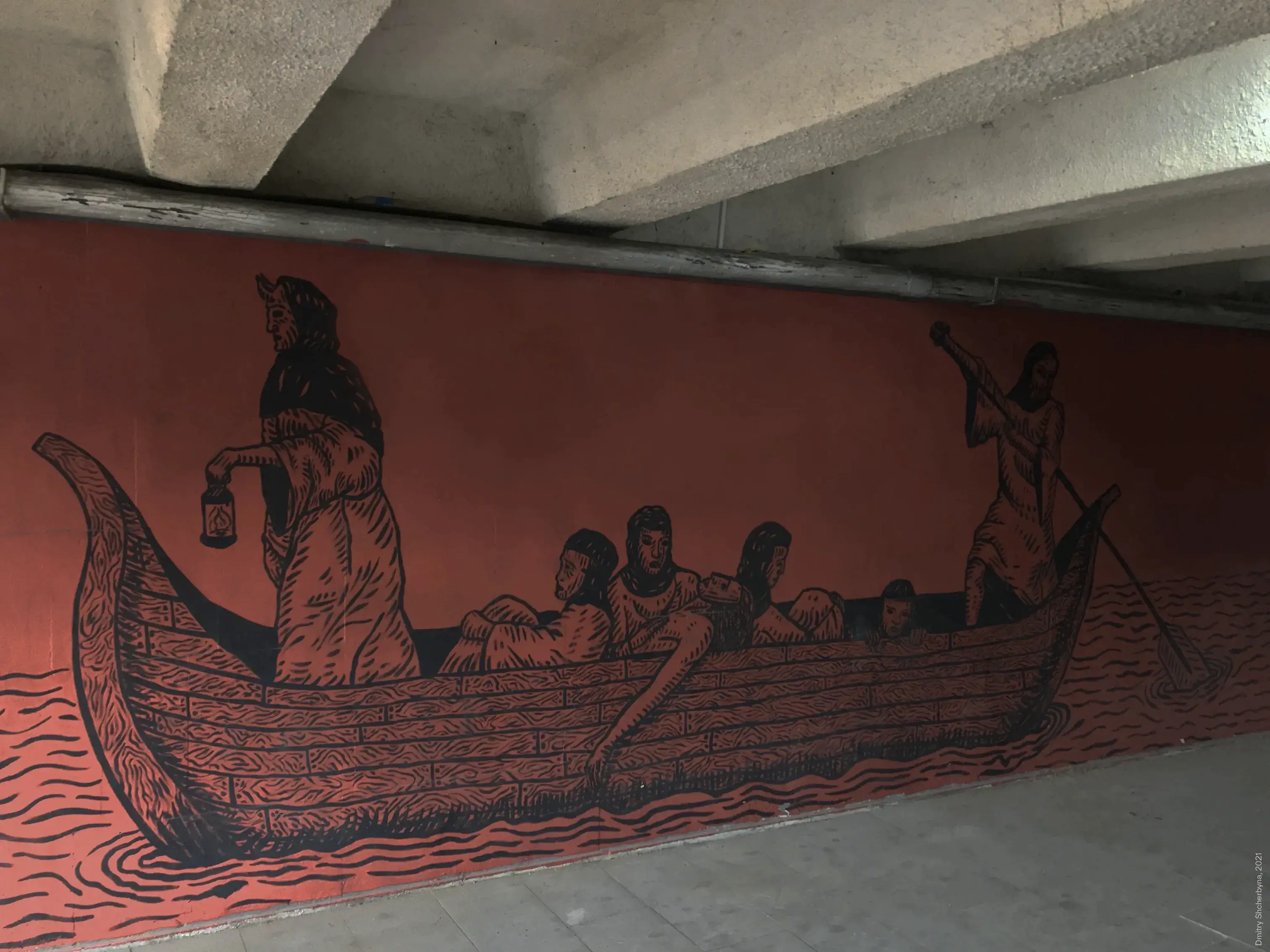
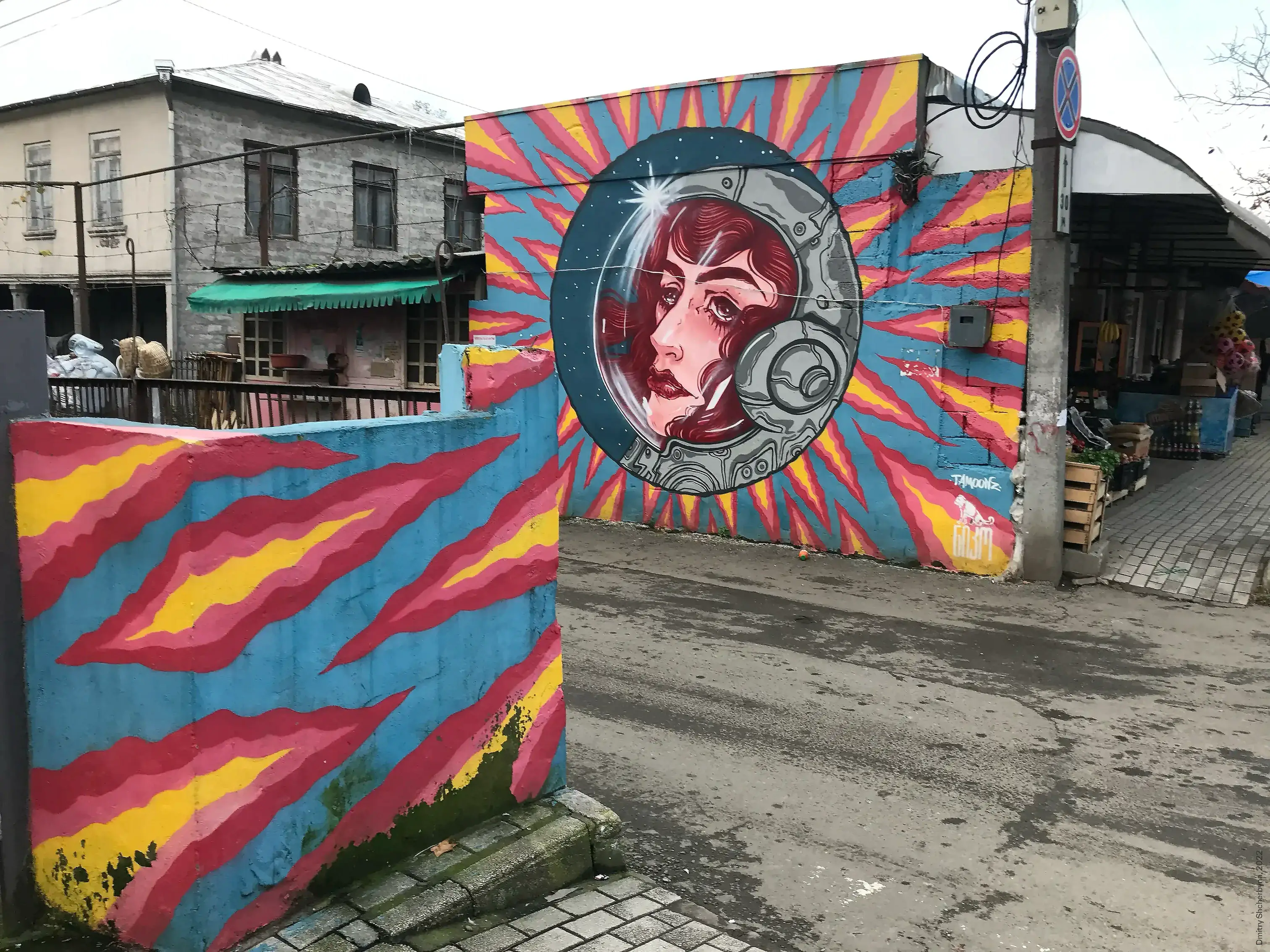
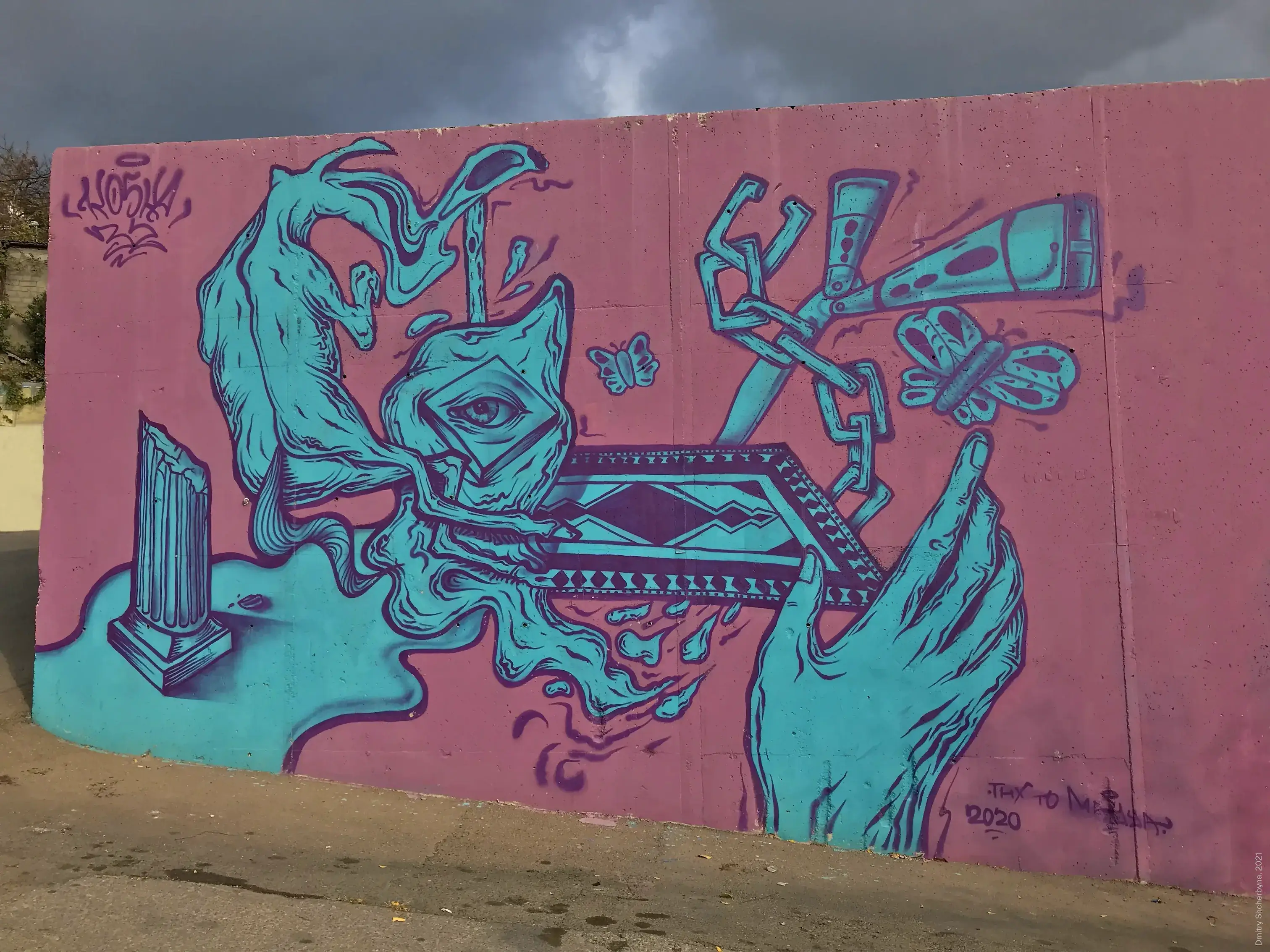
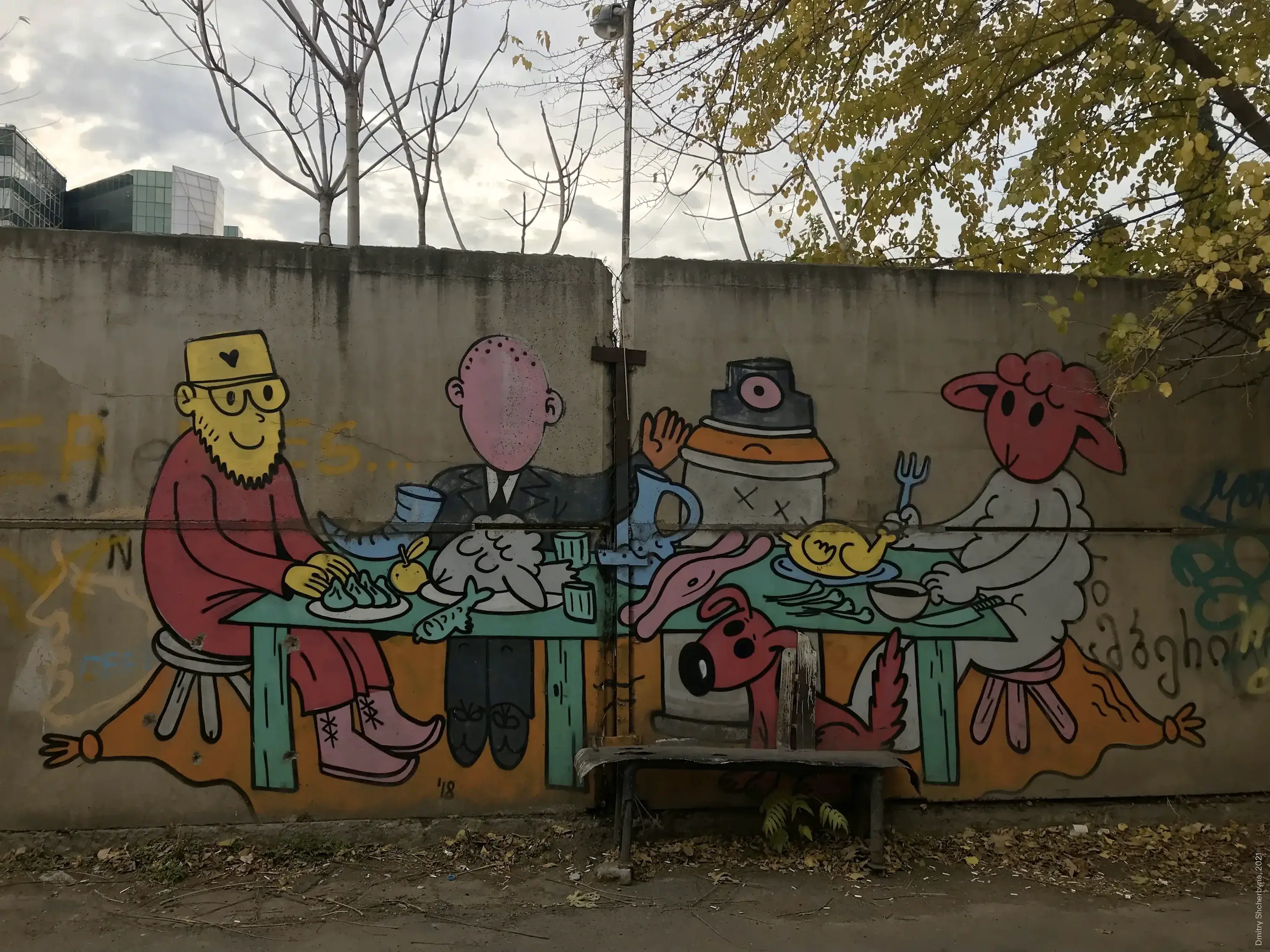
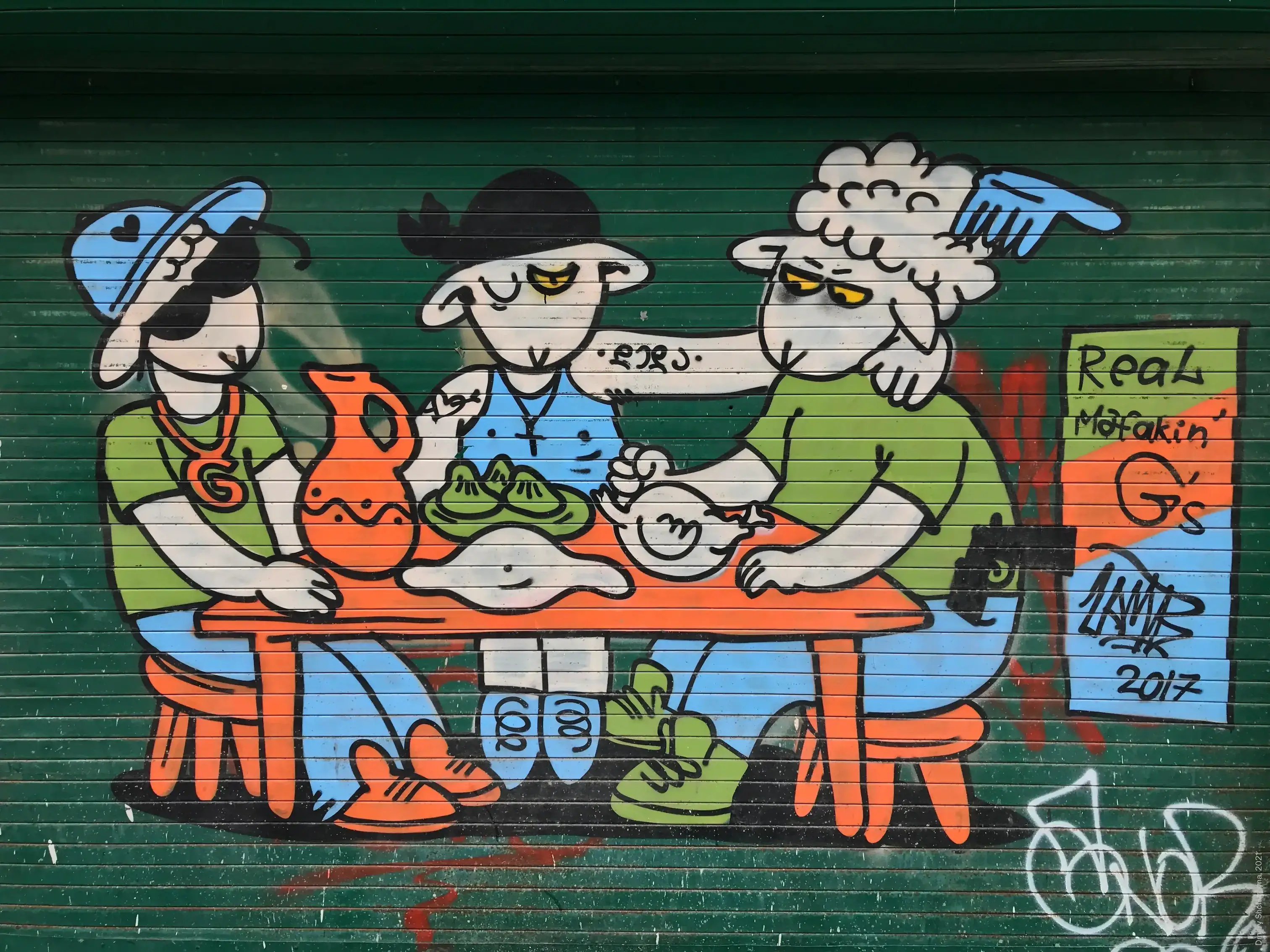
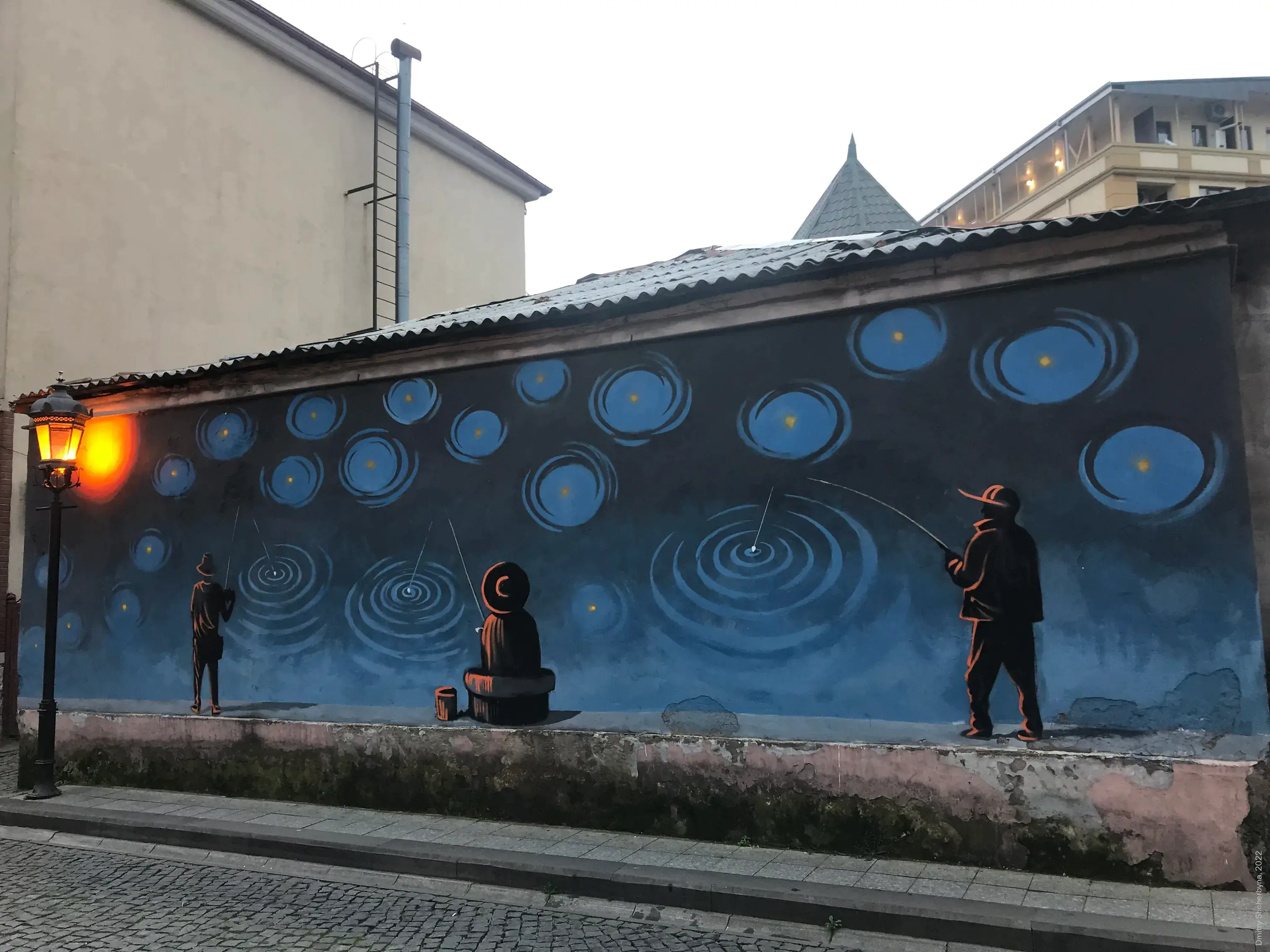
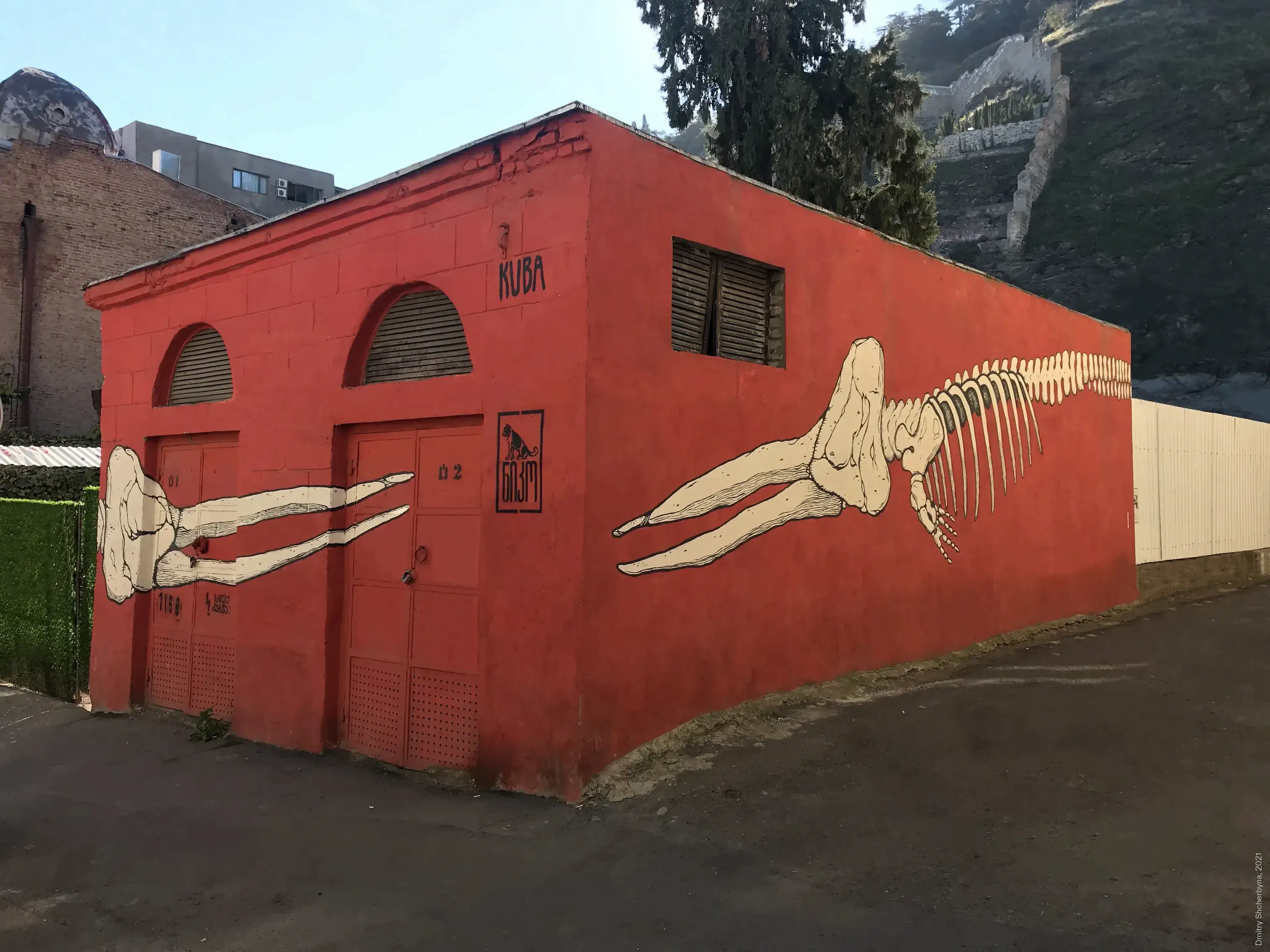
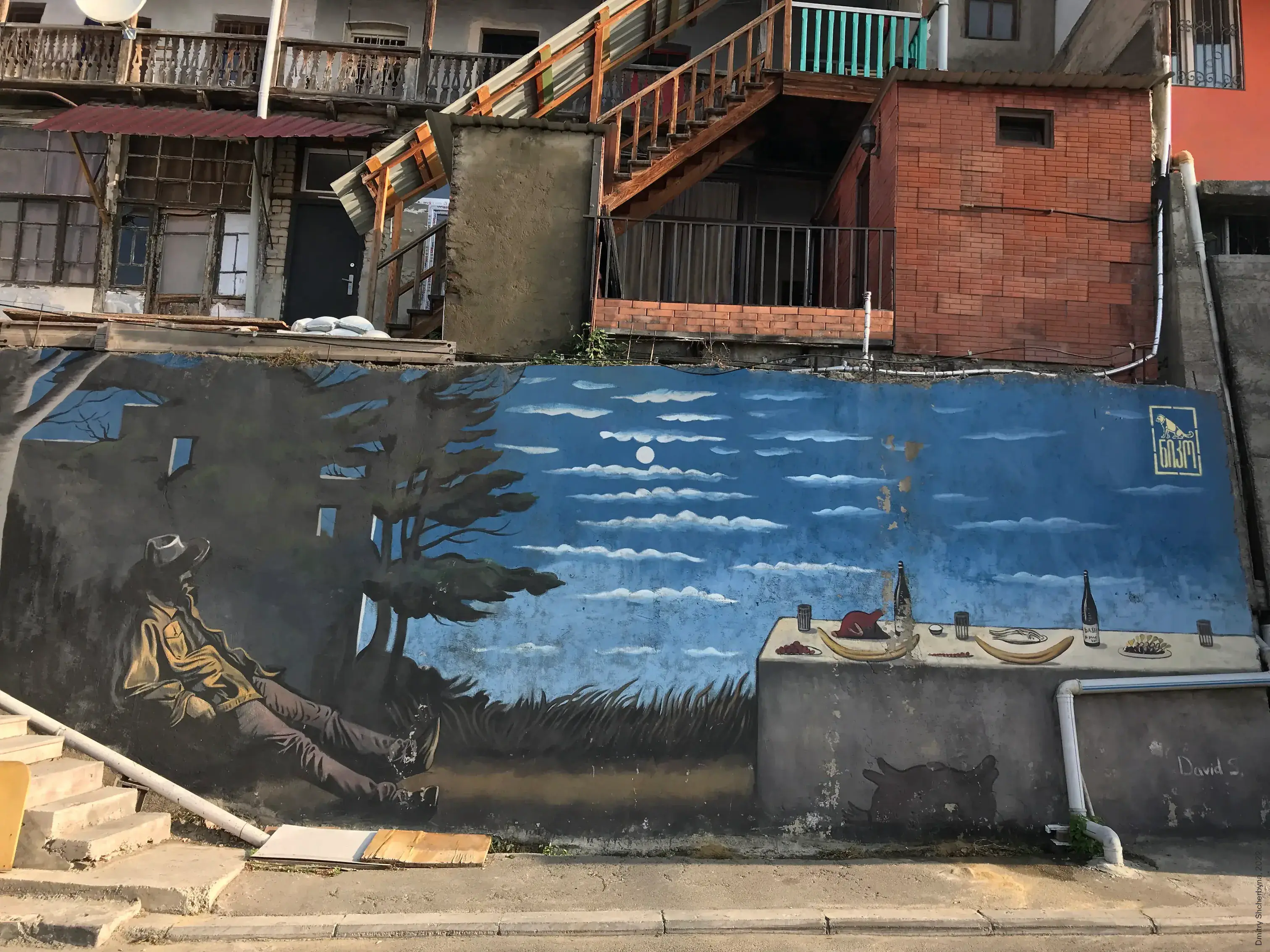
The tradition of bringing large-scale murals to working-class residential districts has roots in Latin America, where paint on concrete changed how people felt about the places they lived in. Tbilisi's outer districts like Varketili or Gldani have a similar logic: at sufficient scale, a mural becomes a landmark, a gathering point, a way of navigating the monotonous panel architecture.
The movement's rising popularity has attracted the interest of the private sector and local governments, which have sought to recruit artists for corporate and municipal projects. Tbilisi alone now counts well over a hundred murals, painted by both Georgian and international artists. What took root first in the capital is now steadily appearing, wall by wall, in cities across the entire country.
Street art can be found in cities such as Batumi, Kutaisi, Ozurgeti, Poti, and Rustavi. Its spread to other cities has also been reinforced by organized initiatives. One example is the “Batumi Grafikart Festival”, launched in 2013 and supported by the Adjara Ministry of Culture and Batumi City Hall, which played an important role and became a catalyst in the early development of the local scene.
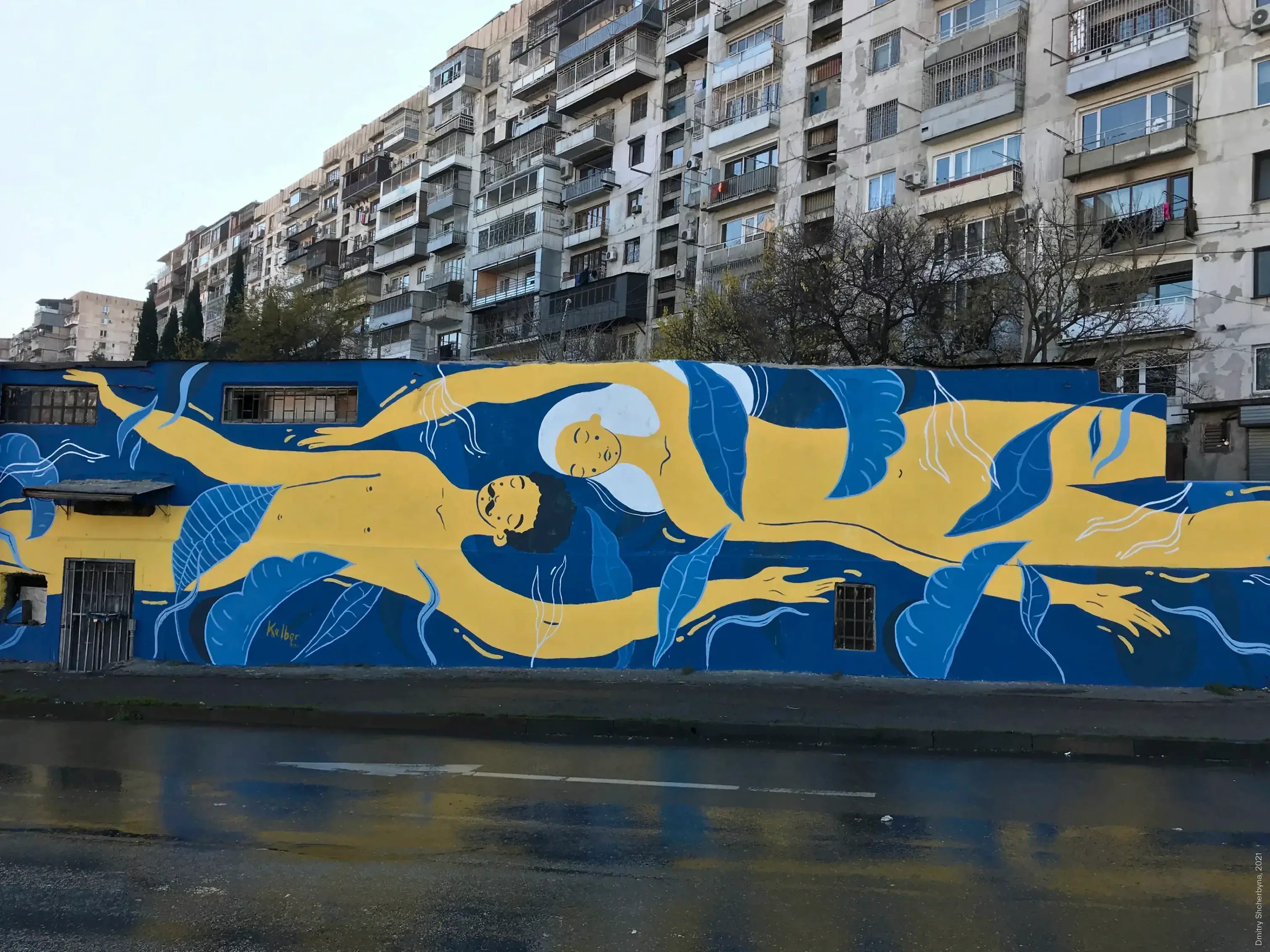
Despite the diversity of authorship within the local street art scene, there may be little contextual information that could provide the basis for interpretation. Some street artists conceal their identity, thus making it more difficult to trace continuity in themes and style. Questions of meaning are further complicated by the relationship between subject matter and informal boundaries of tolerance: sensitive or political content faces stronger control, while less confrontational works pass relatively unnoticed.
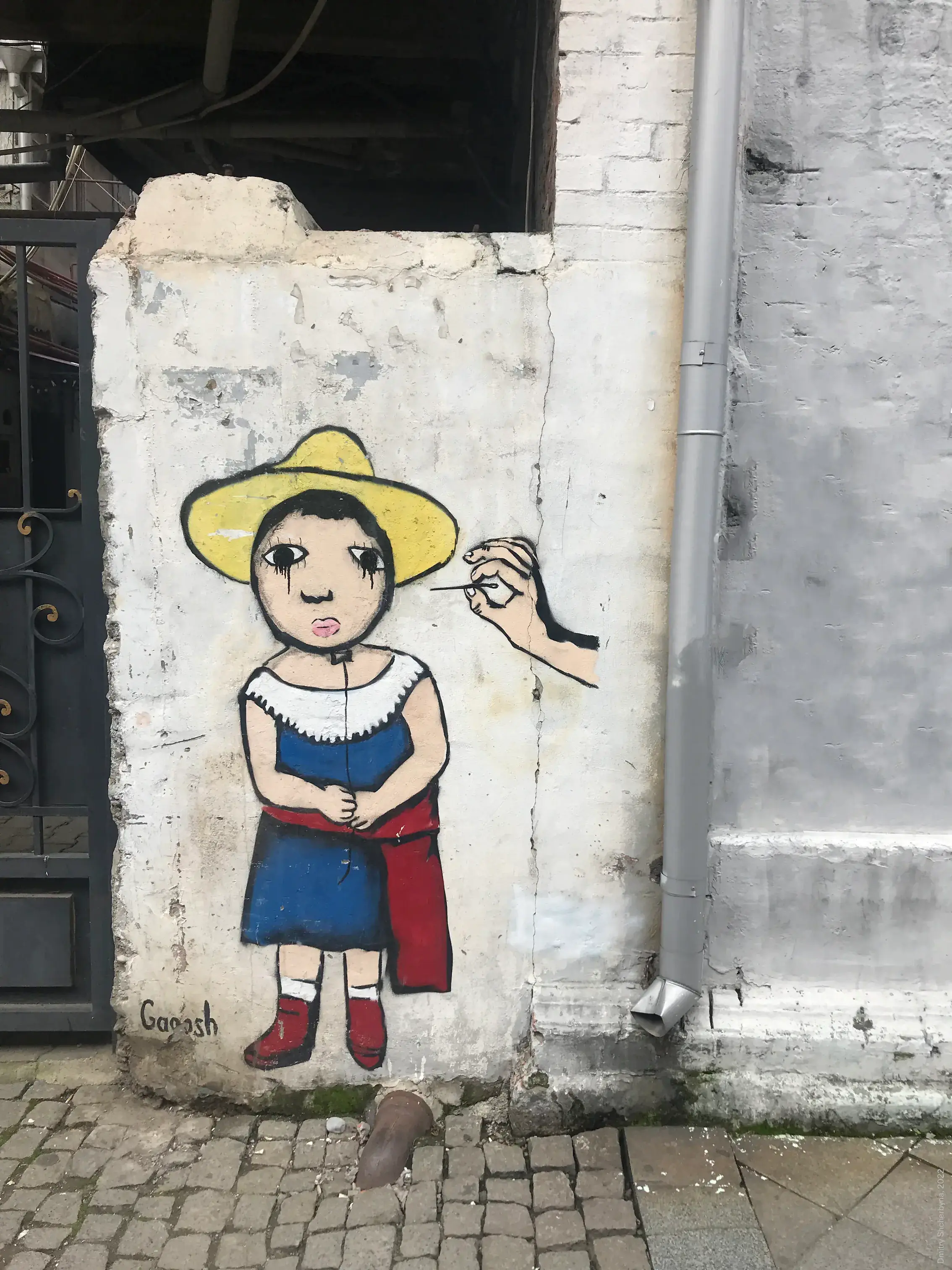
As Gagosh, one of the pioneers of Georgian street art, put it, “If you draw flowers, no one will come and fine you.” In this sense, subject matter itself shapes the conditions under which street art is produced and received.
These challenges don't diminish the role street art plays in the urban environment. Anonymity, meanwhile, can create space for self-expression that might otherwise remain constrained by social or institutional pressure.
Since gaining independence from the Soviet Union in 1991, Georgia has sought to reclaim its cultural identity. Across the Soviet Union, mosaics functioned as instruments of urban design and ideological storytelling, turning public spaces in nearly every city and town into surfaces for large-scale state-commissioned imagery that glorified the future of the communist society.
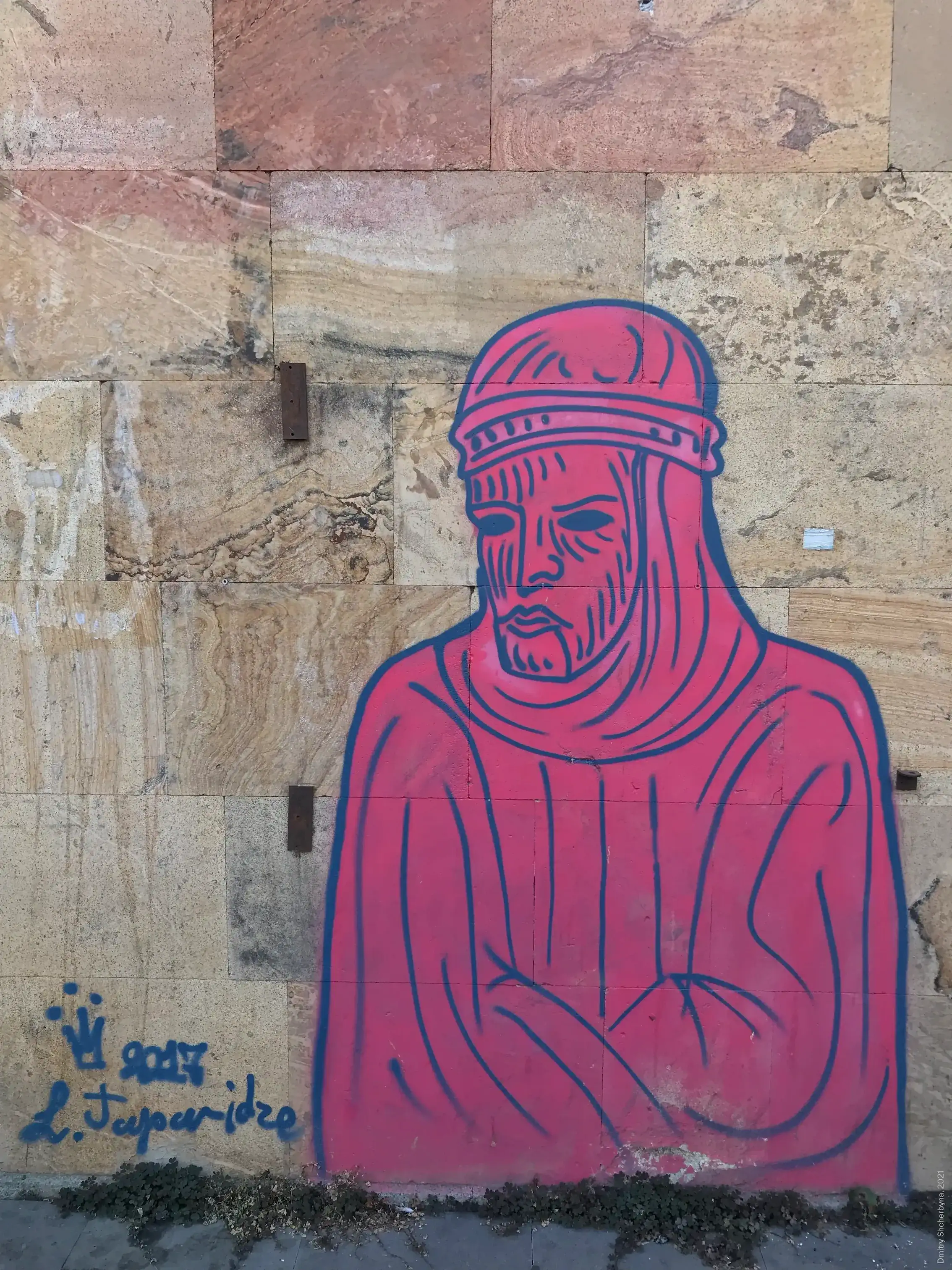
Soviet visual culture used state-commissioned mosaics as propaganda tools that didn't wear out much, making them more durable for ideological meaning. Contemporary murals are typically paint-based, temporary, and artist-initiated.
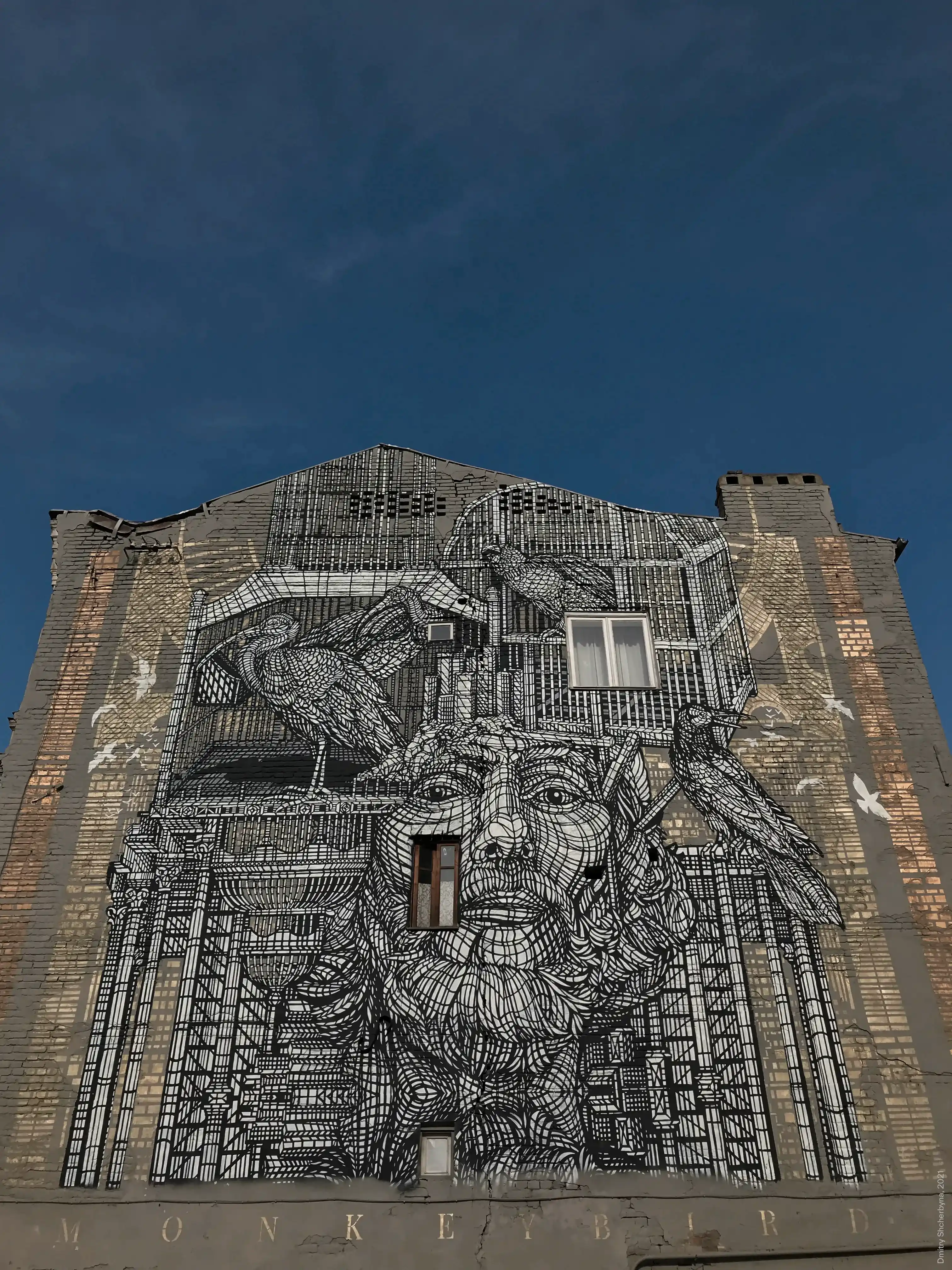
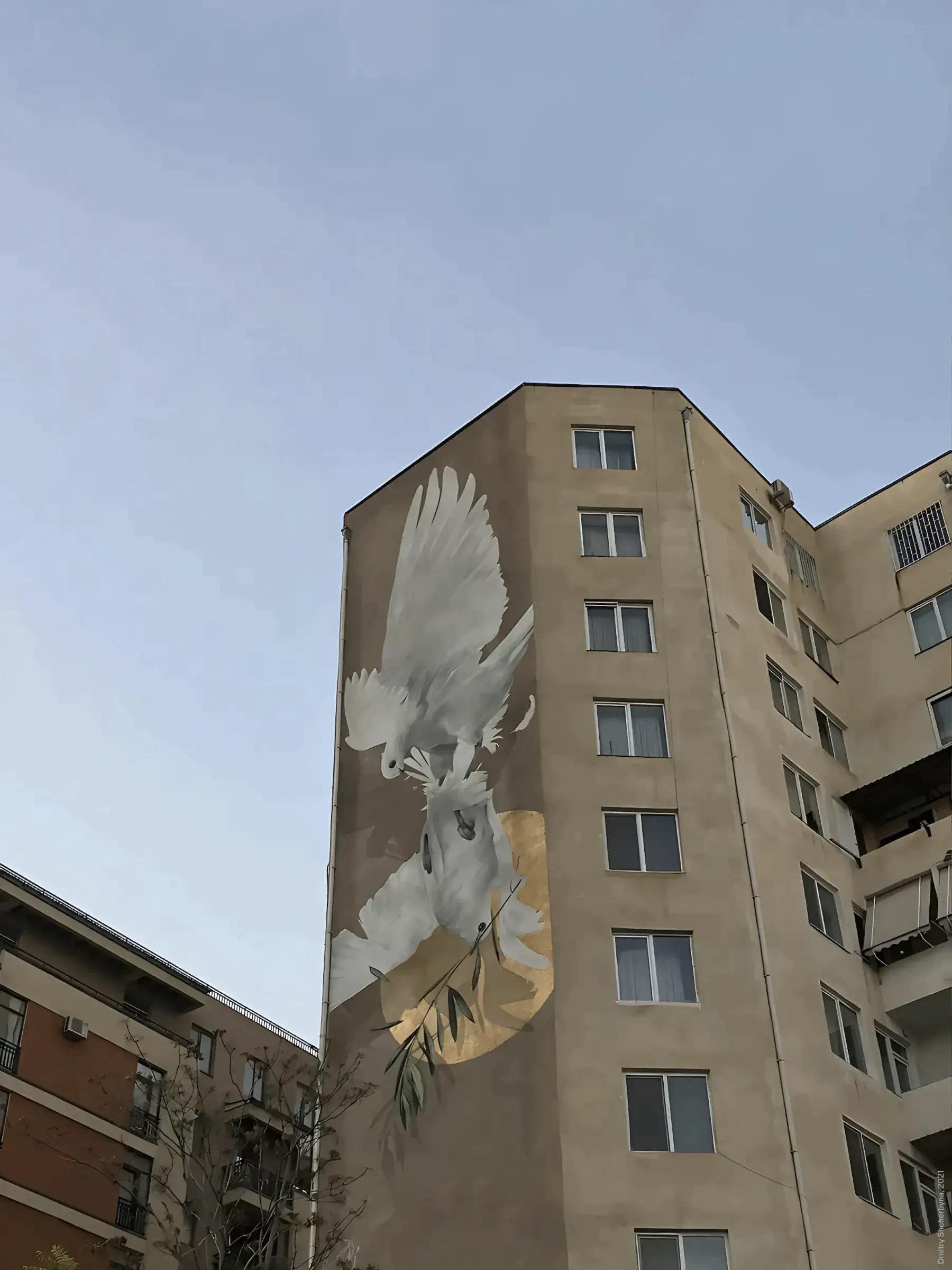
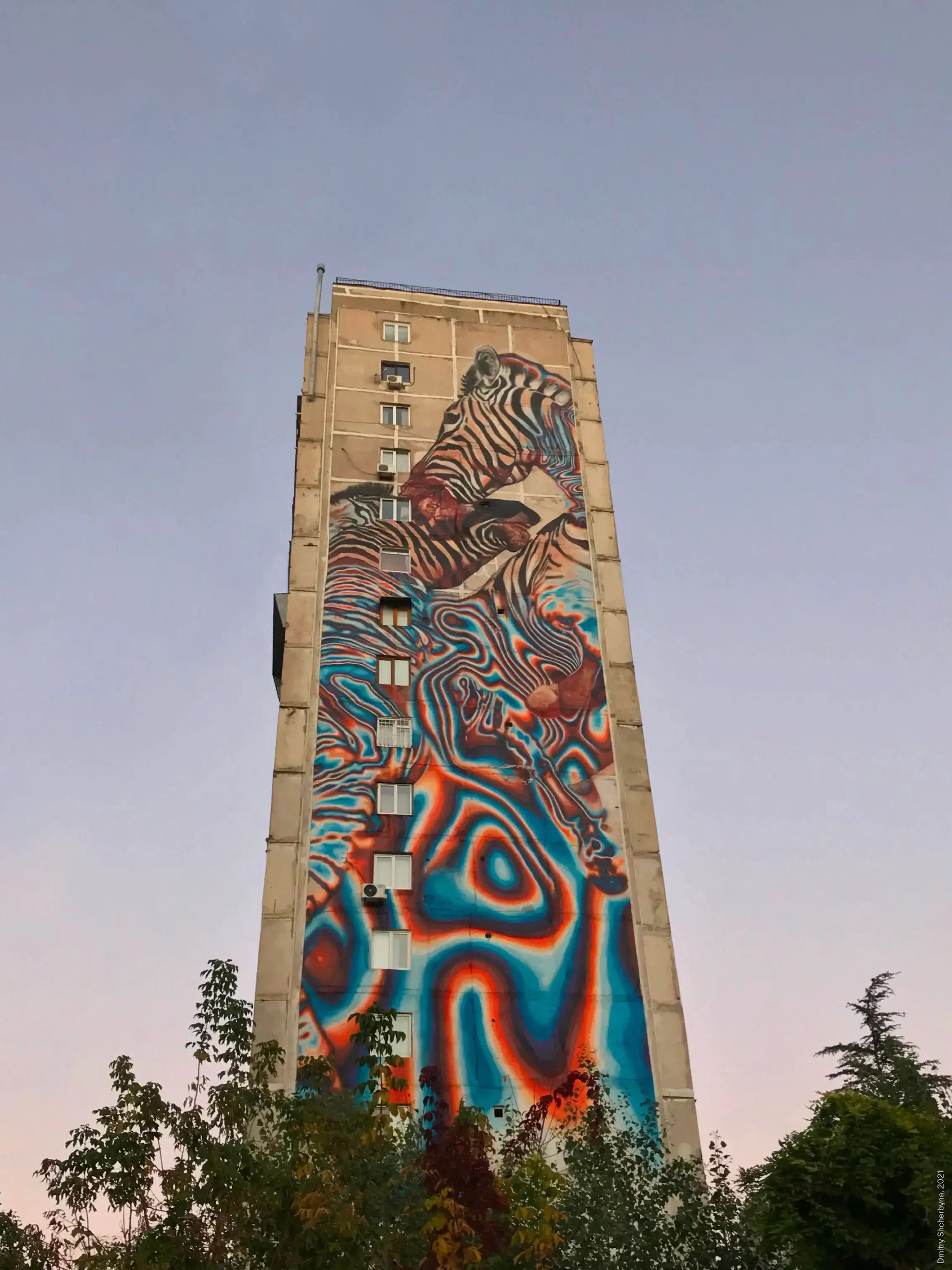
For Georgia, public art carries a particular weight. After decades of Soviet-imposed visual culture, the ability to put one's own image on a building's facade is not a neutral act in a country where those surfaces once belonged entirely to the state. What appears as decoration is often also a statement about who gets to shape the image of a city today.
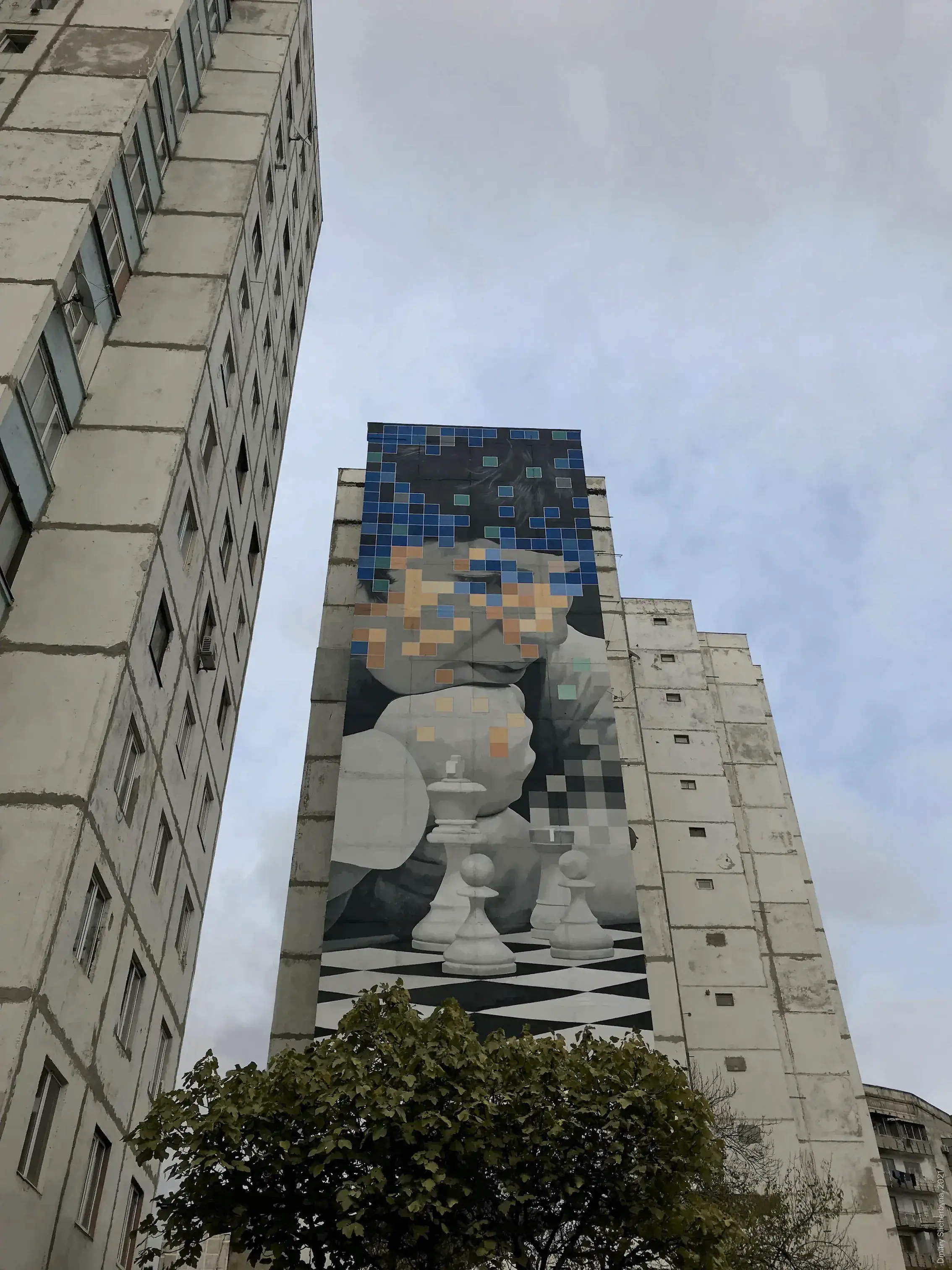
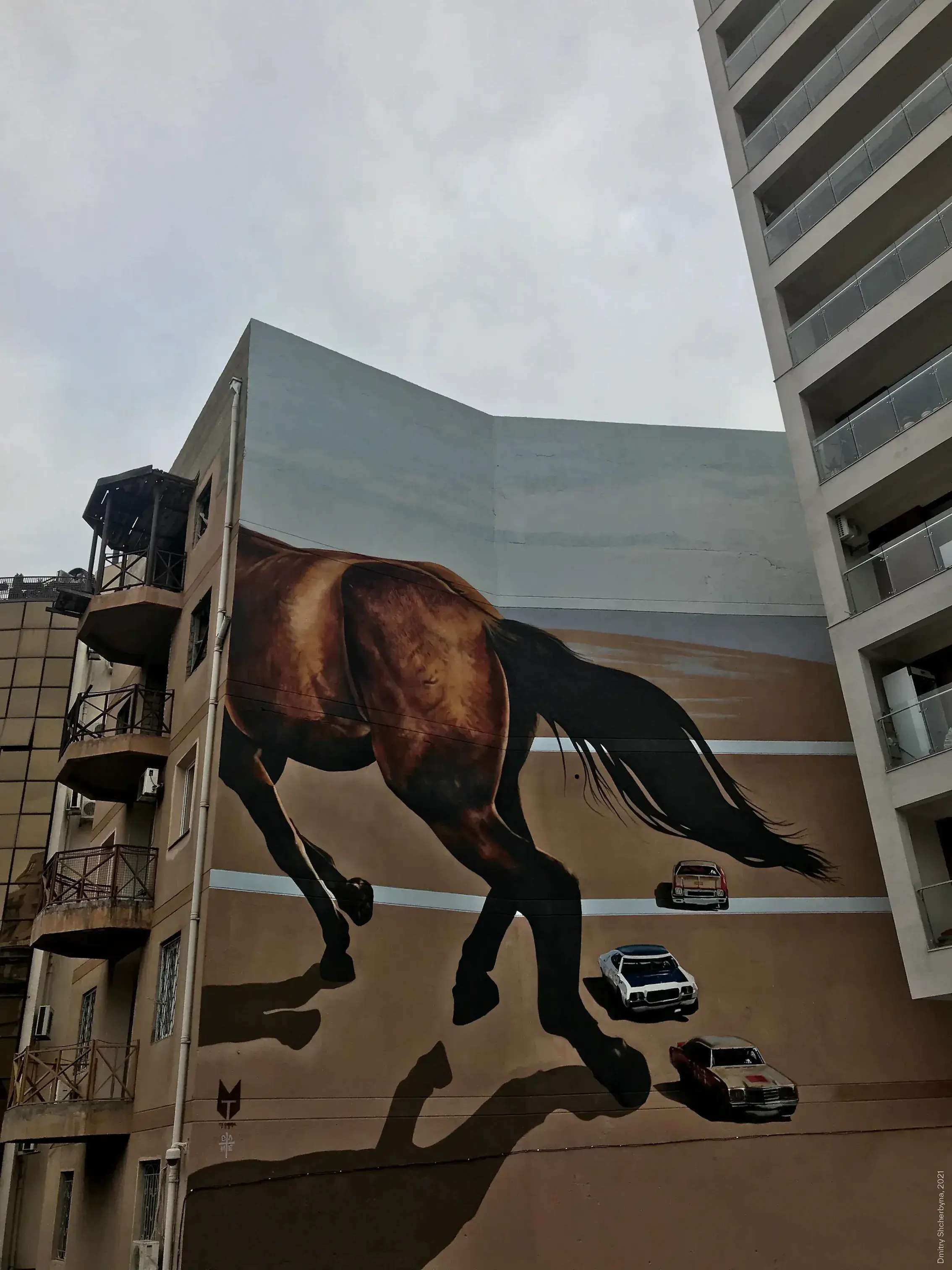
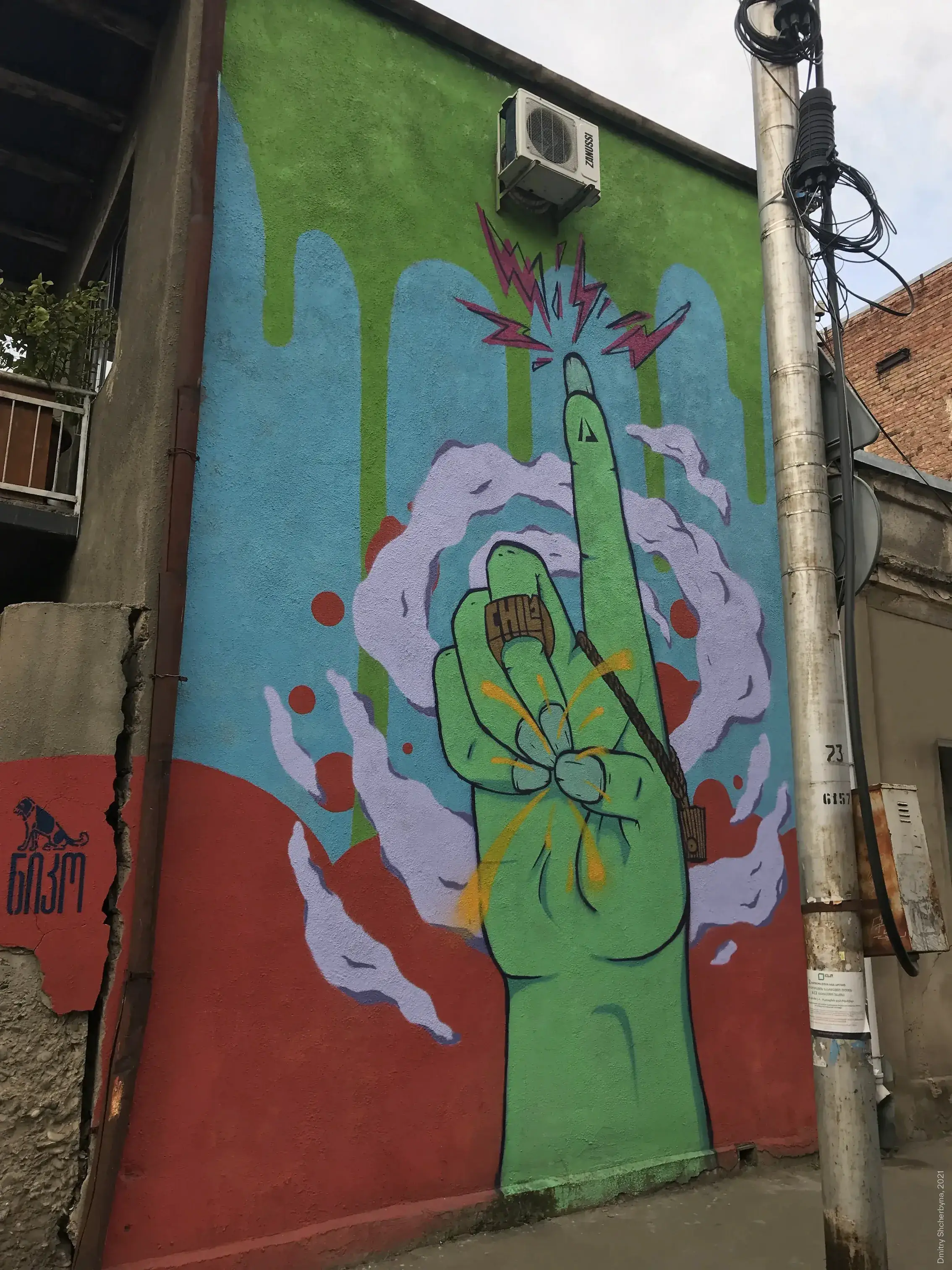
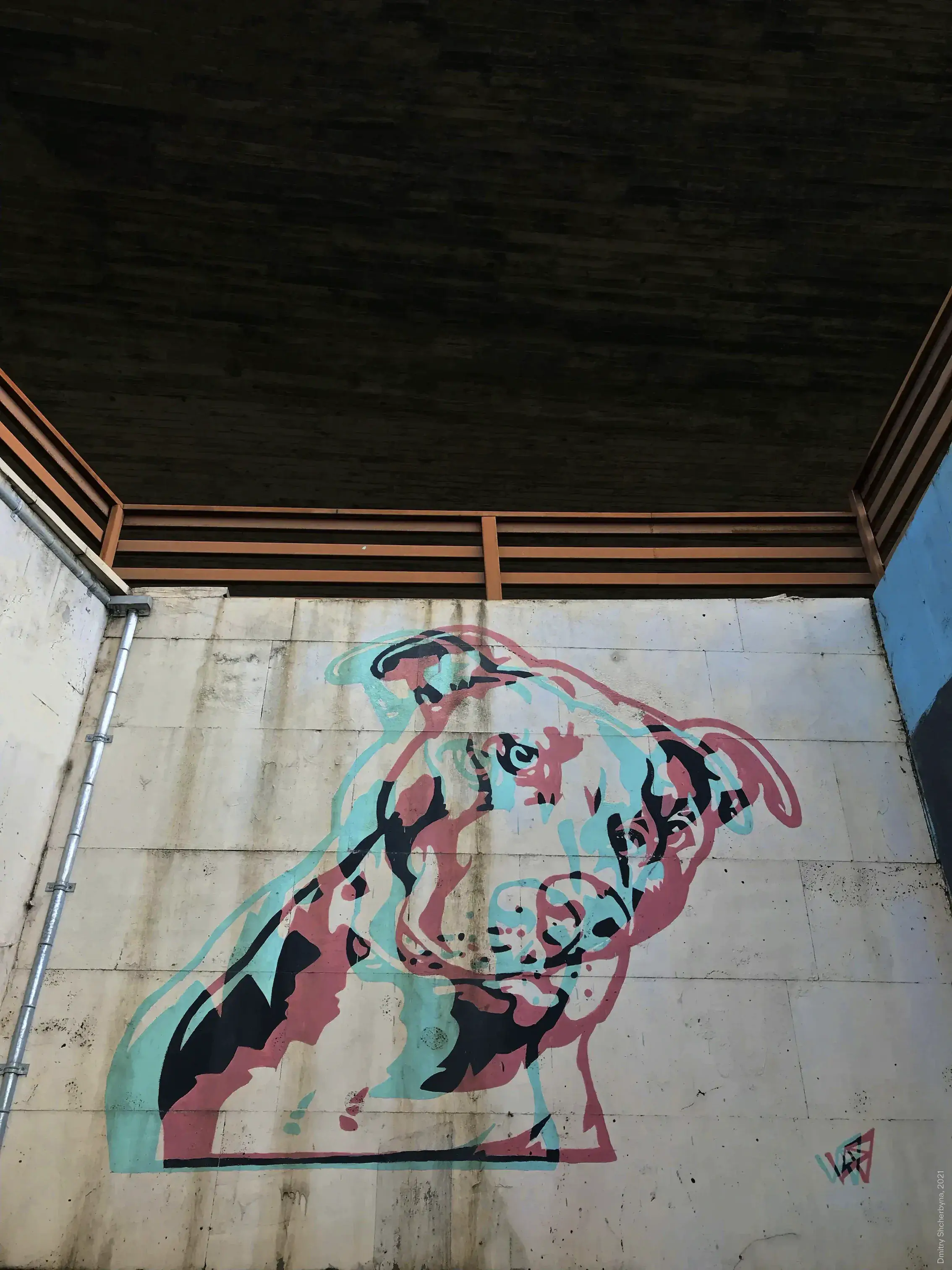
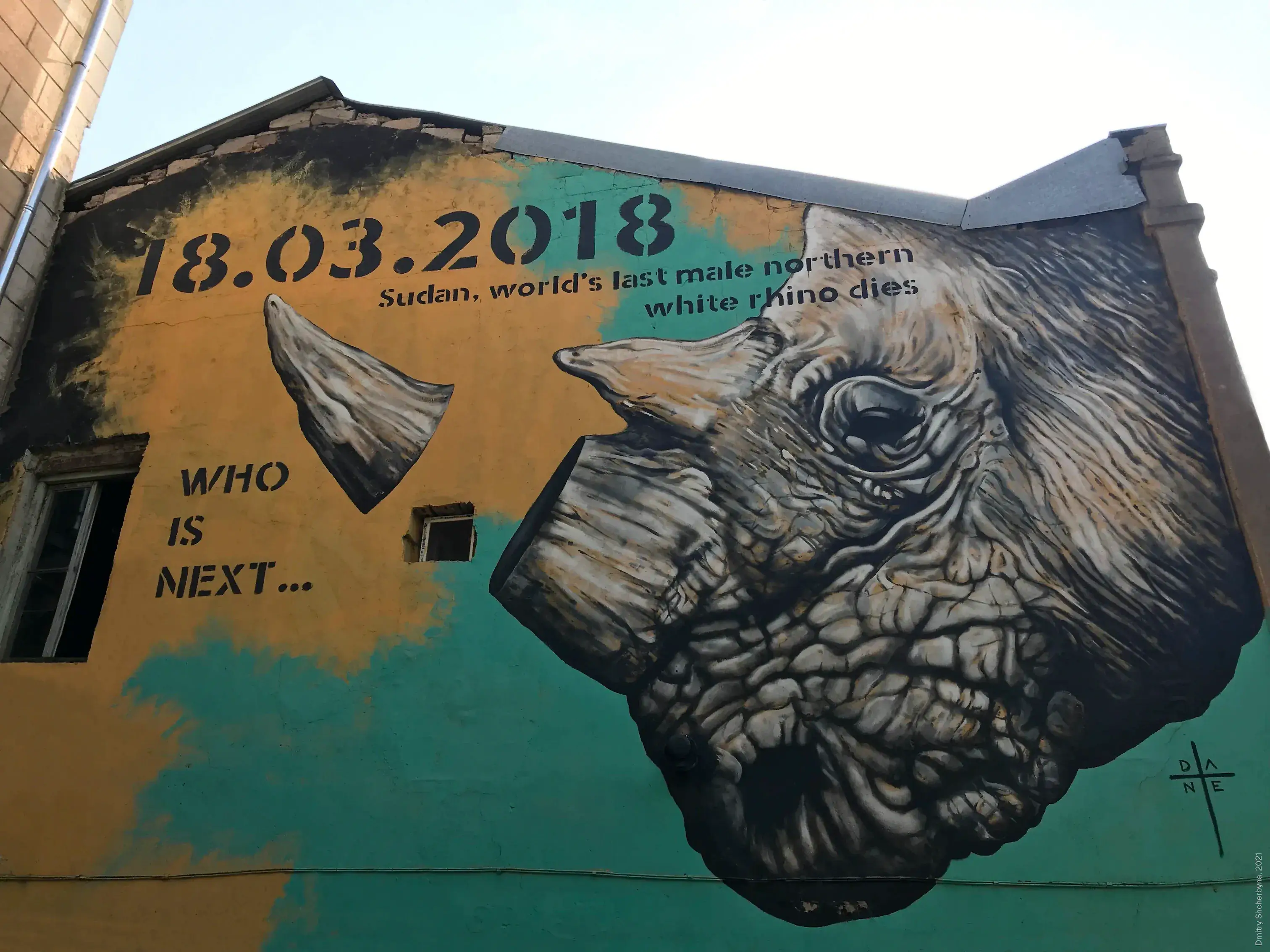
Broader cultural transformations find their most visible and concrete expression through festivals and initiatives dedicated to public art.
Georgia hosted its first “Tbilisi Mural Fest” in 2019, founded by Besik Maziashvili with the support of the Berlin Senate and the Tbilisi City Hall, to give the local mural scene international visibility. It is an annual event that invites artists from across the globe to paint large-scale murals on buildings and walls. In addition to the murals, the festival hosts lectures and exhibitions to foster a deeper understanding and appreciation of street art culture. It features a diverse range of styles, techniques, and themes — from lifelike portraits and abstract designs to political messages and humor. The festival welcomes artists, including celebrated muralists, to take part in its events, but at the same time, it actively supports local established and up-and-coming talent, offering them a unique platform. It typically takes place in autumn over a period of several weeks. During this time, visitors have the opportunity to witness the creative process up close, engage with artists, and participate in public events like panel discussions and open workshops.
The organizers emphasize that the primary goal of the festival is to foster community engagement, encourage cultural dialogue, and facilitate creative exchange while also enhancing the urban environment and leaving a legacy for the city. Since its inception, the festival has drawn increasing attention from international media, art professionals, and cultural tourists, establishing itself as a recurring fixture on the region's cultural calendar. In 2023, the festival received the “Guardians of Tolerance” award within the “Unity Through Diversity” program implemented by UNA Georgia — recognition of its sustained efforts in promoting diversity, inclusion, and tolerance through public art. The 2024 edition attracted international coverage while producing more than twenty new murals across five Georgian cities, marking the “Tbilisi Mural Fest” expansion beyond Tbilisi. Some of these works have drawn on history, mythology, and regional traditions, connecting mural practice to the specific cultural memory of each carefully selected location.
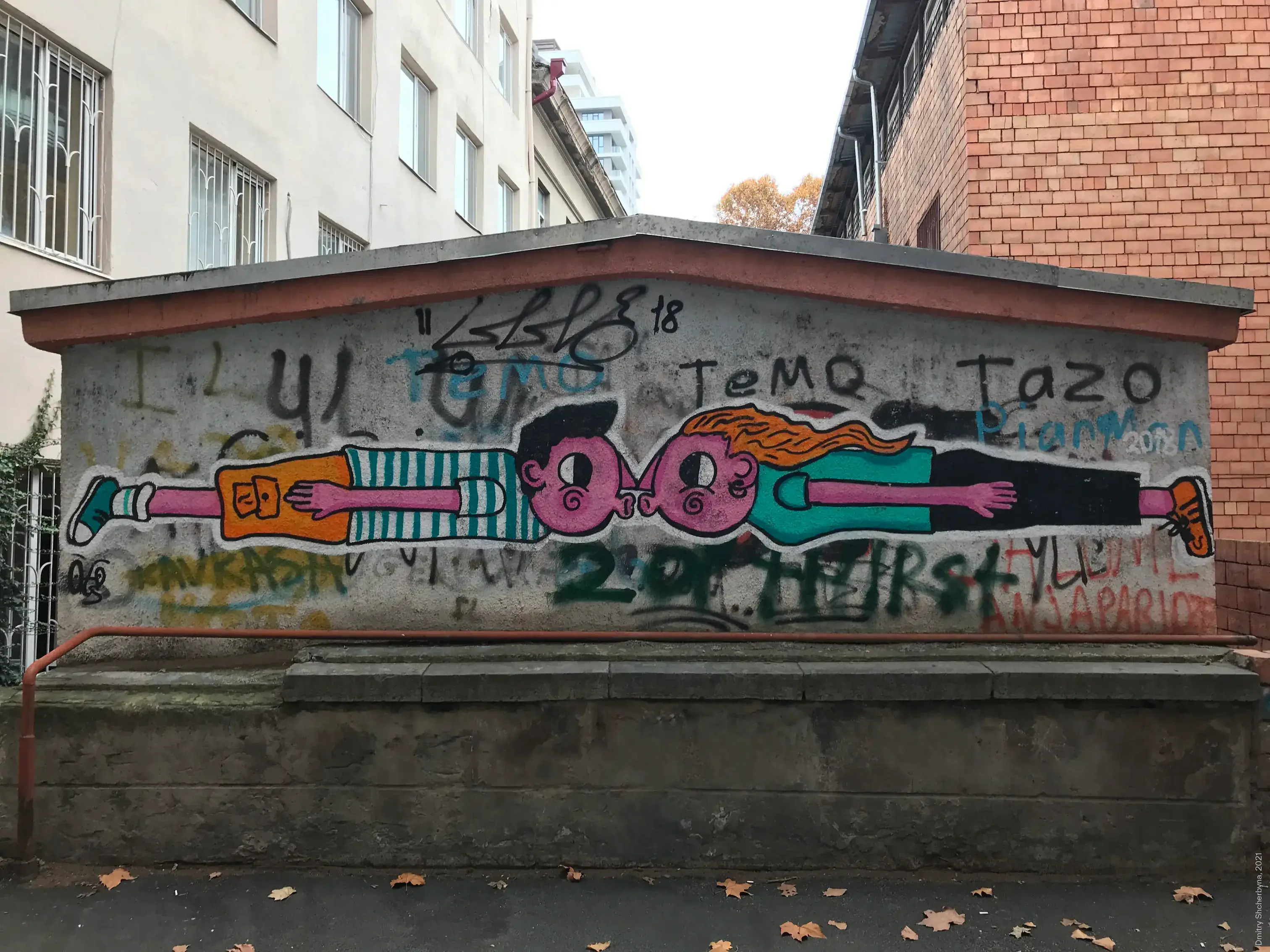
Unlike a gallery or museum, a mural requires no ticket, no invitation, and no detour from daily life. It meets people where they already are — including those who would never otherwise walk through that door.
This kind of incidental exposure has its own quiet value. Encountering ambitious, large-scale work gradually shapes visual literacy and cultural expectations through repetition and presence in citizens' daily routines.
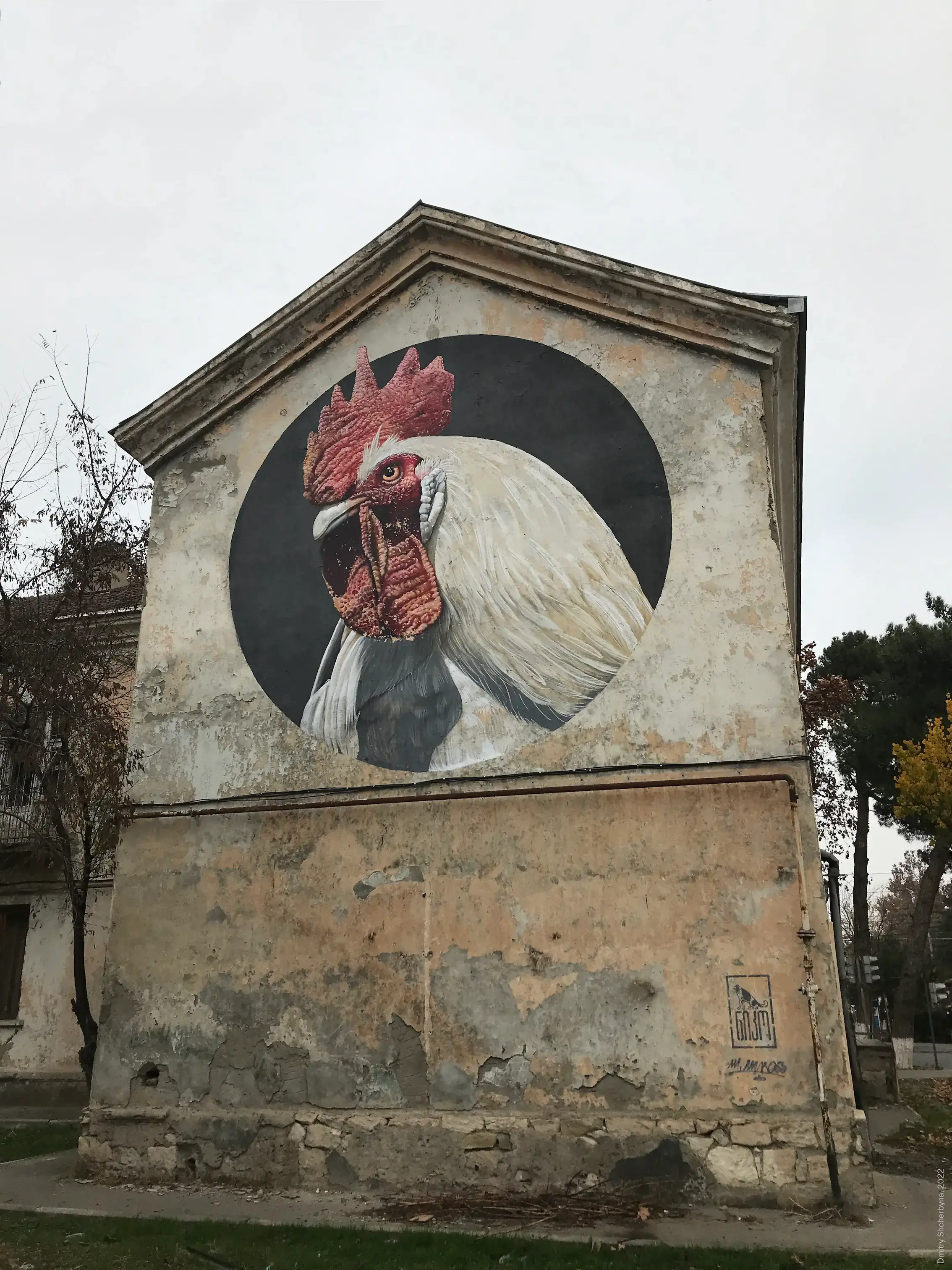
In addition to celebrated foreign muralists participating in festivals or working independently outside institutional frameworks, a distinct Georgian cohort of artists has steadily emerged alongside them.
Many local artists have established themselves — yet continue to work on the streets of their own cities, often supported by the same initiatives and movements that helped them gain access to their first walls.
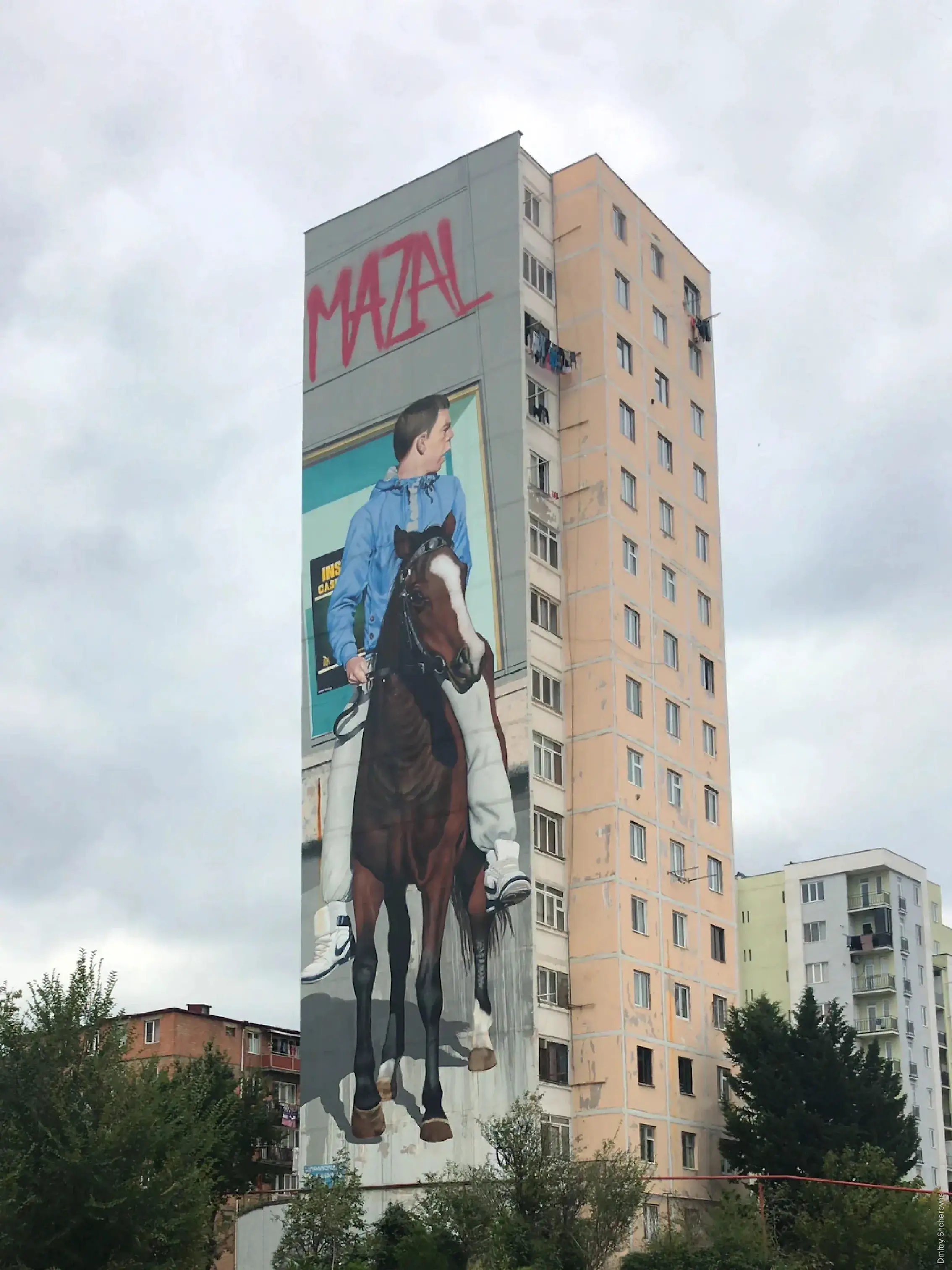
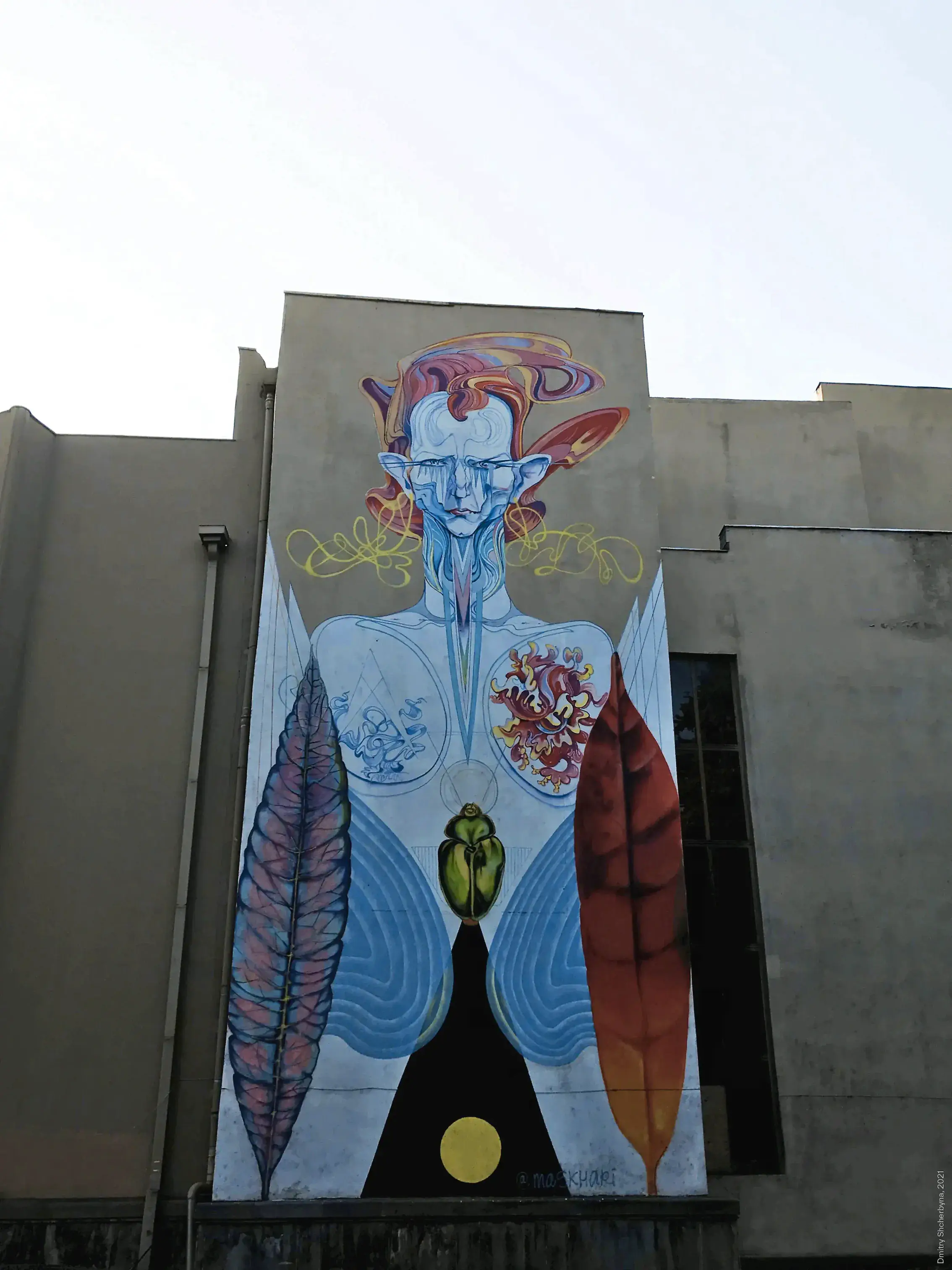
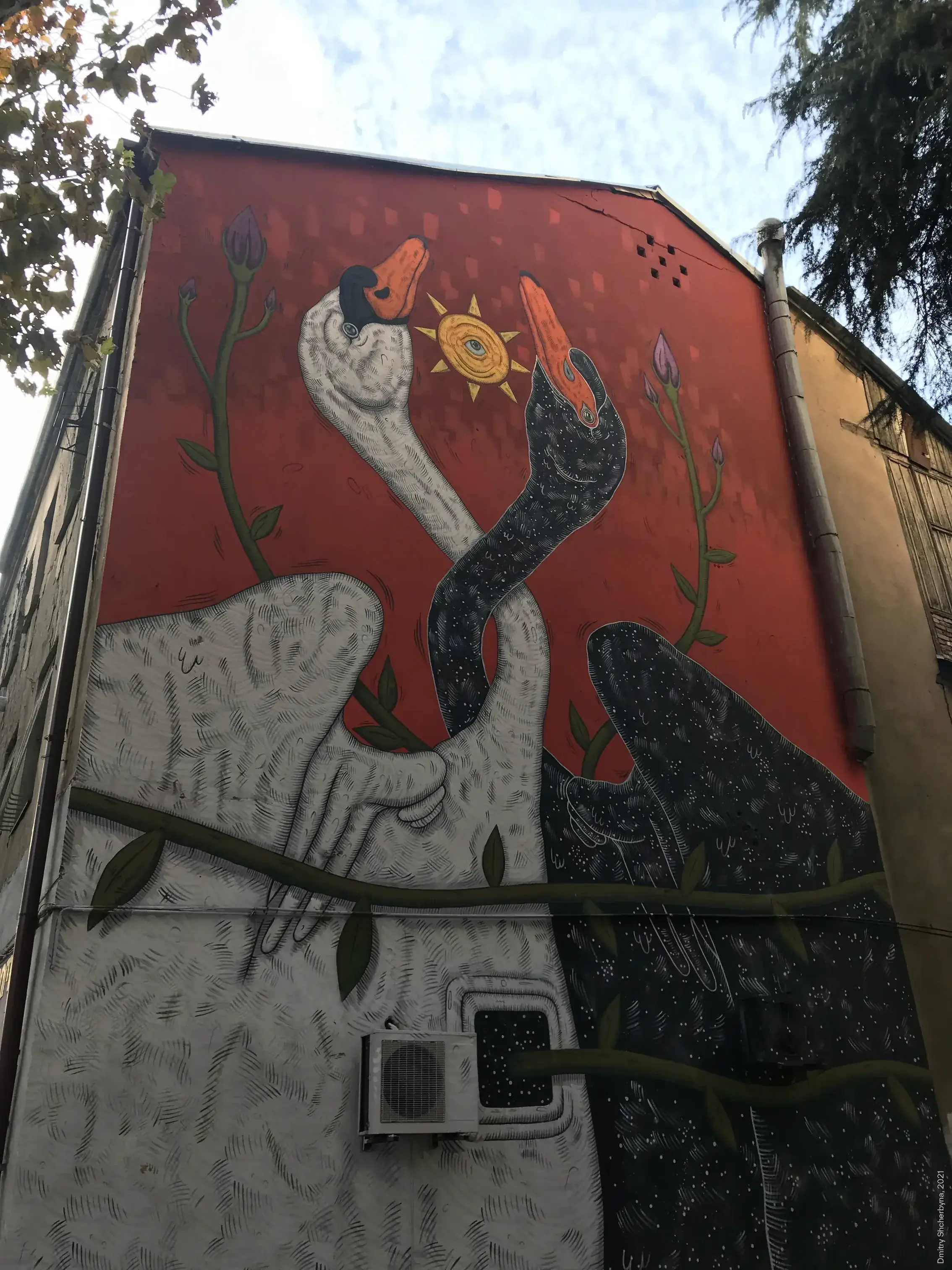
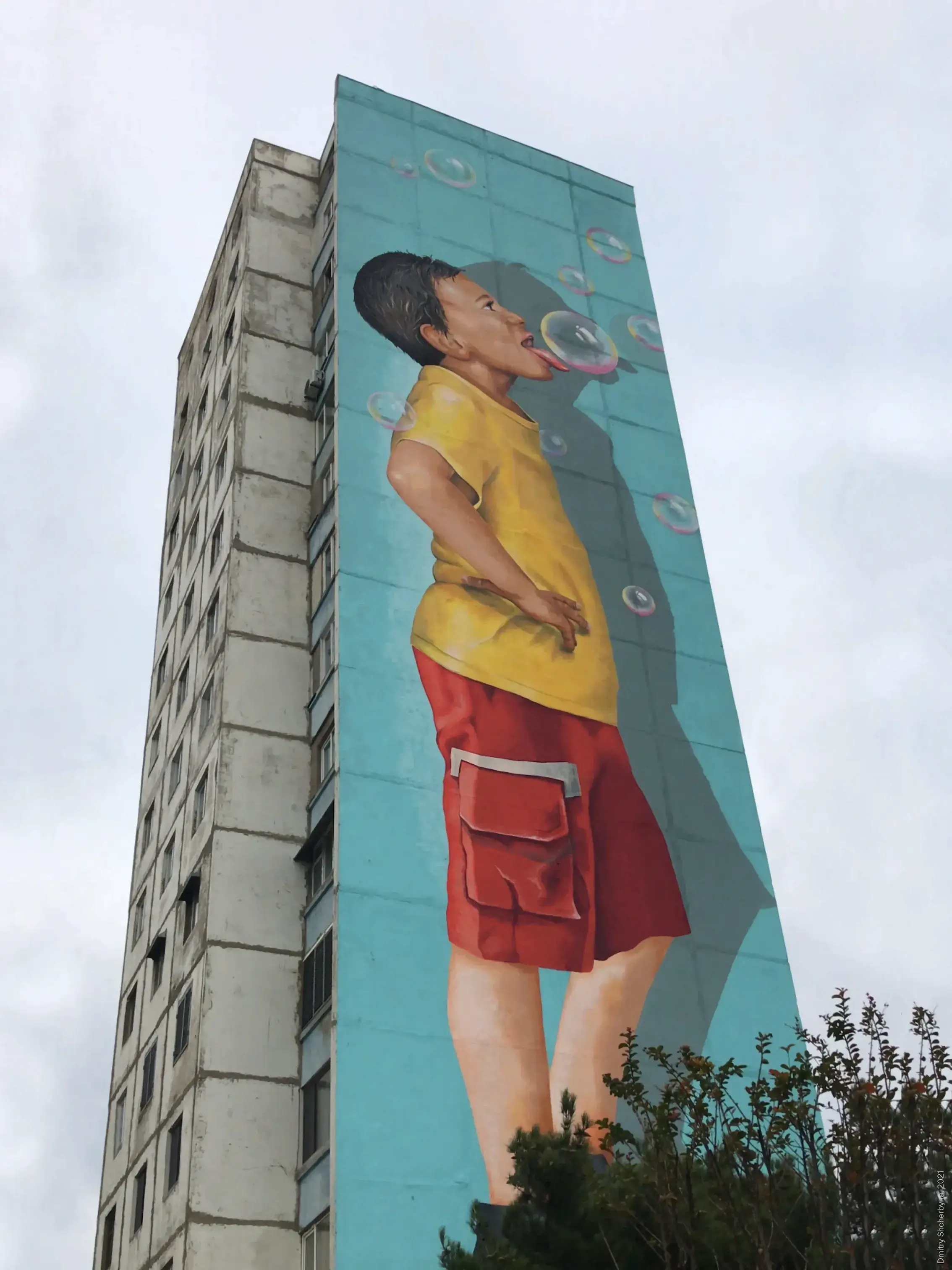
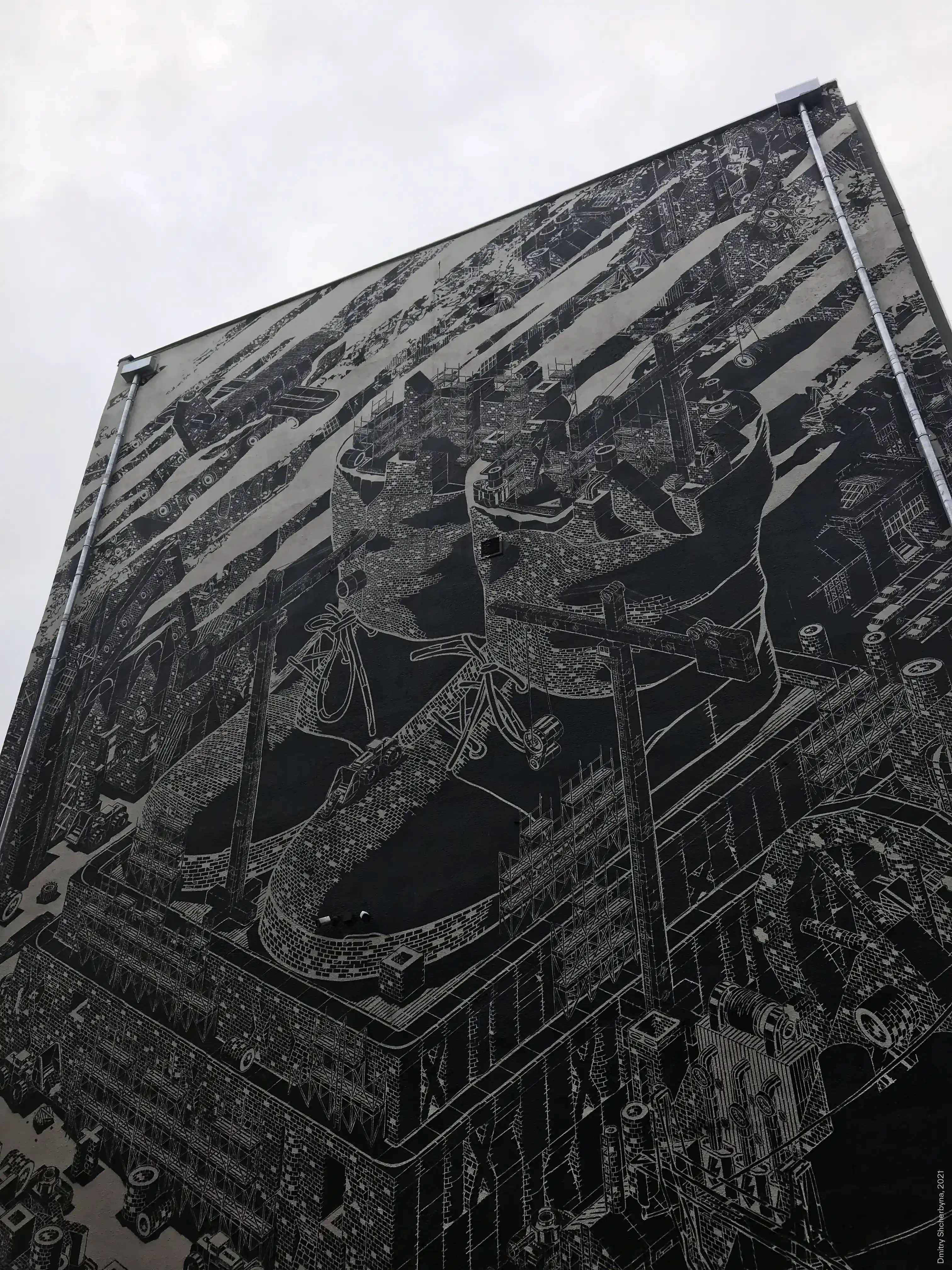
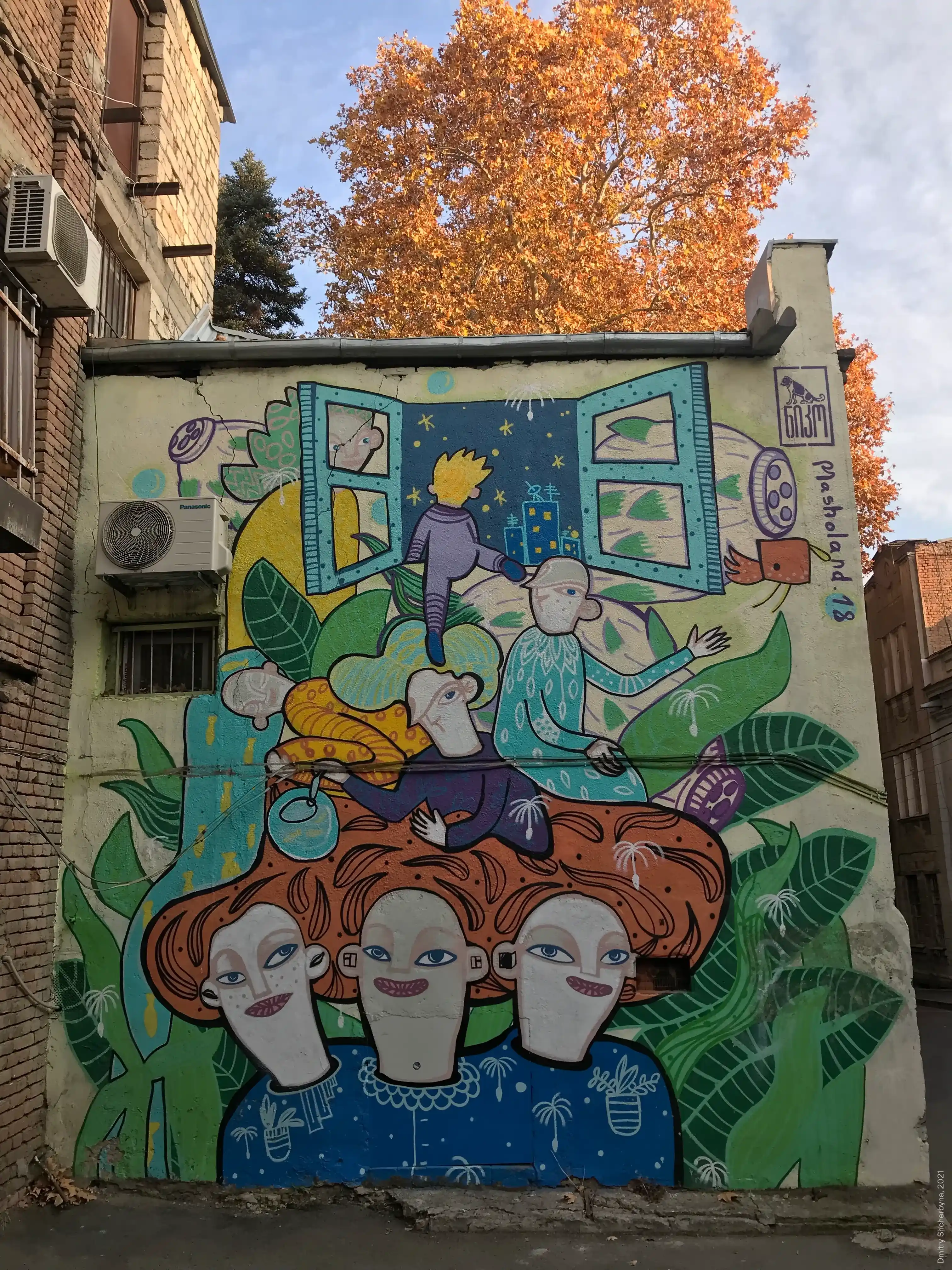
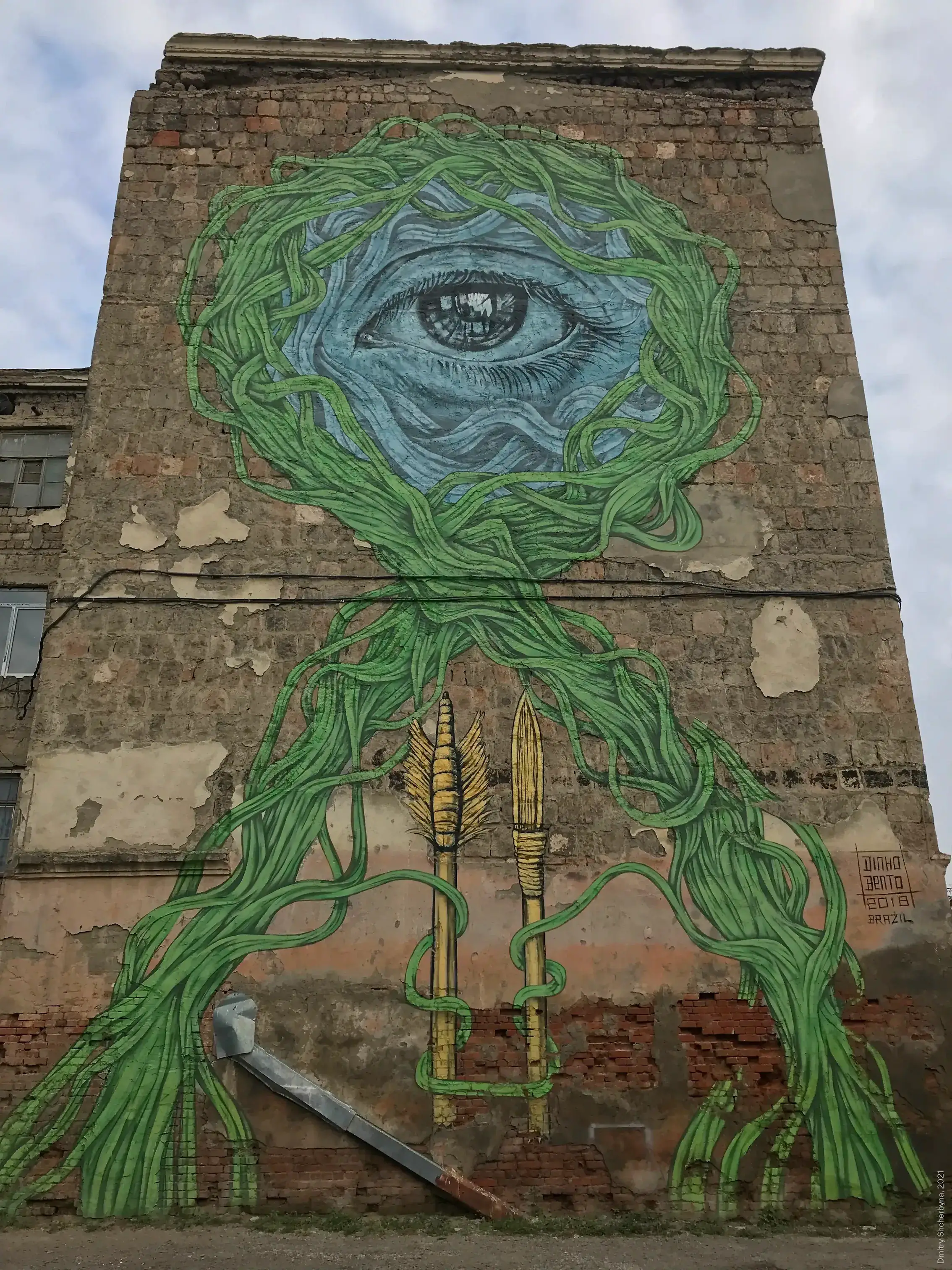
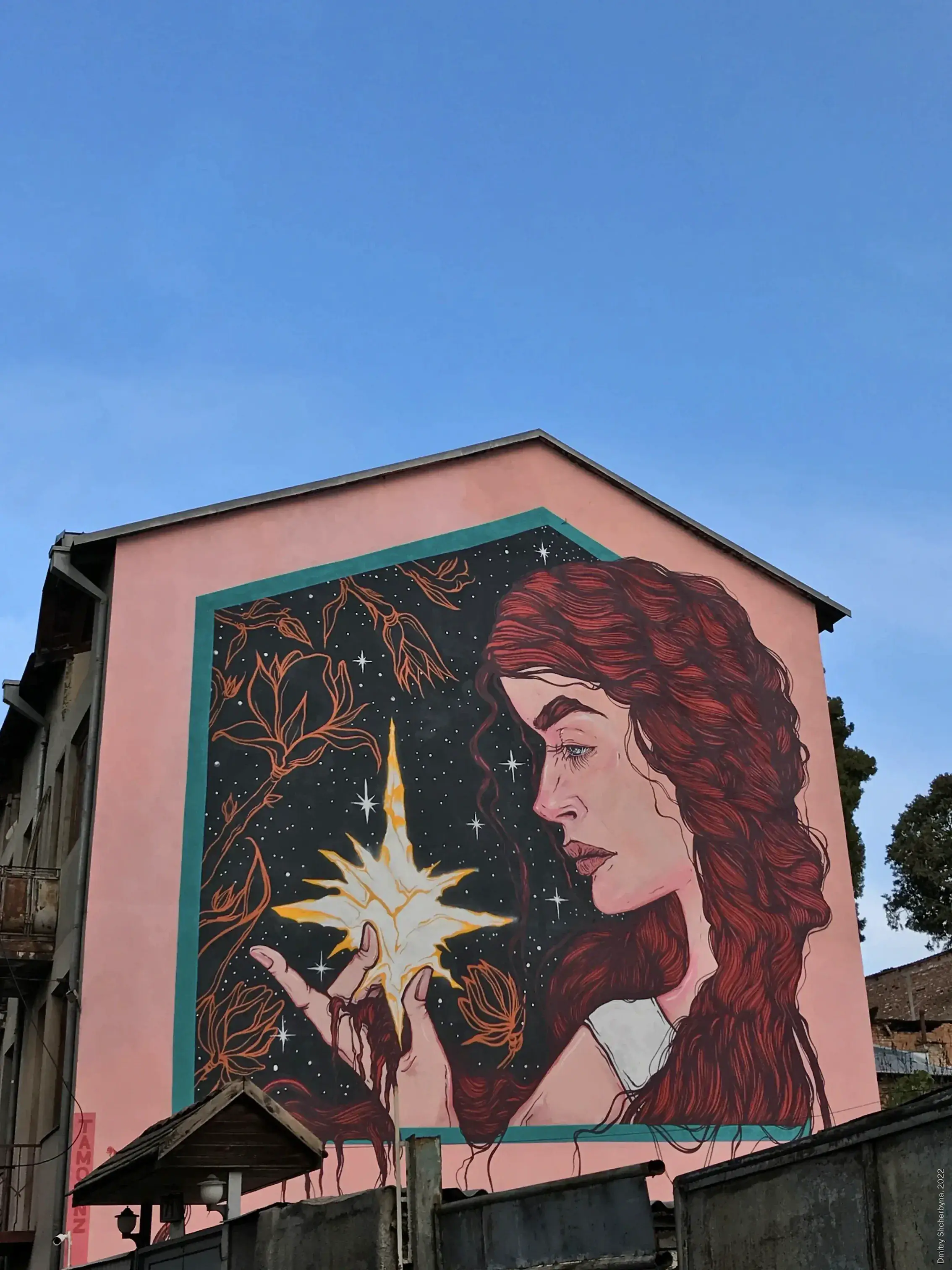
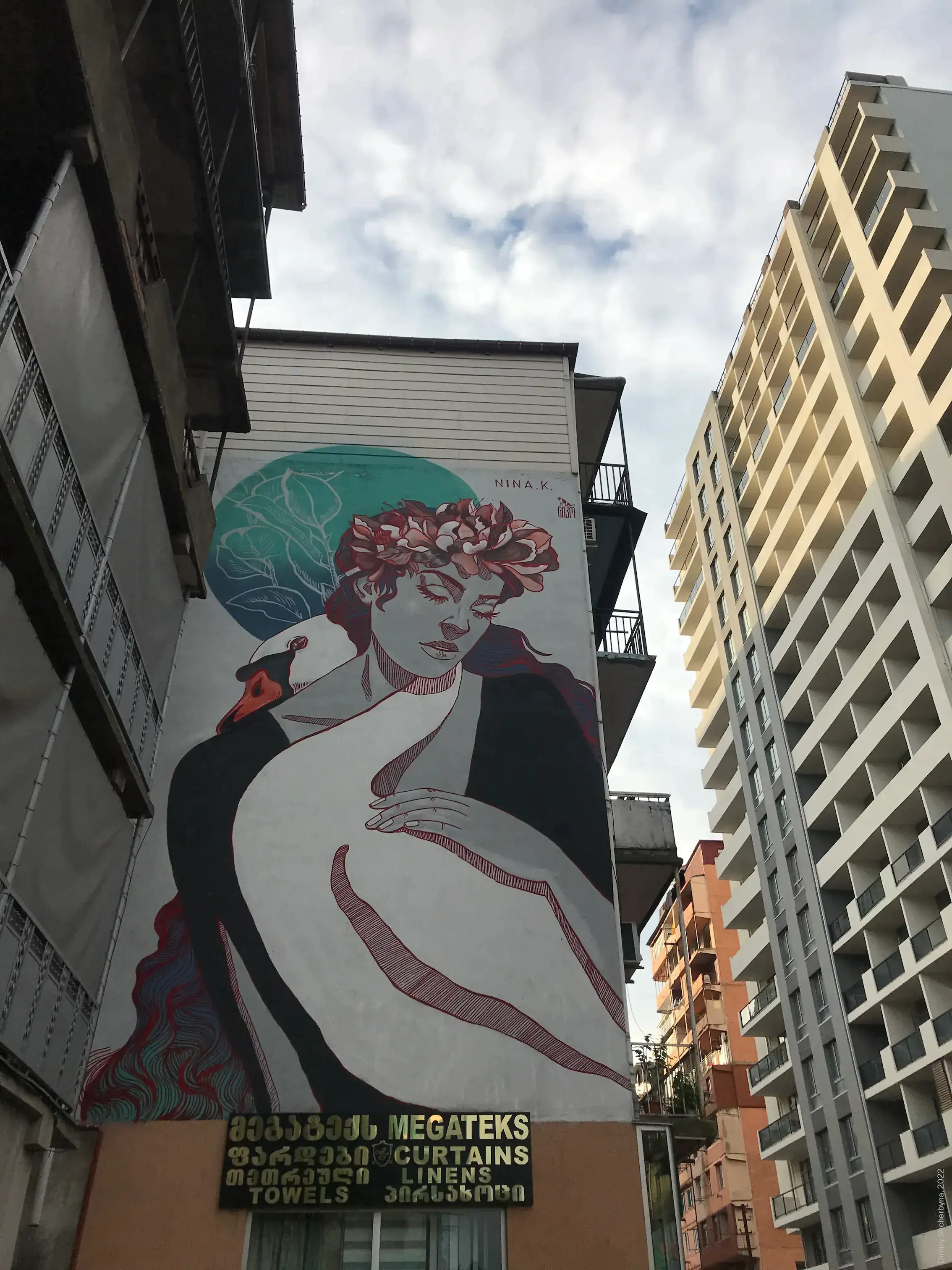
One of those movements is “Niko”, founded by Sandro Kvantaliani in 2017. What began as a small initiative to connect emerging artists with walls, permits, and basic equipment has since grown into one of the most significant and consistently active presences in the Georgian street art scene.
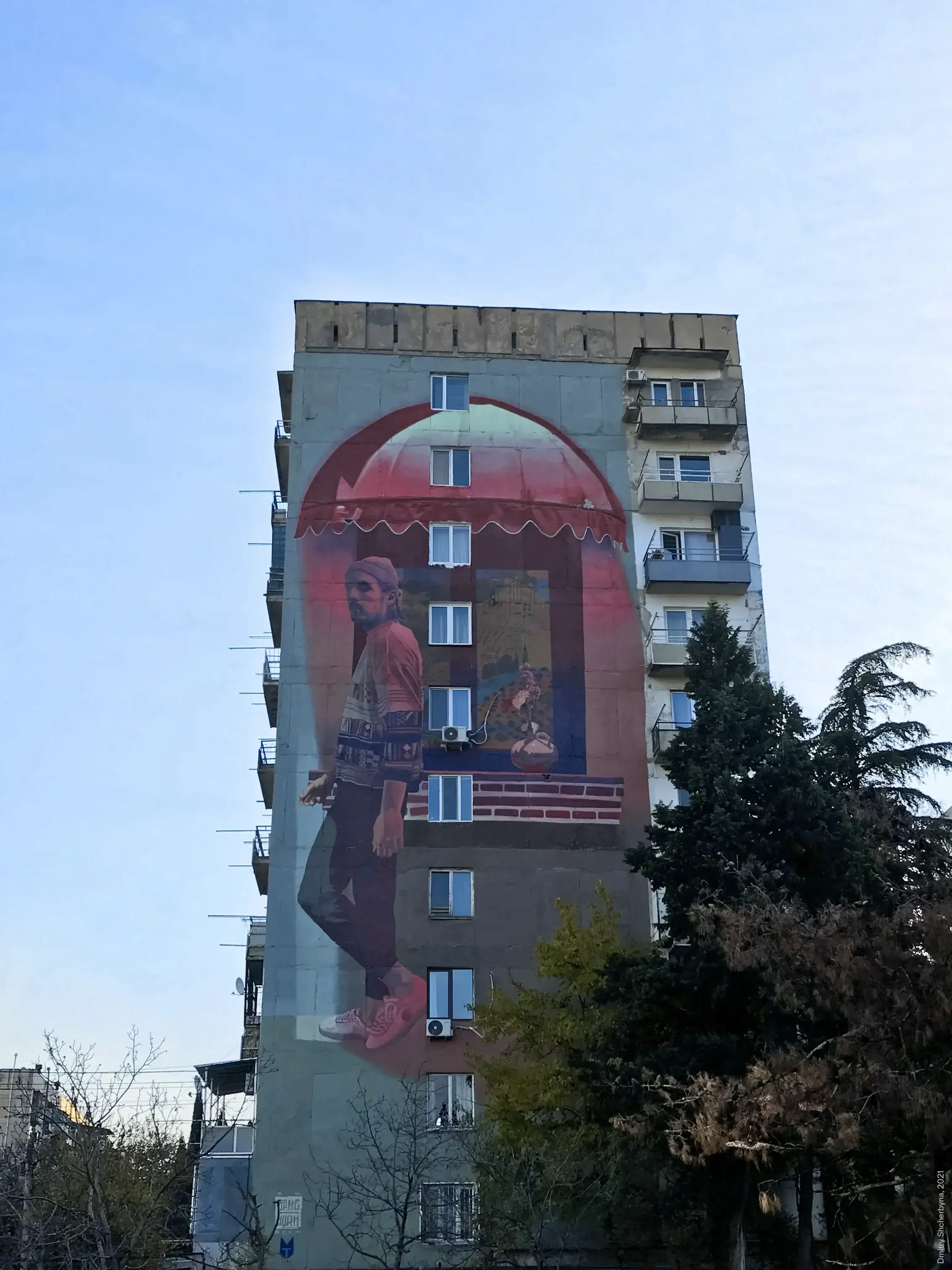
The “Niko” movement works exclusively with private wall owners, treating each agreement with residents as part of the creative process itself — seeing the negotiation with the community not as a bureaucratic step but as something inseparable from the work. In this way, “Niko” creates concrete pathways for emerging Georgian artists — giving a structure without imposing a program, and providing walls, equipment, and a professional context that would otherwise remain out of reach.
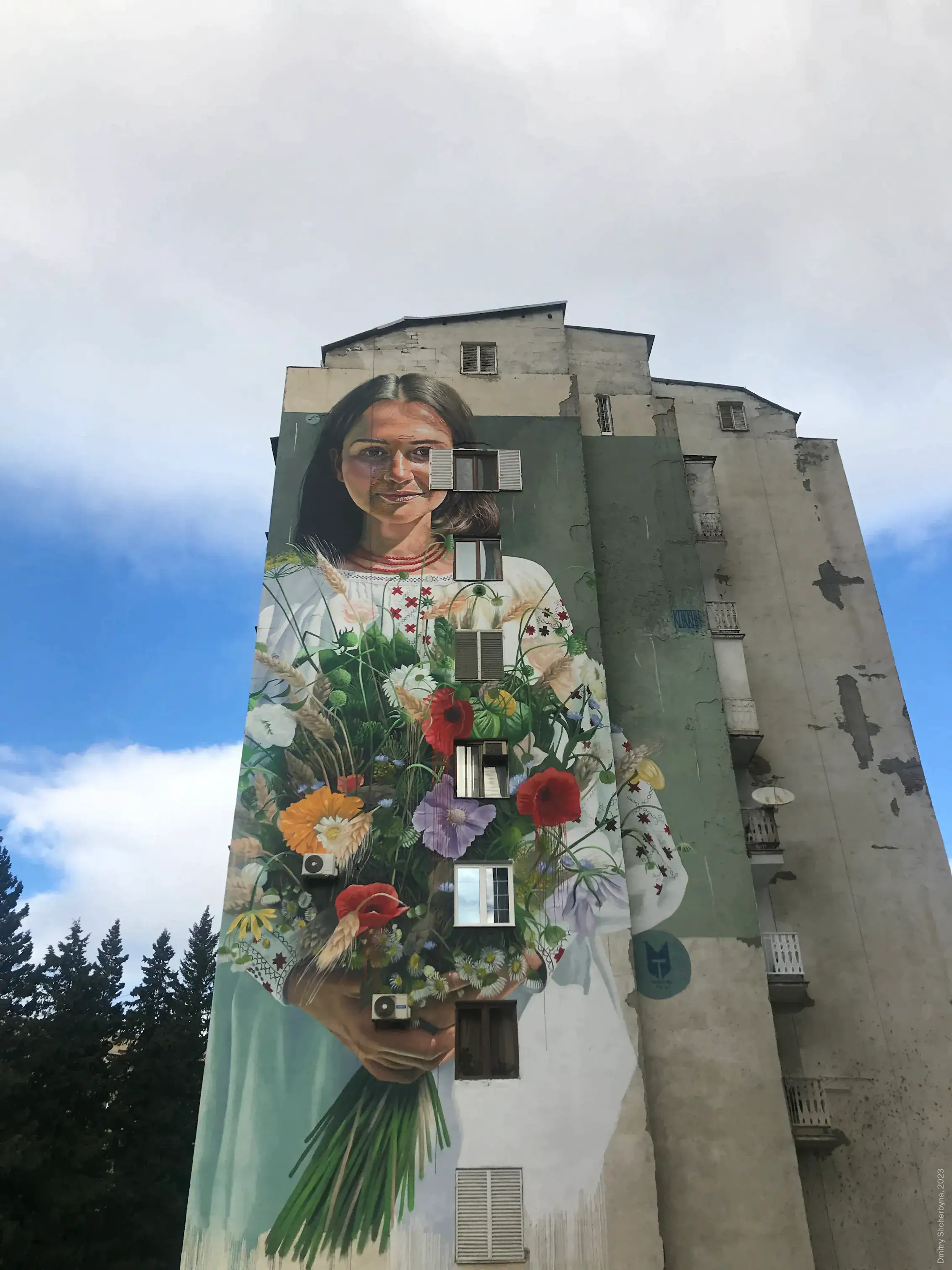
Over the years, “Niko” has attracted support beyond the local art community — embassies and cultural institutes have become active partners, with German, Brazilian, Italian, French, and Polish institutions among those who have contributed to bringing international artists into the movement's projects. This growing network of support has allowed “Niko” to expand its reach and operate at the intersection of local development and international exchange. It also creates spaces for artistic experimentation and growth.
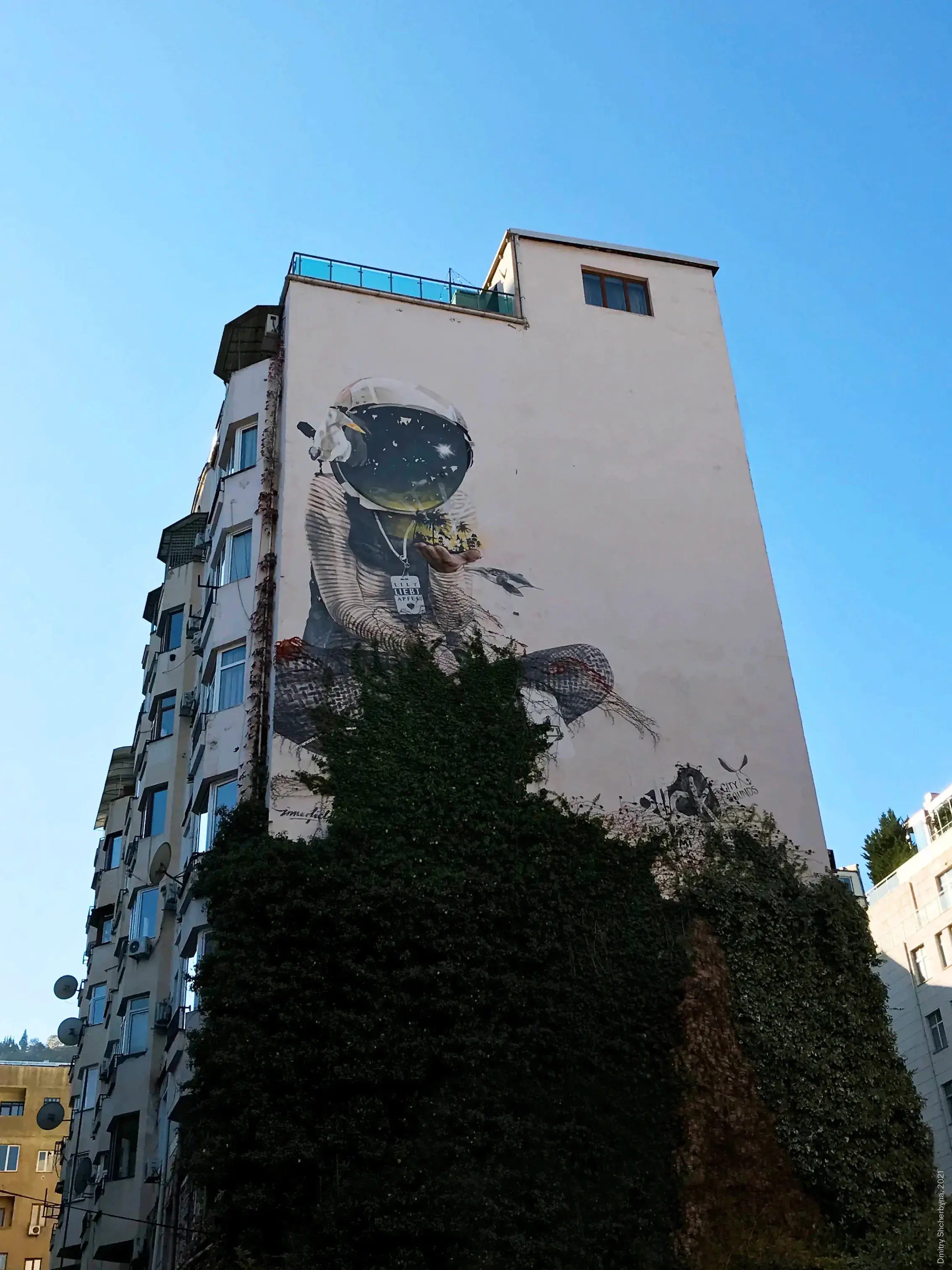
The appearance of a large-scale mural is rarely spontaneous. Each work requires negotiations with authorities and building residents, careful planning over weeks, an abundance of materials, and technical equipment — from scaffolding to auto-lifts — that most individual artists could not access or afford independently. Without this kind of support, the gap between an artist's vision and its execution on a residential wall remains simply unbridgeable. This is precisely the gap that “Niko” was built to close.
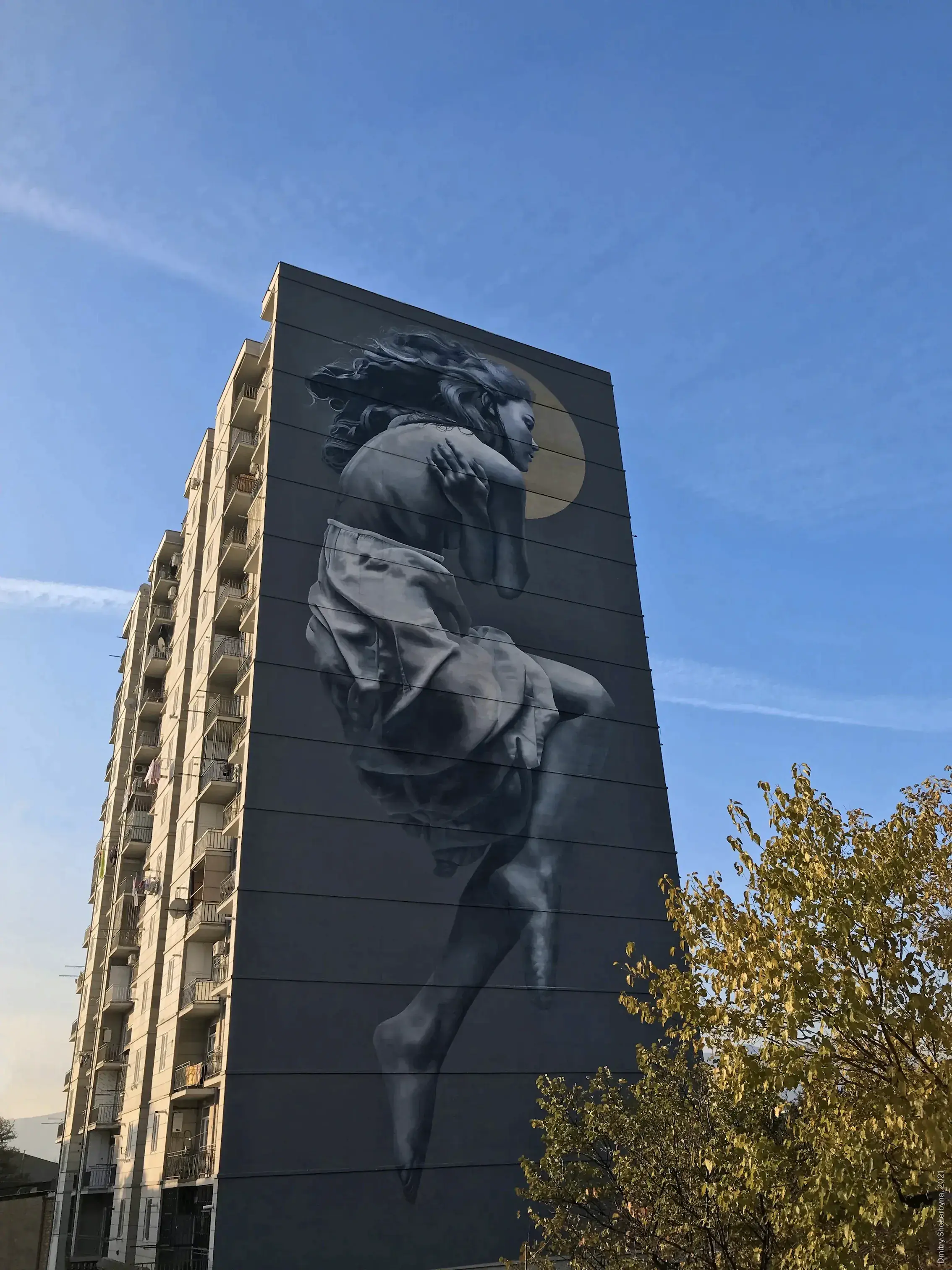
Maglivi, known as a part of Tbilisi State University, is a place where you can see a wide range of works at the same time. This site functions as a practice ground for street-art artists where all walls are frequently replaced, layered, or painted over.
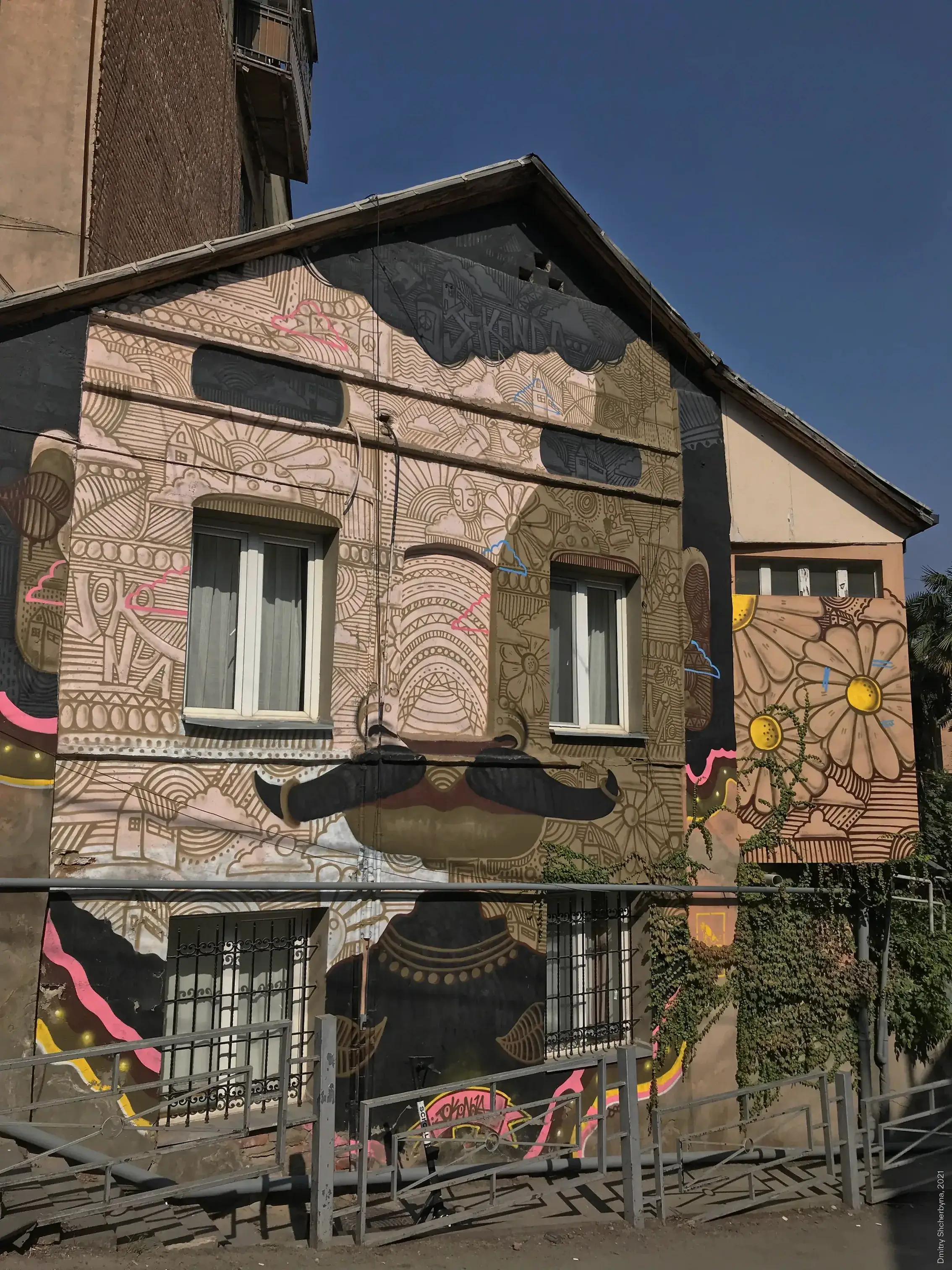
Just as Niko Pirosmani painted without support or recognition — working alone, exchanging paintings for meals, in obscurity for most of his life — the “Niko” movement has made supporting young talents its founding principle. The dog from the movement's logo, featured in Pirosmani's painting “The Feast in a Grape Gazebo”, makes this cultural connection visible on every wall they paint. What began as a coincidence — a first wall near Pirosmani's memorial — has since become a meaningful point of reference.
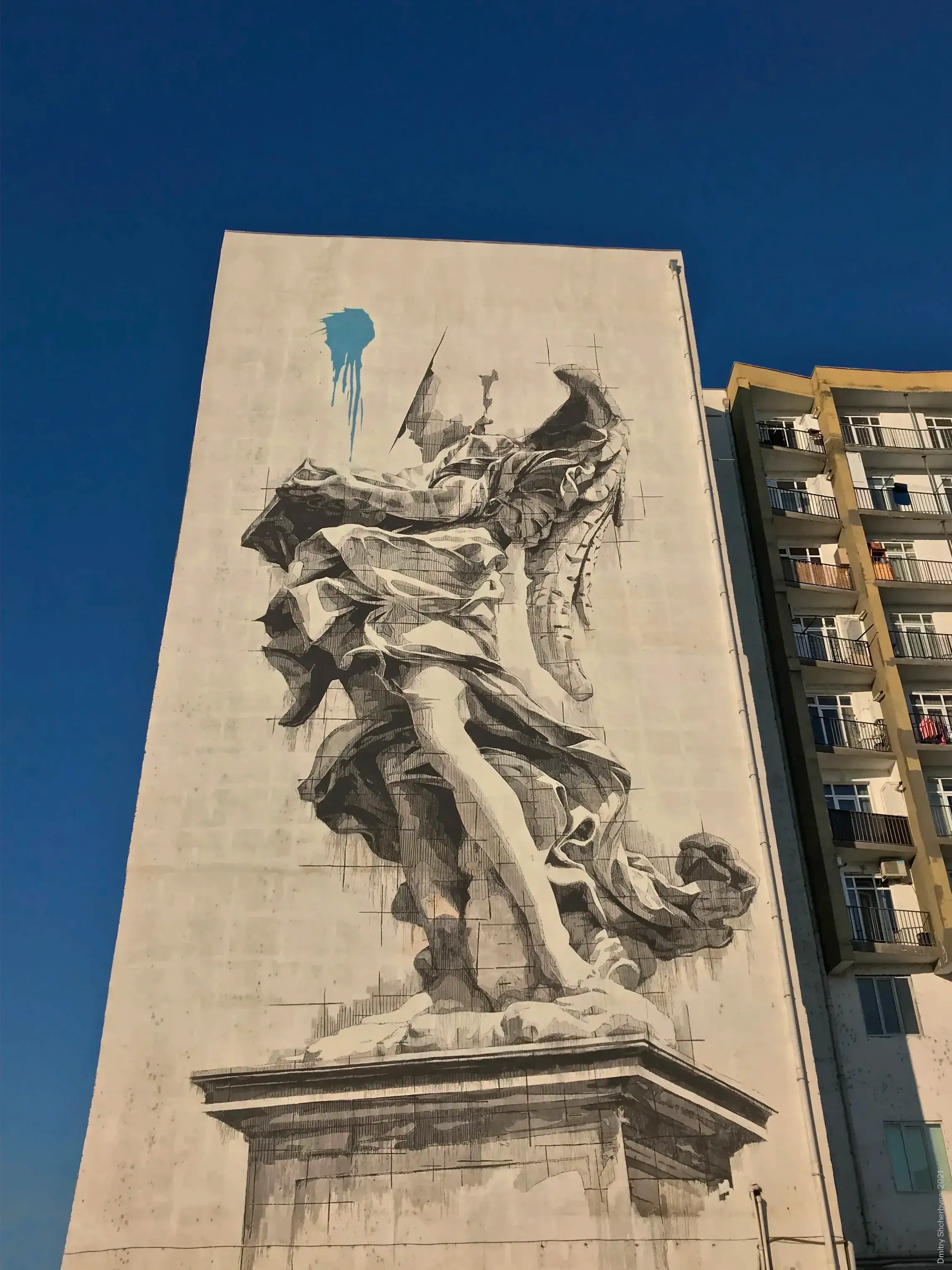
Street art has always been a way of self-expression and a distinct voice — a way of transmitting information, where what gets communicated depends on the author. Achieving influence on public consciousness, however, requires works that combine visual techniques with conceptual depth. For “Niko”, this openness to meaning is matched by an openness to form: the movement is expanding beyond murals into light installations and sculptures, treating urban art not as a fixed medium but as a continuously evolving language.
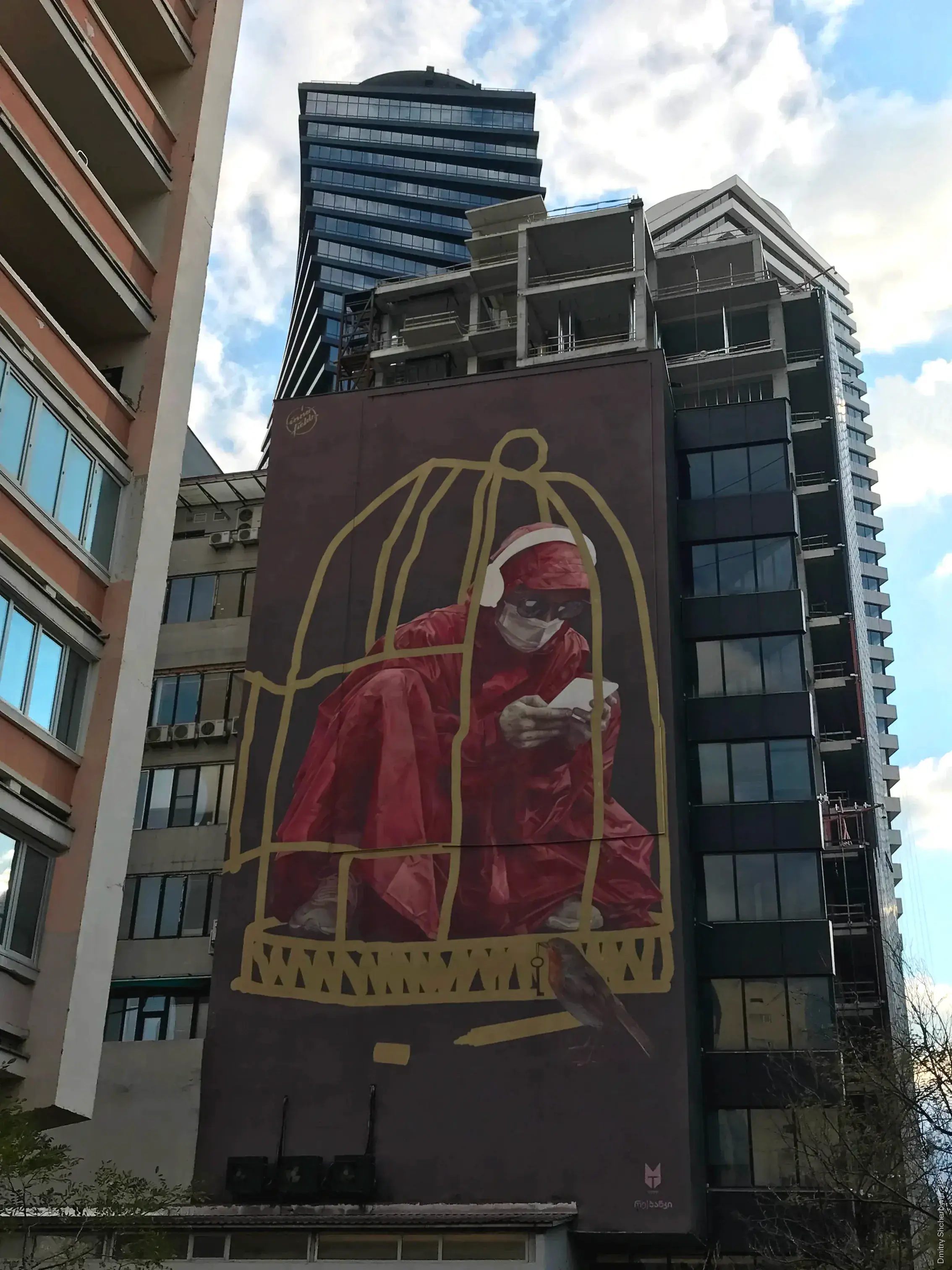
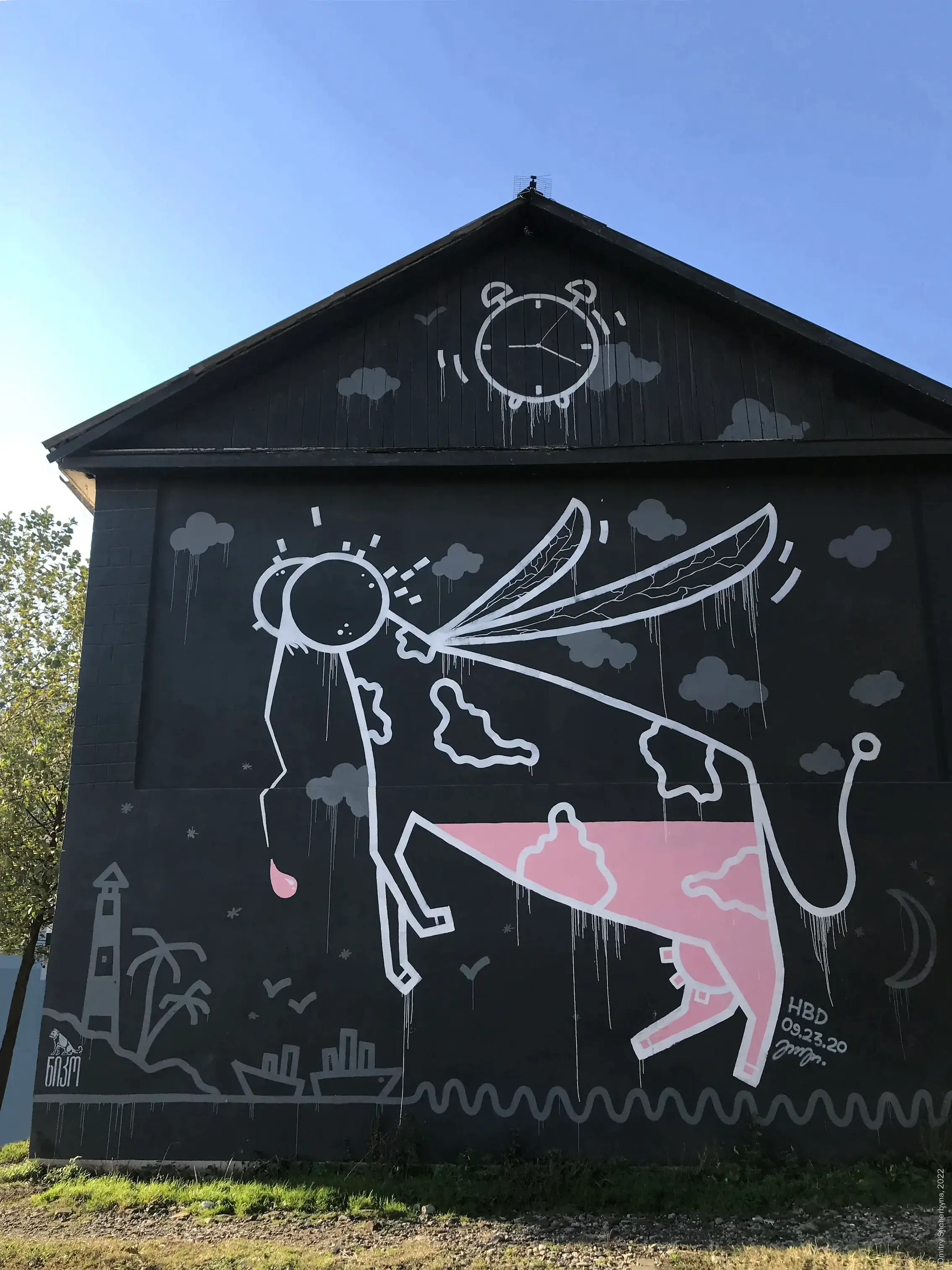
In the historic Chugureti district of Tbilisi, a former Soviet sewing factory called 'Nino' sat abandoned for years after the USSR collapsed. In 2016, Adjara Group Hospitality and Multiverse Architecture (MUA) transformed it into “Fabrika” — a cultural and creative hub housing artist studios, co-working spaces, cafes, and the largest hostel in the region. It has since become one of the most recognisable and frequently visited landmarks on the Left Bank of the city and an unexpected entry point into Tbilisi's street art scene.
From the beginning, street art was central to Fabrika's identity rather than an afterthought. It was the first building in Tbilisi to deliberately offer its walls to artists — both local and international — making it a living canvas rather than a fixed exhibition.
Exposed pipes, repurposed factory equipment, and colorful works create a contrast reflecting Georgia’s transition from its Soviet legacy to the present. The exterior is entirely covered in works of varying scale — from small pieces to a large mural.
The complex is organized around a central courtyard formed by three interconnected building blocks, which functions as a primary hub for social interaction. It also regularly hosts public events, exhibitions, markets, and live performances.
What began as a project to revitalize an abandoned industrial site has, over the following years, contributed noticeably to an incremental transformation of the surrounding neighborhood, attracting a steady stream of foreign and local visitors.
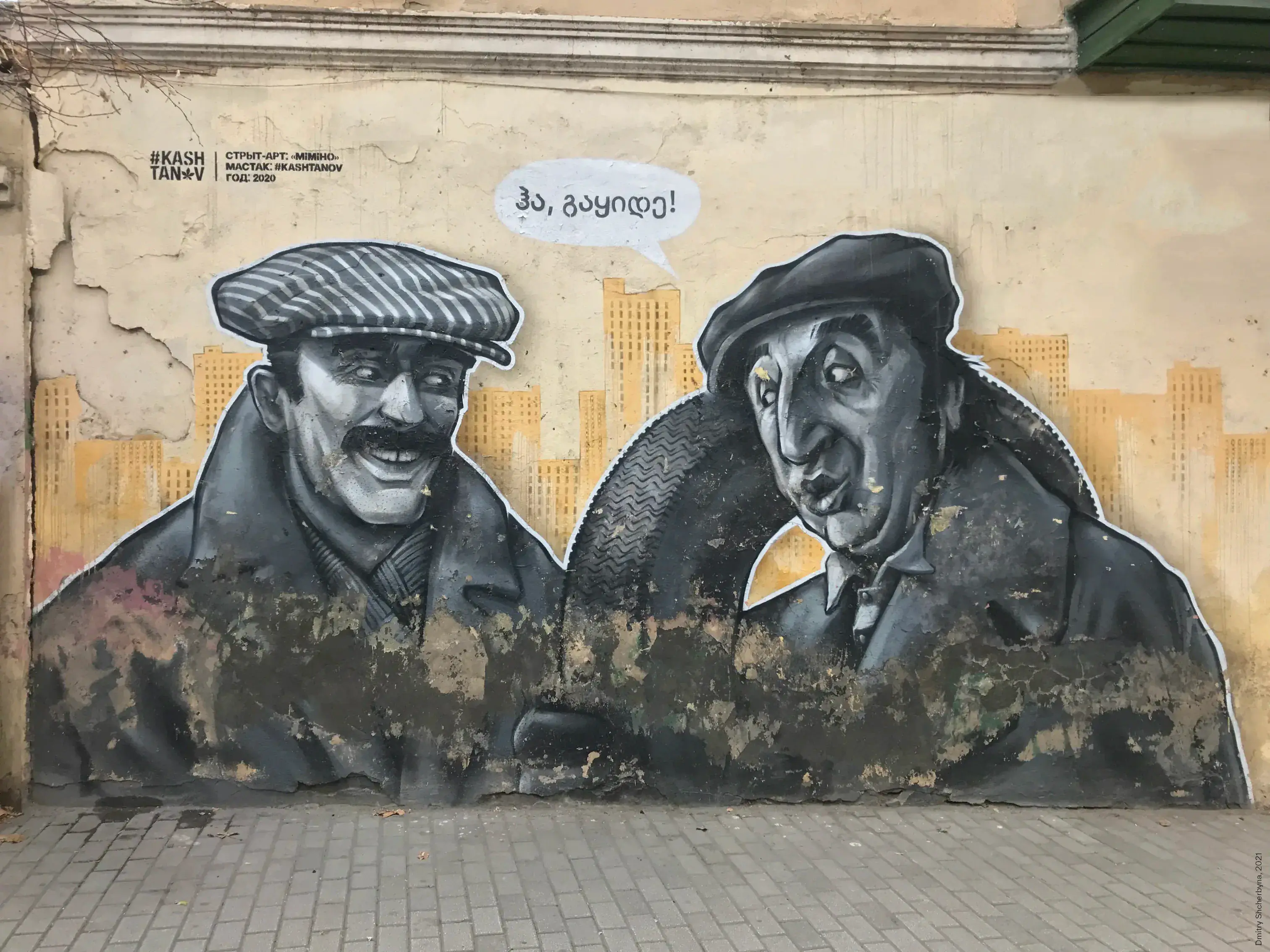
Its growing visibility has also made “Fabrika” a case study in adaptive-reuse urban redevelopment, drawing interest from investors, boosting local businesses, and contributing to spurring the gradual area gentrification.
“Fabrika” has hosted its own “Fabrikaffiti festival” since 2016, organized in collaboration with the local CRU Crew collective. The event invites both Georgian and international artists to repaint the venue's walls, connecting the visual practice to the broader urban culture from which it historically evolved.
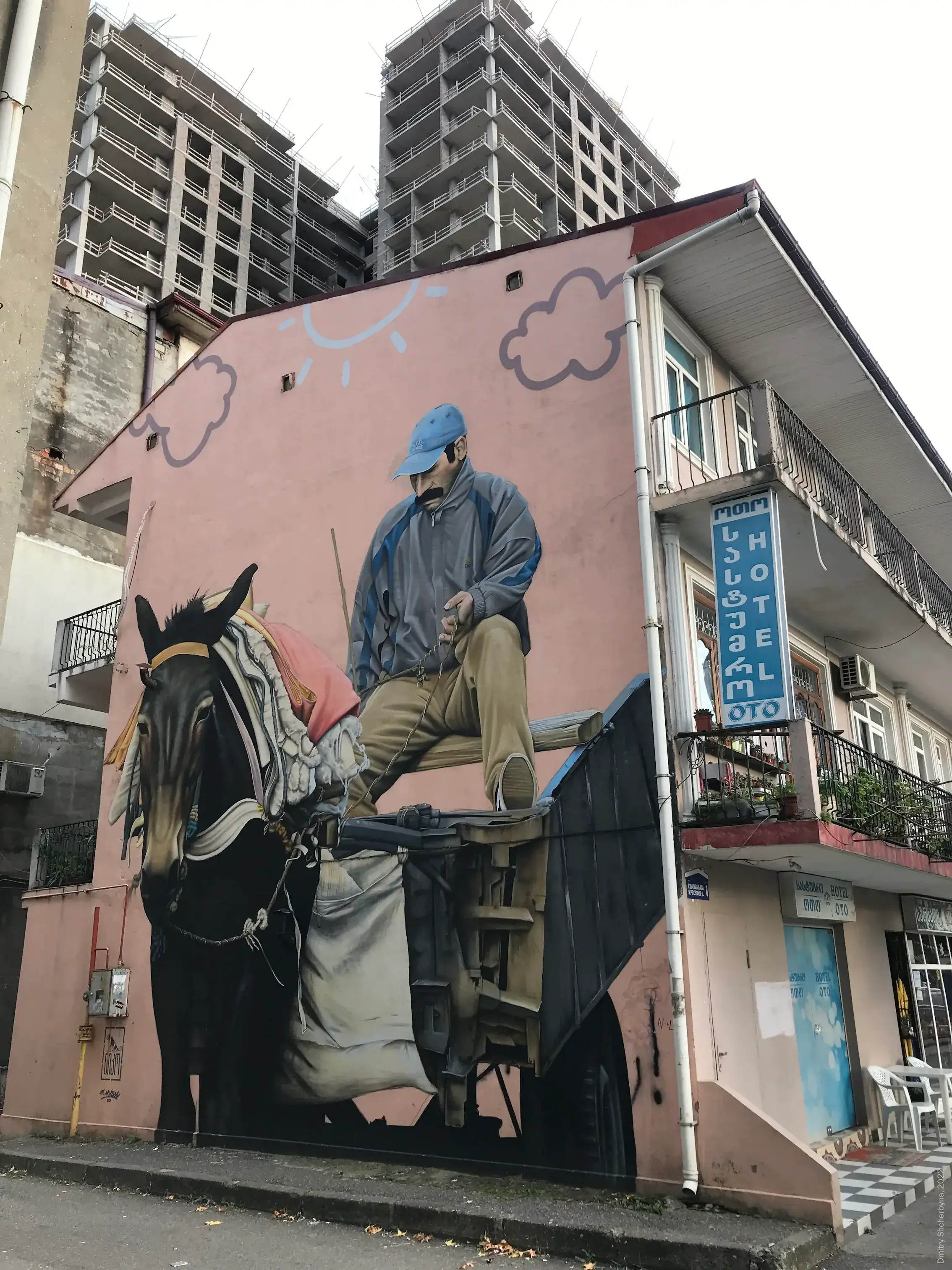
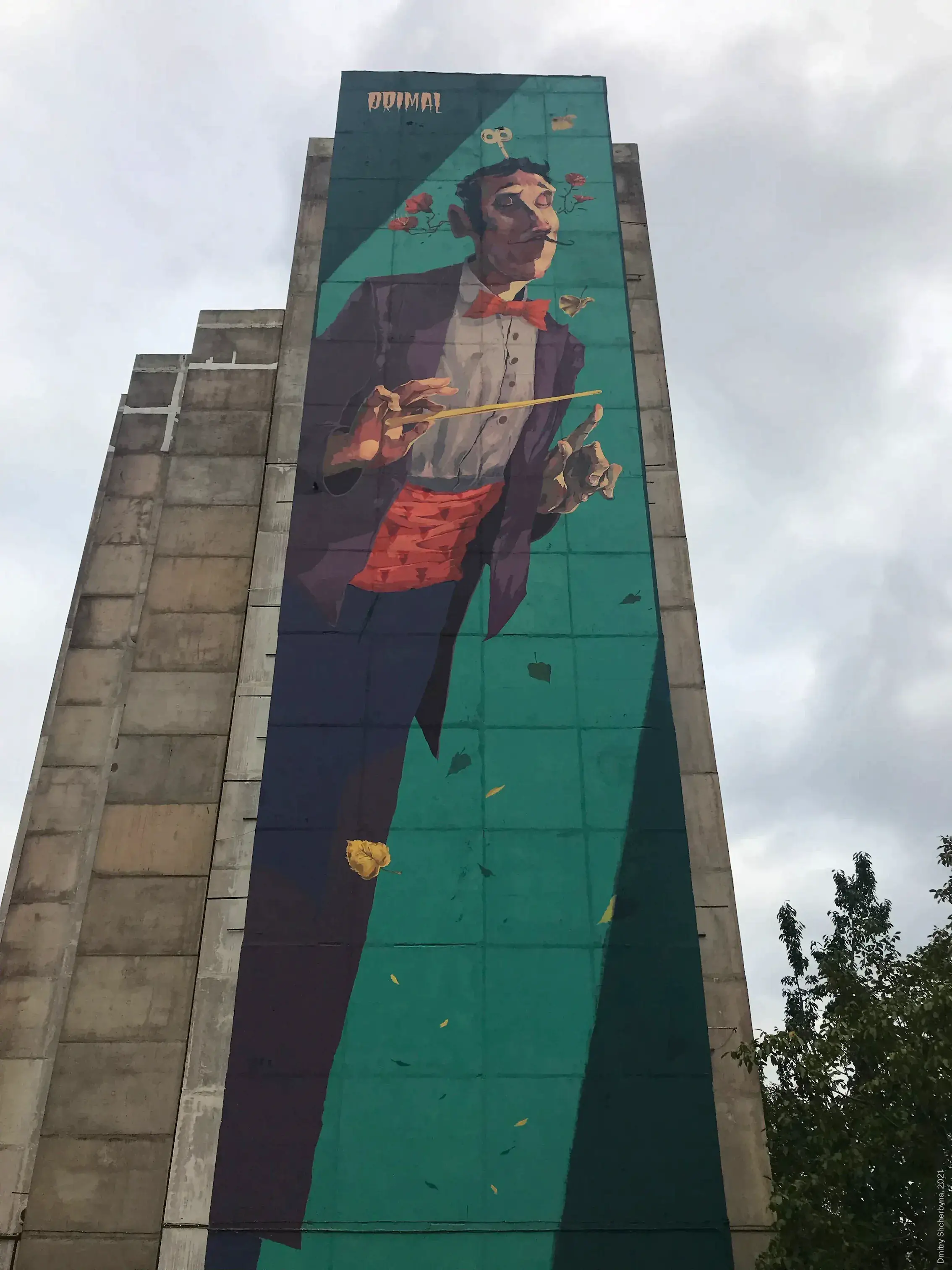
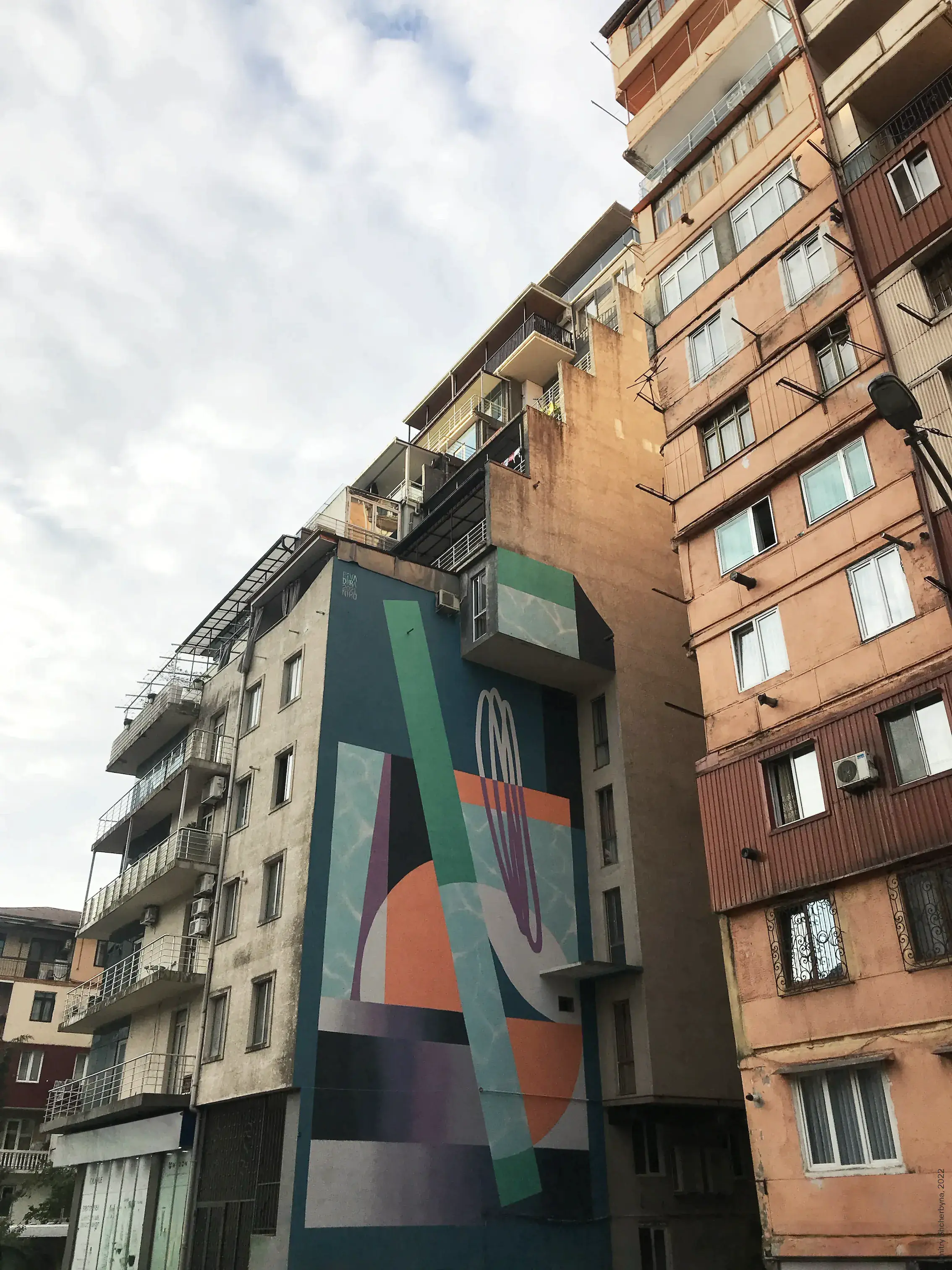
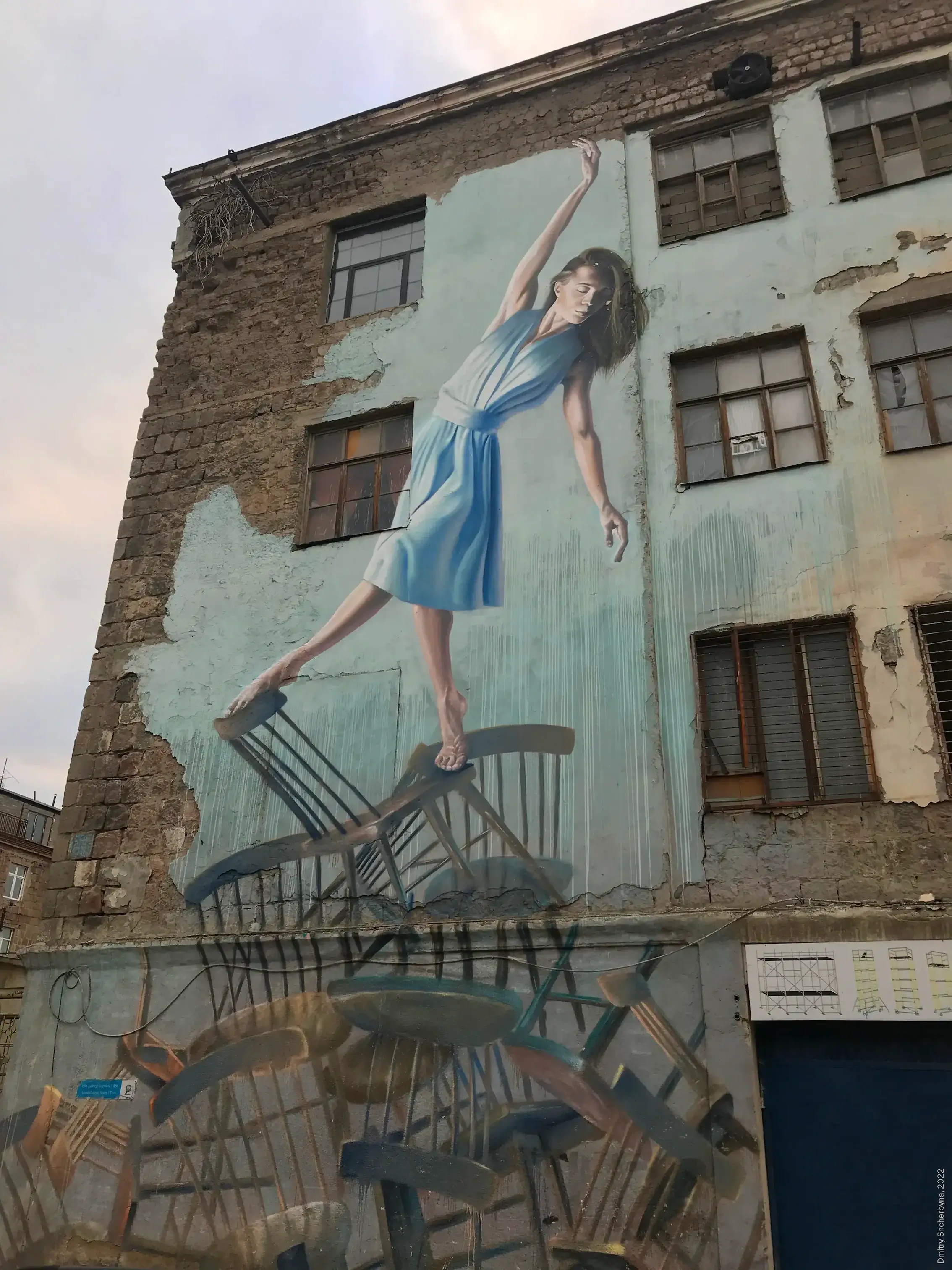
“Fabrika” became an influential anchor of Georgian street art, proving that urban regeneration and creative culture could reinforce each other.
The street art scene is developing rapidly, with an increasing number of notable large-scale works appearing on the streets of Georgian cities.
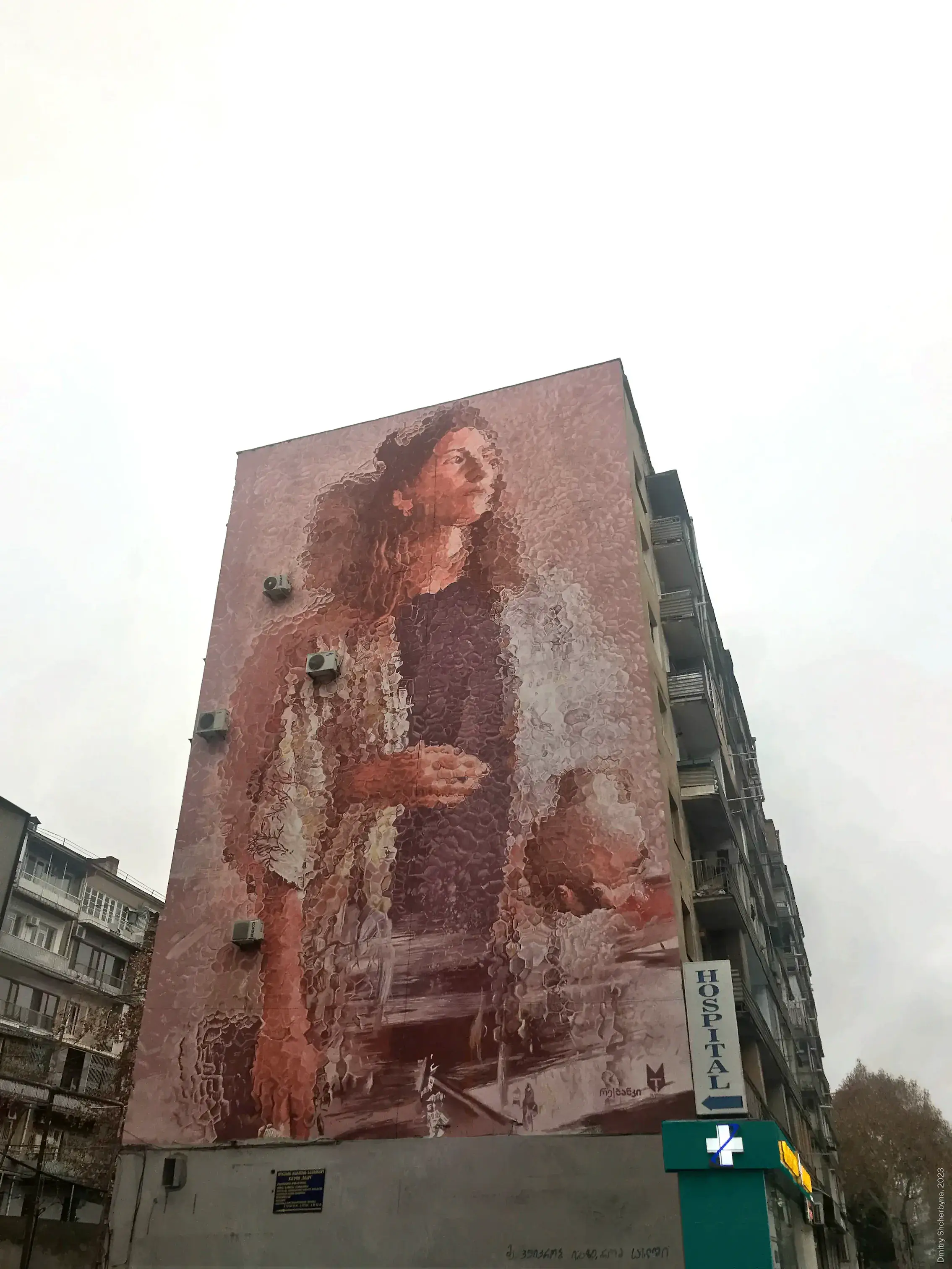
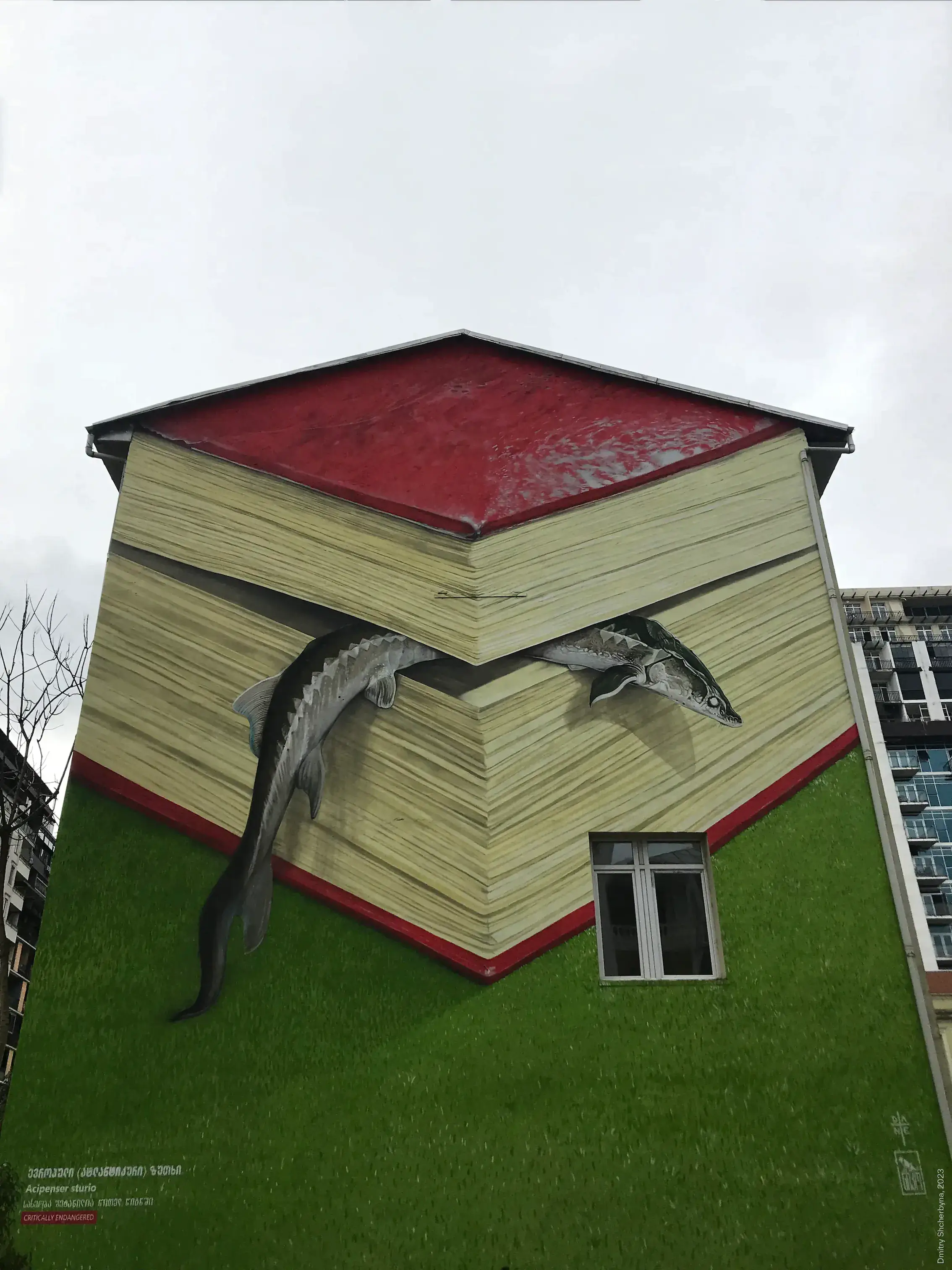
However, any outdoor works tend to deteriorate over time. Some of the works presented in this article no longer exist. Some have been painted over, and others have been badly damaged by the elements or other factors. Within just a few years, numerous works have vanished, reflecting the trade-off of such a fast-moving scene, where new pieces emerge almost as quickly as older ones fade. The ephemeral nature of street art makes it vulnerable to urban development and subject to removal by authorities or property owners. In practice, many works are simply replaced rather than repaired. However, its impermanence does not ultimately detract from its cultural relevance or its lasting influence.
As neighborhoods improve — repainted, redeveloped, gentrified — something else inevitably gives way in the process. The gradual erasure of works from the city's landscape represents not merely a visual loss but also the disappearance of the narratives of community identity and diverse forms of artistic expression.
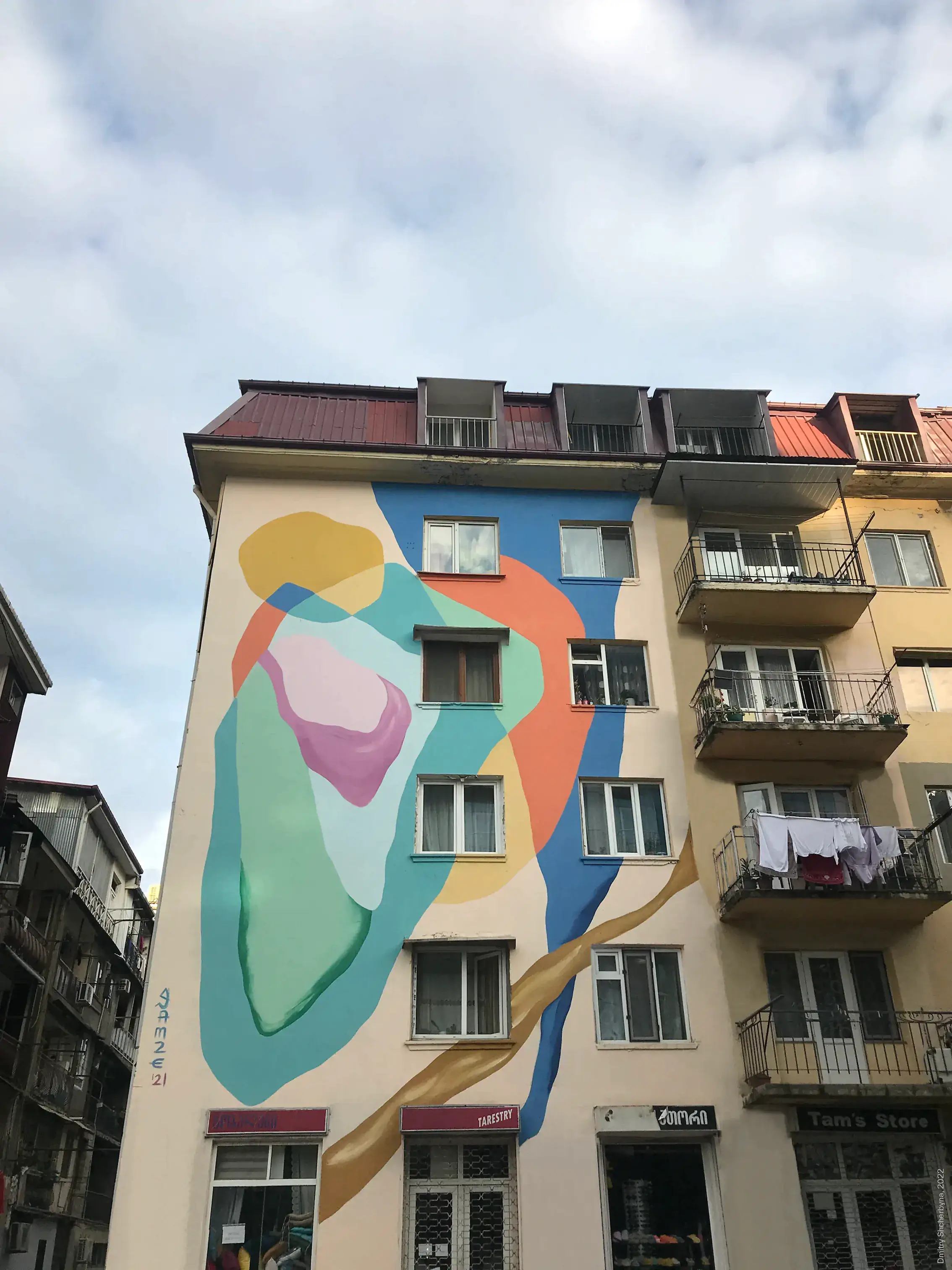
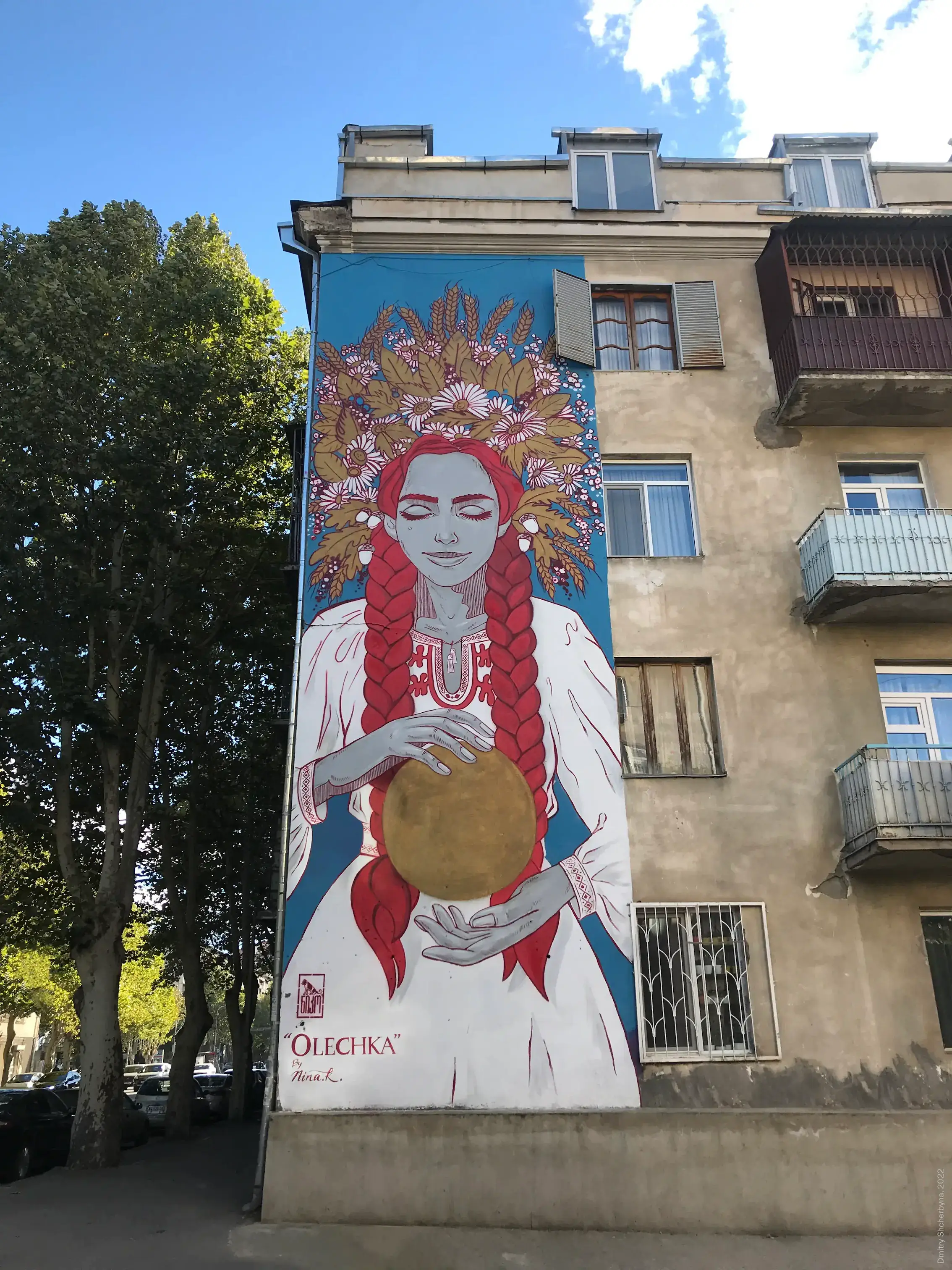
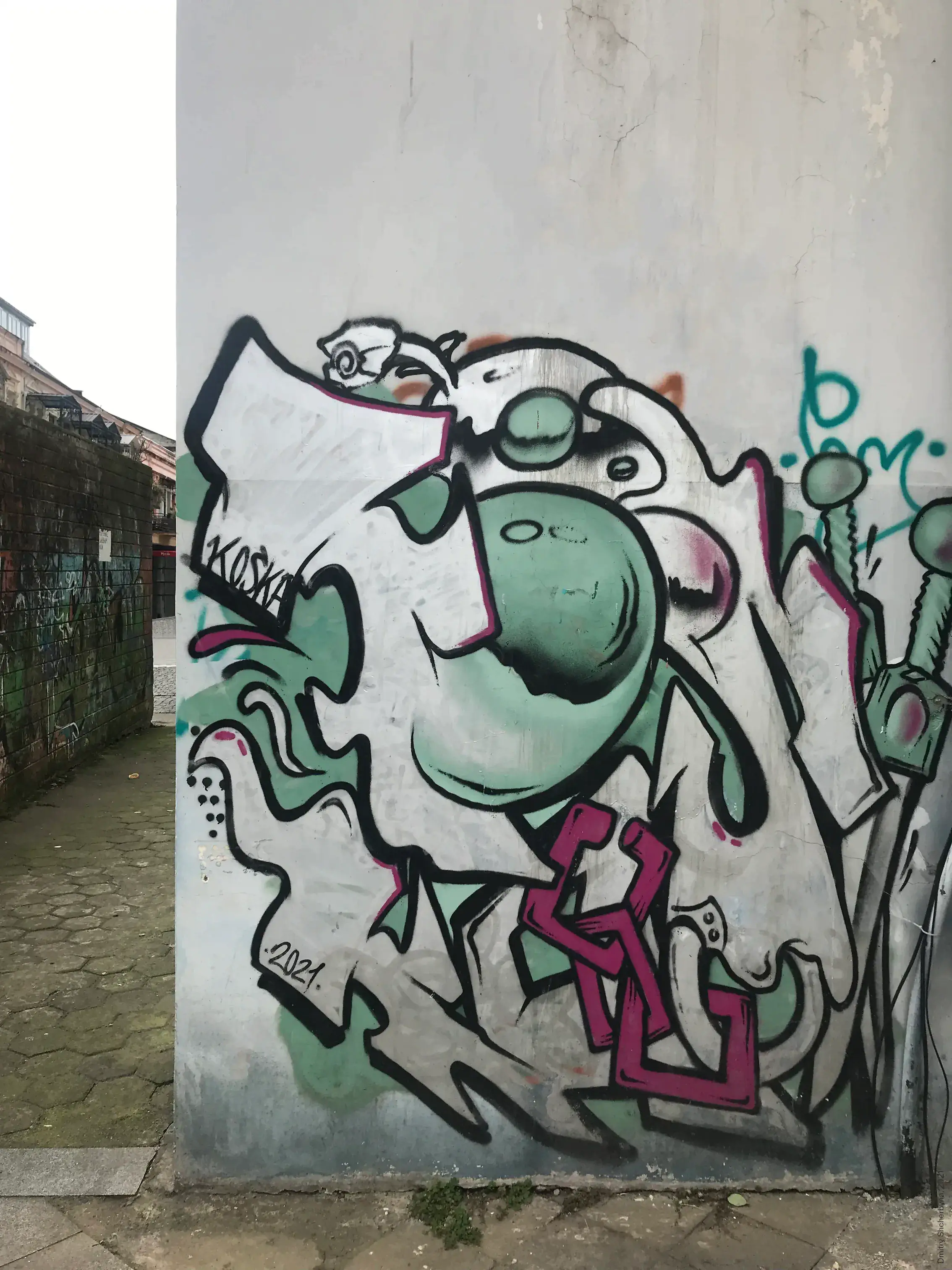
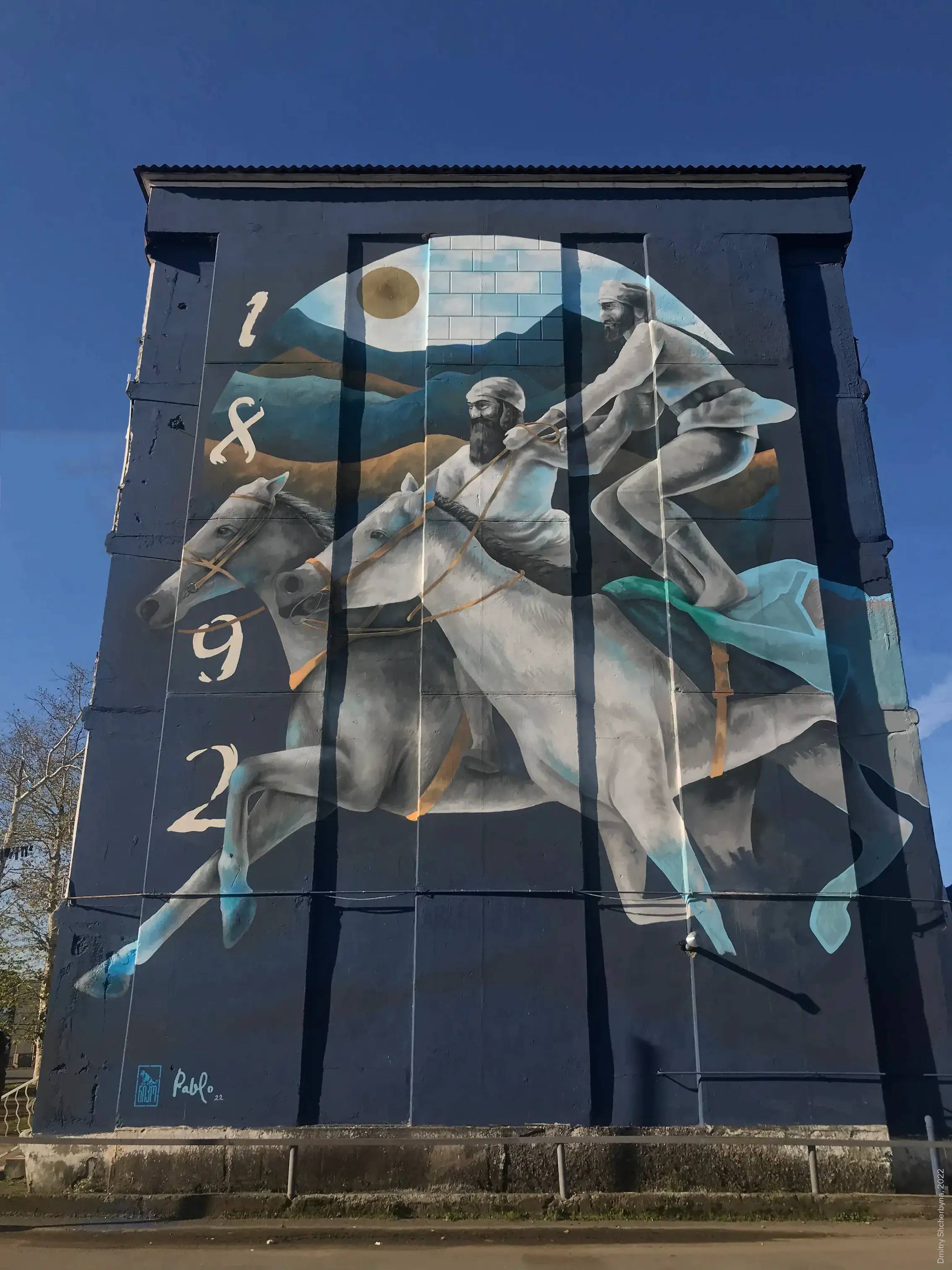
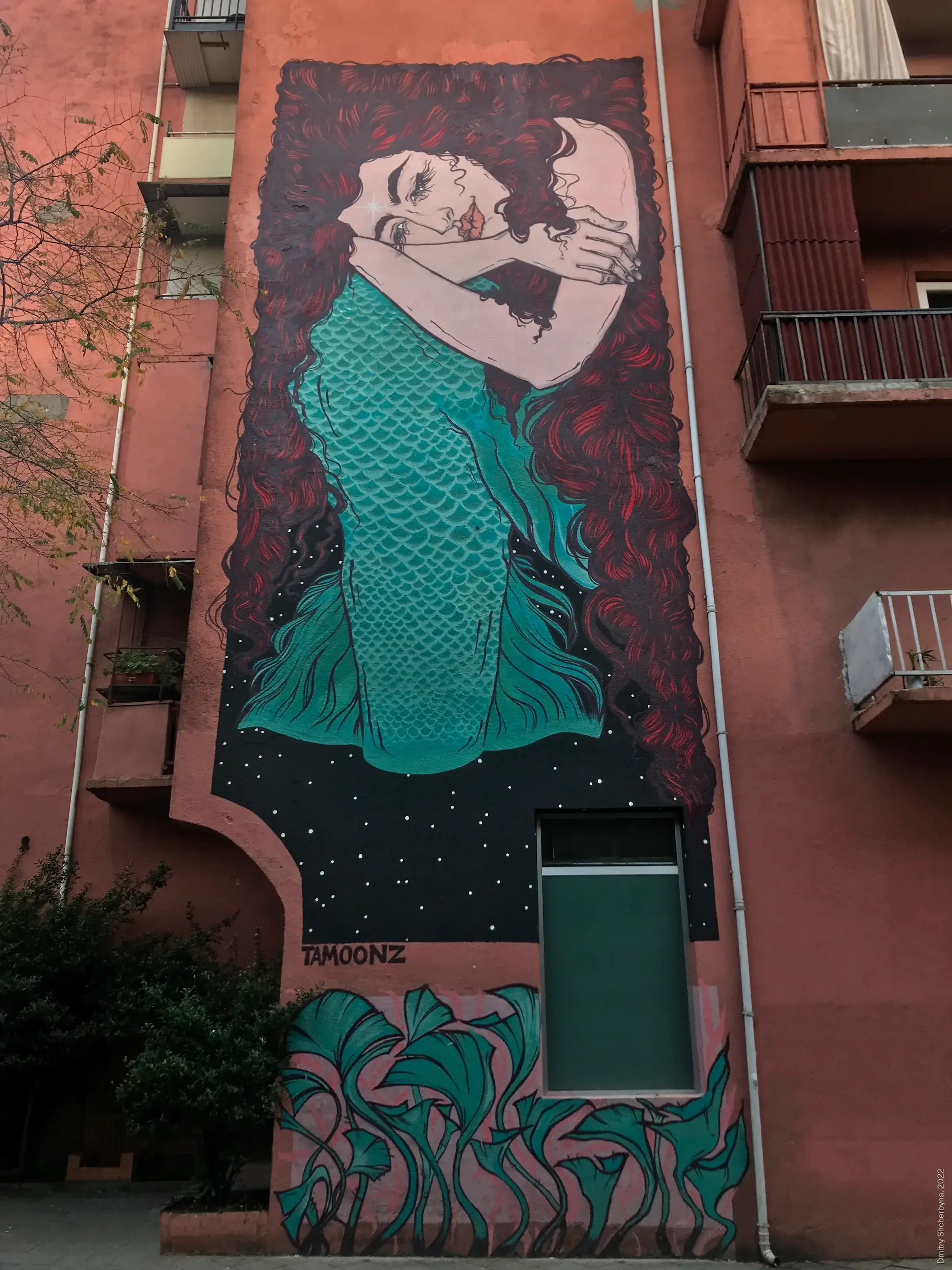
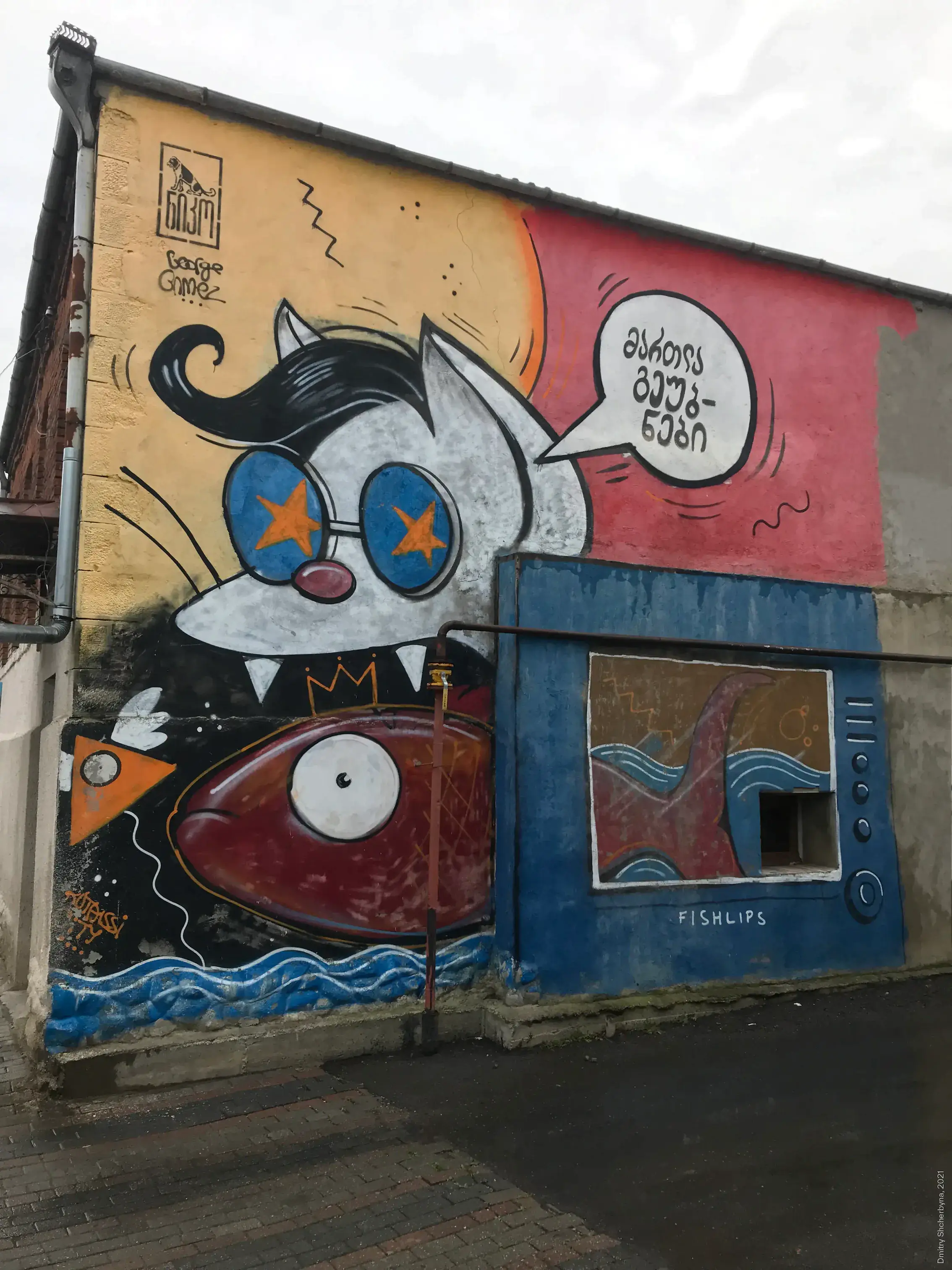
Through their works, Georgian artists — those just beginning and those long established — continue to document the history of the country's rising modern street art scene.
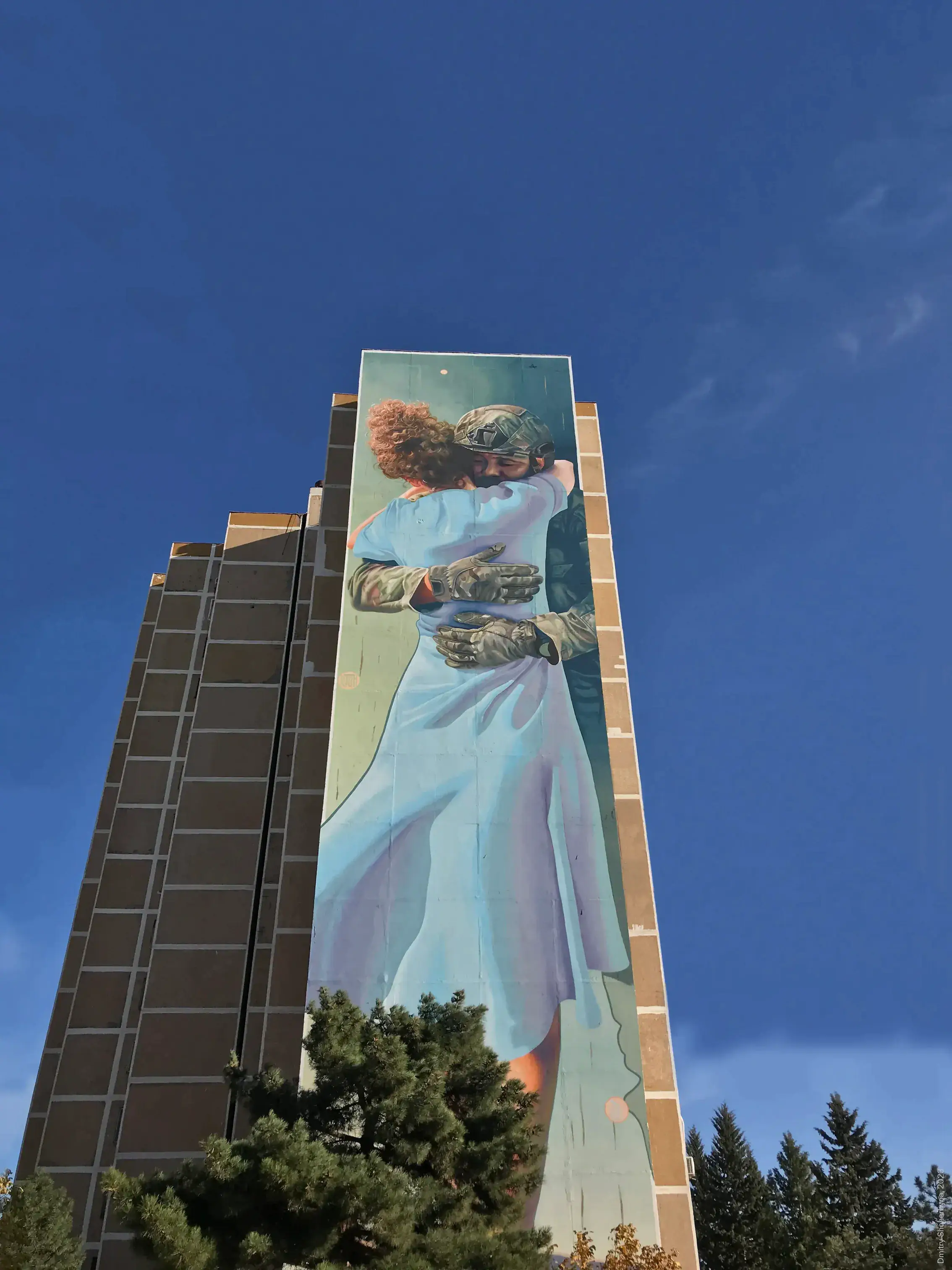
Like in the case of jazz in the recent past, social recognition through increased broader public attention to the topic was one of the key stages in the process of legitimization.